


Open defecation and contamination of drinking and bathing water has been an endemic sanitary problem in India. In 2014, around 530 million people practiced open defecation — catalysing the need for a nationwide campaign to improve hygiene and sanitation: Swachh Bharat Mission. Its aim: to eradicate open defecation by constructing 90 million toilets in rural India by 2019.
While the Swachh Bharat Mission provided momentum for rural sanitation across the nation, Ambuja Foundation had been working towards total sanitation of communities even before the national agenda launched. In 2005, following the Gram Swachta Abhiyan by the Government, Ambuja Foundation initiated its Community Led Total Sanitation (CLTS) program to promote health and hygiene by encouraging toilet construction at household level.
Though efforts to promote CLTS showed good progress, a baseline study in 2013 identified gaps where some households still lacked toilets. This highlighted a need for deeper intervention. In 2014, Ambuja Foundation re-invigorated the programme and realigned it with the Swachh Bharat Abhiyan.
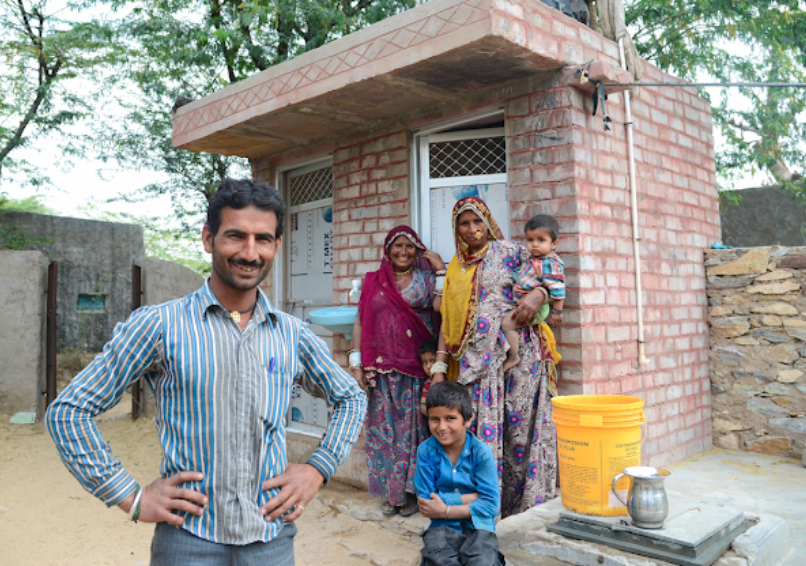
As part of this intervention, Ambuja Foundation mobilized entire village communities, creating awareness and motivating families to build toilets — also facilitating access to government subsidies. With support from Gruh Finance, a seed fund was provided to the Federation of SHGs, which created a revolving fund to help families build toilets.
Efforts took a multipronged approach — targeting women through SHGs and children in schools. Ambuja Foundation conducted awareness campaigns in schools, promoted hand washing and ensured safe water and toilets for children. Adolescents were trained as Swachta Doots or 'cleanliness ambassadors' to educate peers and the broader community.
Ambuja Foundation also helped form and empower committees like Village Health Sanitation and Nutrition Committees (VHSNCs) to drive sanitation and health issues at village level. The concept of SMART villages was introduced and widely embraced.
Through various interventions and camps, target communities now understand the importance of clean water, basic toilets and good hygiene practices for health and village development. This multi-pronged approach has delivered strong results:
- 100% toilet coverage across core villages
- Construction of 32,164 toilets
- Coverage of 1,076 villages
- 2 smart villages