


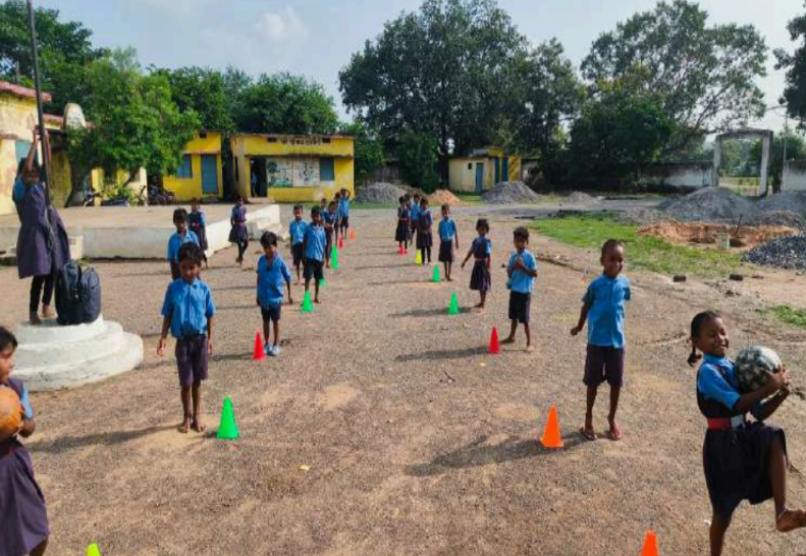
When students from Kapadvanj Kelavani Mandal, supported by Daani Foundation, arrived in Bhatapara, Chandrapur and Ambujanagar for their 4–6 month Master’s internship, the objective was clear: to understand the realities of sports and physical education in rural schools and Anganwadi centres — and to contribute meaningfully through activity-based learning interventions.
What began as an academic requirement soon evolved into a dynamic cross-learning platform. The interns gained first-hand exposure to grassroots challenges — limited infrastructure, inconsistent sports programming, and gaps in foundational motor skills. At the same time, teachers, Anganwadi workers, parents and students were introduced to fresh perspectives, research-backed methods, and structured, low-cost physical education models adapted to their context.
Bringing research, planning and youthful energy into the field, the interns designed and implemented targeted interventions aimed at strengthening physical literacy, confidence and participation in sports. The following initiatives highlight how thoughtful, structured engagement can make a measurable difference in resource-constrained settings.
Play-Based Intervention in Anganwadis
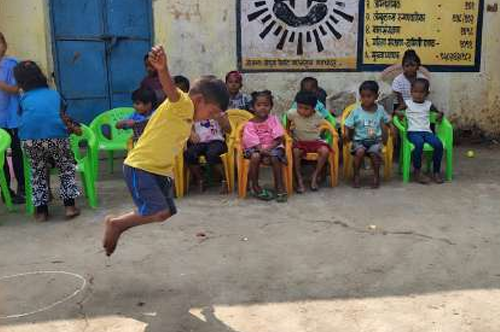
Nanhe Kadam was a play-based intervention designed to improve fundamental motor skills — running, jumping, balancing and throwing — among children aged 3 to 6 years. Implemented in five Anganwadis in Chandrapur, Maharashtra, the project sought to better understand children’s struggles with basic motor coordination and address these gaps through structured play.
Each 40–45 minute session included simple warm-ups, focused skill-building activities, and free play using low-cost materials such as cones, chalk lines, rings, balls and chairs — making the program practical and sustainable within the Anganwadi environment.
Over time, children’s participation increased significantly, driven by the playful and encouraging atmosphere. Importantly, the intervention extended beyond children. Anganwadi workers began adopting play-based learning approaches in their regular sessions, while parents developed a broader understanding of education — recognising that physical development is as essential as reading and writing in early childhood.
Body–Object Coordination Among Primary School Children
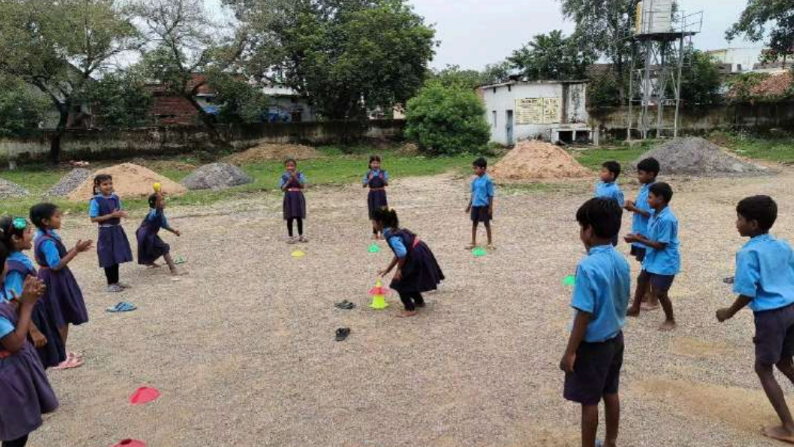
The Nanha Prayas intervention, implemented in two primary schools in Bhatapara, Chhattisgarh, focused on enhancing body–object coordination, self-confidence and active participation through structured, play-based physical activities.
The program concentrated on developing foundational motor skills such as throwing, catching and kicking — critical competencies that build confidence and encourage sustained participation in sports. Integrated activities combining multiple movements were introduced, and game-based sessions enabled children to apply these skills together, strengthening overall coordination.
The results showed visible improvements in children’s body–object coordination, classroom participation and self-confidence. The project reinforced a key insight: early, structured motor-skill interventions can significantly influence children’s long-term engagement in physical activity and sports.
Strengthening Foundational Athletic and Life Skills
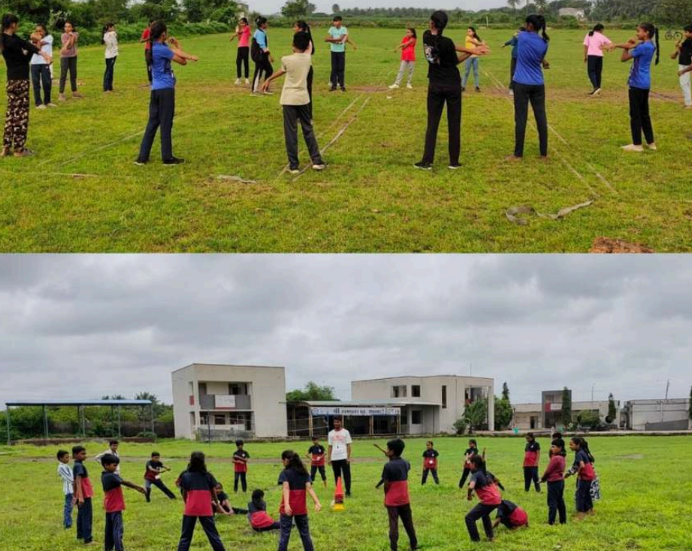
A needs assessment in three schools in Kodinar, Gujarat revealed gaps in basic fitness elements such as muscular endurance, upper-body strength, speed and agility. Alongside physical gaps, children also demonstrated low confidence, limited leadership opportunities and minimal exposure to teamwork.
To address this, structured sports sessions were introduced, incorporating sprint drills, shuttle runs, chase-tag games, agility exercises, and rotations of traditional sports such as Kho-Kho and Kabaddi to promote teamwork. Sessions concluded with cooldown reflections, and leadership roles were gradually introduced to encourage ownership and responsibility among students.
The intervention resulted in measurable improvements in both physical abilities and behavioural growth. Children showed increased stamina and agility, stronger teamwork skills, and greater confidence — along with a noticeable rise in interest and engagement in sports within both school and community settings.
Puberty and Menstruation Awareness Through Sports
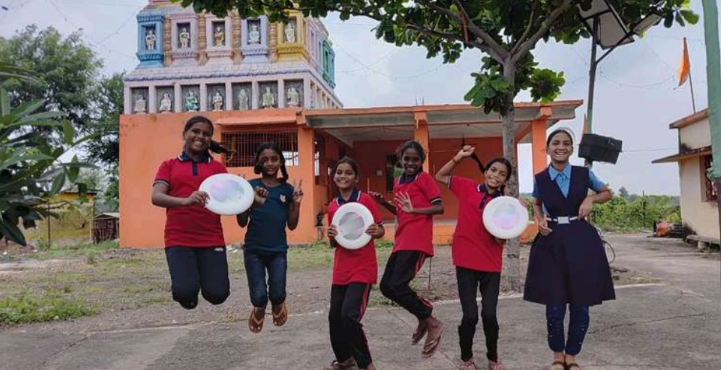
Adolescent girls in rural areas often lack accurate information about puberty and menstruation, leading to confusion, stigma and reduced participation in physical activities. To address this, a focused initiative engaged 80 girls aged 10–14 in Chandrapur, Maharashtra.
Sports such as Frisbee, Kabaddi and Kho-Kho were used to create a safe, interactive learning environment. Sessions addressed puberty, menstrual hygiene, myth-busting, emotional well-being and body confidence. Through games, peer discussions and guided reflection, girls were encouraged to ask questions openly and support one another.
Gradually, participants became more comfortable discussing menstruation and managing bodily changes with confidence and dignity. By integrating sports with life-skills education, the initiative demonstrated how physical activity spaces can become powerful platforms for empowerment.
A Model of Mutual Learning and Program Strengthening
These cross-learning engagements went far beyond short-term interventions. They created a shared platform where grassroots realities met academic research, and where innovation was grounded in local context. While interns gained invaluable exposure to on-the-ground challenges and community dynamics, schools and Anganwadi centres benefited from structured models, new methodologies and renewed enthusiasm around sports and physical education.
For organisations like Ambuja Foundation, such exchanges offer important insights for refining and strengthening program design. By continuously integrating field learning with fresh research perspectives, program models can evolve to become more responsive, scalable and impactful.
Ultimately, this initiative reaffirmed a powerful idea: when learning flows in both directions — from classroom to community and back — sustainable and meaningful impact becomes possible.