


The Multiplier Effect: Why True Scale Begins with Partnership
By Sun Pharma’s Shraddha Gaikwad
Sun Pharmaceutical Industries Ltd. has partnered with Ambuja Foundation for the past two years. In this article, CSR Head Mr Chandrashekhar Gowda reflects on what drives the company’s approach to social investment - and why, in his view, partnership is essential to achieving meaningful scale in CSR.
True scale isn’t about project size; it’s about impact. In development, scale is often measured in numbers — more villages, larger investments, wider coverage. But for Sun Pharmaceutical Industries Ltd., scale means something deeper and more human — creating sustainable impact in people’s lives.
To achieve large scale impact in the shortest possible time and with the most frugal social investment, partnership is the only way forward. In the social sector, when two like-minded entities come together, the outcome is never a simple arithmetic addition of 1+1=2. Instead, the power of partnership must always be greater than 2. This has certainly been true for the collaboration between Sun Pharma CSR and Ambuja Foundation, especially in the area of integrated watershed development.
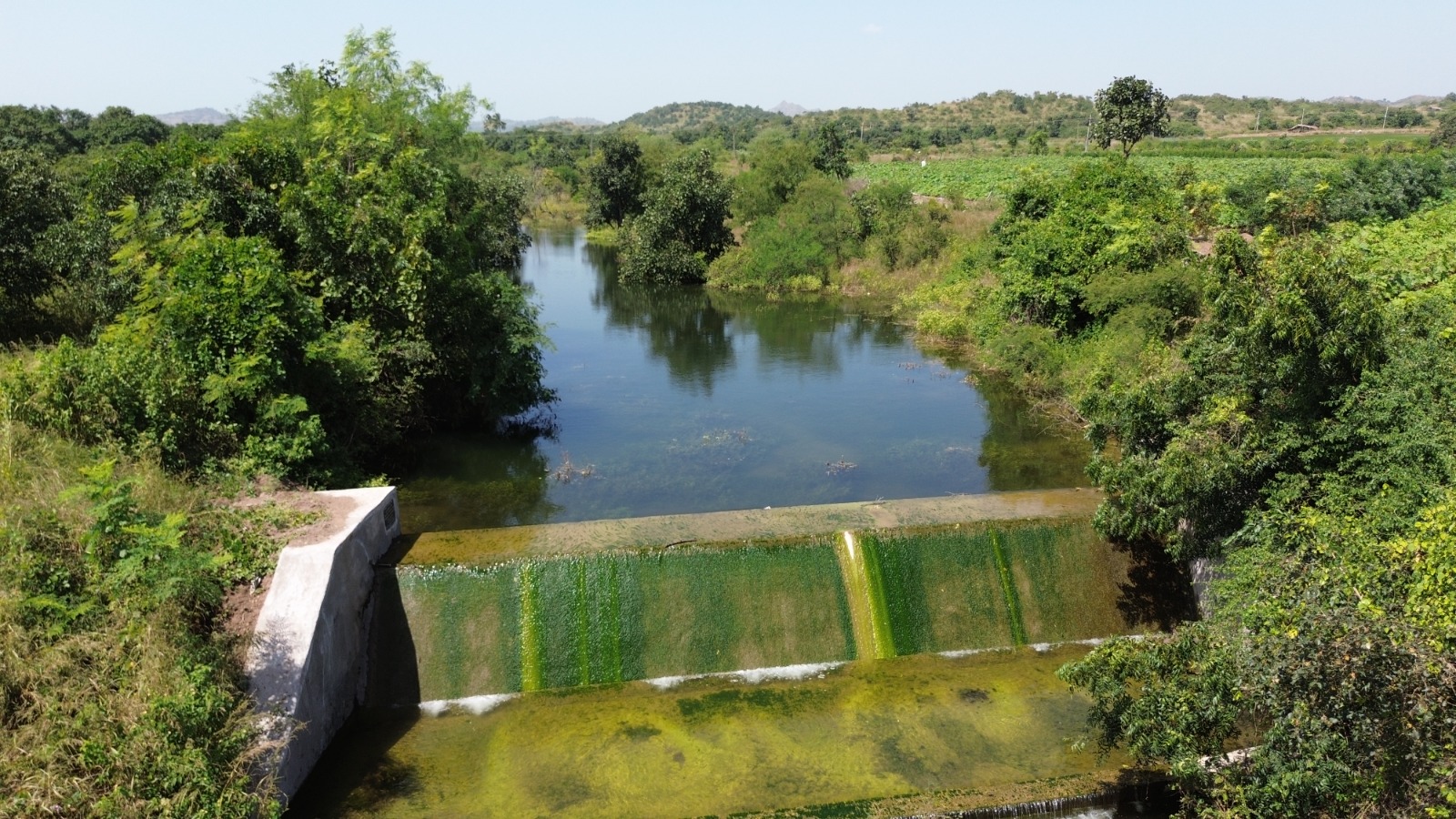
Watershed development cannot be viewed merely as a project, but as a strategic investment with the potential to create transformative change in the lives of communities, the environment, and the local economy. It is not simply about constructing water-harvesting structures; it is about fostering accountability toward the environment so that communities can make the best use of natural resources for their own progress while also conserving them for future generations.
“You cannot approach water as a short-term project,” Mr. Gowda explains. “It is technical, social, and behavioural all at once. No single organisation brings all of that strength.”
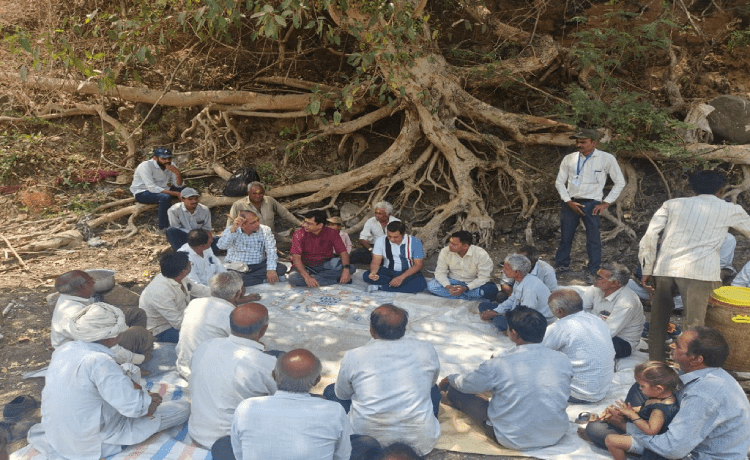
His familiarity with Ambuja Foundation’s grassroots work goes back years. “What struck me when I first saw their work was the depth of community mobilisation strong village institutions, capacity building, ownership. That level of engagement cannot be created overnight.”
When the opportunity arose at Sun Pharma, the partnership felt instinctive. “We knew that if we wanted to work seriously in water, we needed a partner with domain knowledge and credibility on the ground. Ambuja brought that. We bring systems, scale thinking, and outcome orientation. That’s where multiplication begins.”
Beyond Water Creation: The ‘Water Plus’ Philosophy
The Integrated Water Resources Development and Management Programme (IWRDMP), launched in 2025 in Dhari Taluka, reflects this shared vision. Spread across 40 water-stressed villages, the four-year programme addresses watershed restoration, irrigation efficiency, agriculture, livelihoods and environmental conservation together.
For Sun Pharma, water cannot be treated as a standalone theme.
“Water must be seen as a system. We don’t believe in only creating water,” Mr. Gowda says. “If we only build check dams, we are solving 20 percent of the problem. Water must translate into livelihoods, productivity, and resilience including restoring ecological balance.”
The programme therefore evolved into a water plus approach:
· Building and strengthening community institution with special focus on mainstreaming gender
· Adoption of technologies to improve effectiveness and efficiencies
· Diversification of income streams to reduces market shocks by promoting on-fram, Off-farm and non-farm livelihoods
· Promotion of solar power in agriculture and in community spaces
· Large scale afforestation
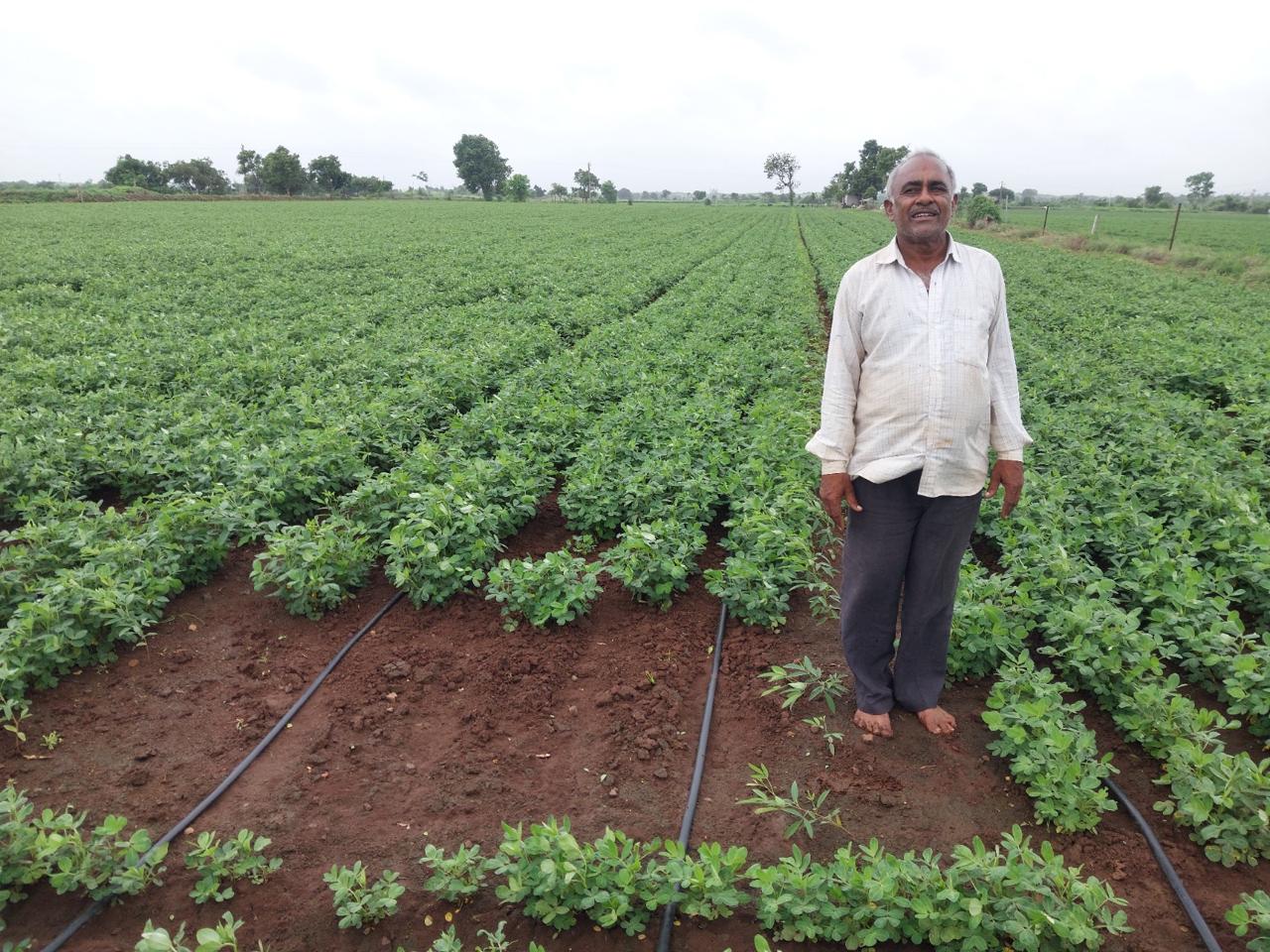
“It’s not about increasing production solely,” he notes. “It’s about increasing productivity sustainably and stabilising farmer incomes.”
Within the watershed component alone, the programme aims to influence over 32 development indicators. “That level of ambition is possible only when partners align for the long term.”
Climate Is Embedded, Not Added On
Rural India is already experiencing climate variability. For Sun Pharma, that reality shapes programme design.
“You cannot talk about water today without talking about climate change. Climate impacts are real.”
Watershed interventions are linked to plantation drives, orchard development, and ecological restoration. Organic practices reduce chemical dependency. Solar pumps reduce fossil fuel reliance. Women’s self-help groups are supported to produce green manure, linking sustainability with livelihoods.
Promotion of smokeless chulhas among households that cannot afford other clean cooking fuels helps reduce dependence on fuelwood. With lower smoke emissions, these chulhas also help prevent respiratory illnesses.
Even skilling programmes are adapting. “If we are preparing youth for the future, why not prepare them for green jobs solar technicians, renewable energy systems? Climate resilience cannot be a side conversation. It must be embedded.”
Ownership Is as Important as Infrastructure
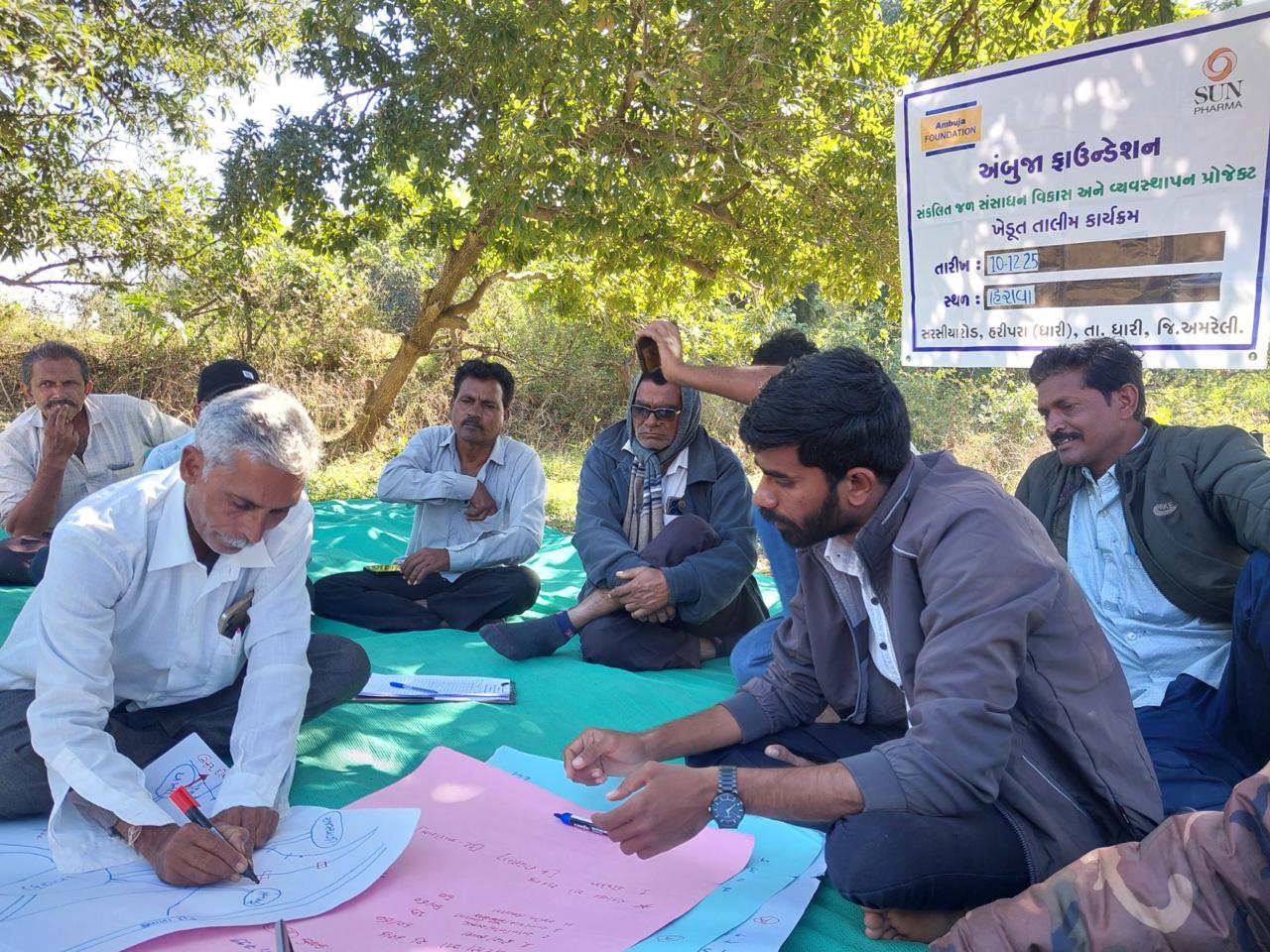
While physical water assets are critical, Mr. Gowda repeatedly returns to one theme: community ownership. “Infrastructure without community ownership and accountability does not secure water,” he says.
Village meetings on water budgeting, responsible usage, and climate-resilient agriculture are central to the programme. Farmers co-invest alongside Sun Pharma and government schemes. “When communities contribute financially and in decision-making, assets become theirs. That changes the mindset from beneficiary to owners.”
This is where scale begins to look different. “For us, scale is not just expanding to more villages. Scale is when Gram Panchayats adopt the model, when farmers independently continue practices, when systems sustain without us.”
Development Cannot Be Fragmented
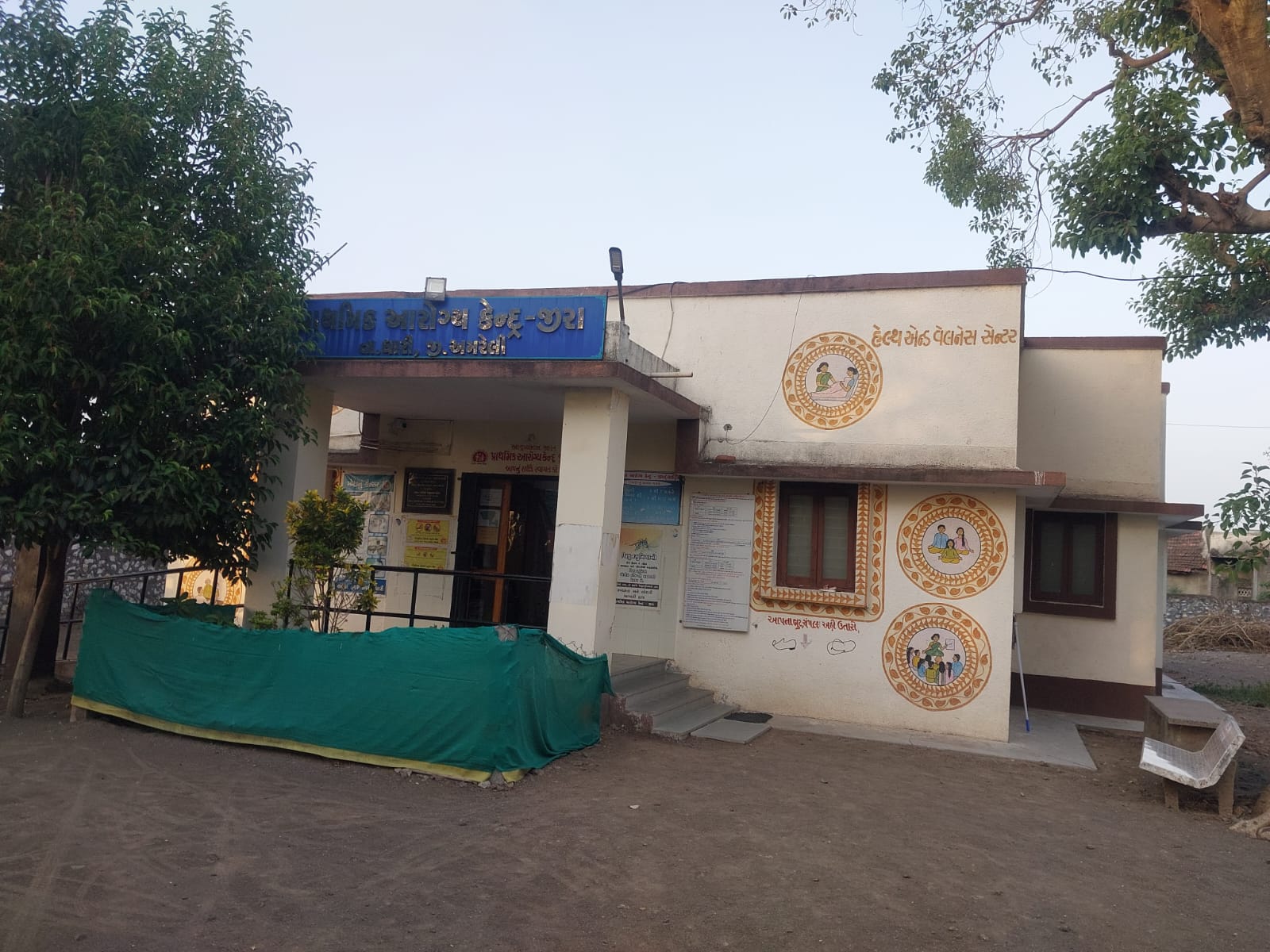
In villages where watershed work is underway, Sun Pharma also invests in strengthening primary healthcare centres, cancer screening outreach, school infrastructure, digital classrooms, and skill development programmes.
“If we only fix water and ignore health and education, we are solving only part of the problem,” Mr. Gowda says. “Development cannot be disjointed.”
Human capital remains central. “When you invest in people their health, skills, and education every other intervention becomes stronger.”
CSR, in his view, must move beyond cheque writing. “Philanthropy gives without expectation. But responsible CSR must look at social return on investment. Every rupee should create lasting value.”
That value is amplified through convergence — with NGOs, with communities, and with government stakeholders. “Sun Pharma alone has finite resources. Ambuja Foundation alone has finite resources. But when we align our strengths, the impact becomes greater than what either of us could achieve on our own.”
Redefining Scale
So, what does scale mean going forward? “Scale is extension and adoption of outcomes,” Mr. Gowda reflects. “If Gram Panchayats integrate water budgeting into annual plans, if neighbouring villages replicate successful models, if district administrations converge schemes based on demonstrated results, that is scale.”
And that kind of scale cannot be achieved in isolation. In watershed development, progress is gradual. But when built on partnership, it is enduring. And that brings him back to his original belief:
In the social sector, addition is not enough. If we truly want impact, we must multiply and multiplication only happens through partnership.