


In a short period, Ambuja Foundation has quickly responded to COVID-19, reaching, educating, and supporting over 6 lakh community members across remote rural India. How did they do it? Thrive finds out in a discussion with Ambuja Foundation CEO Pearl Tiwari, exploring their unique approach — having a Single Point of Contact (SPOC) in each community.
How have you been able to reach such a vast number of people so quickly?
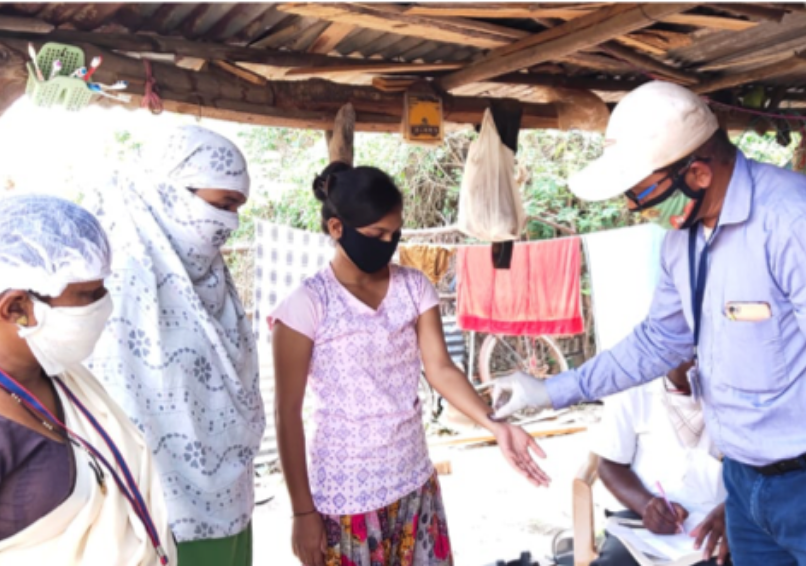
"Initially, we had teams on the ground — staff, Sakhis, and the health team — who could quickly talk to people about COVID and provide basic information. But once the lockdown started, we realised our people couldn’t enter villages as they were confined to their homes. Only frontline staff could go out, and that too with precautions."
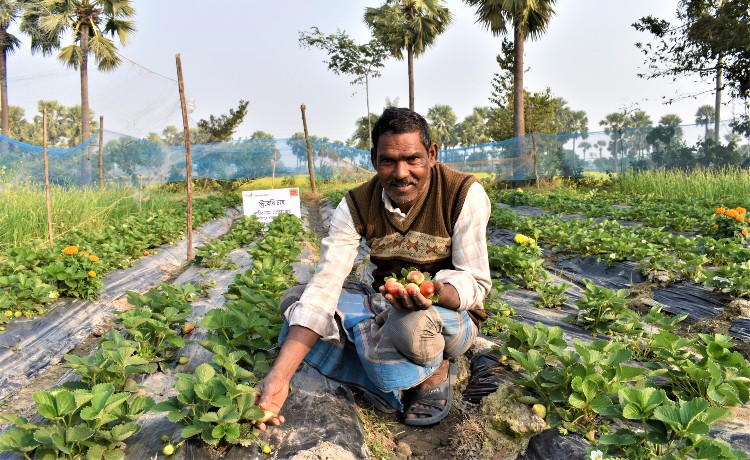
"So, we looked at alternative ways and decided to use our many people-led institutions — farmer producer companies, women's federations, SHGs, BCI farmer groups, etc. We chose one or two people from each to be our primary contact points to relay information to their communities on our behalf."
Once SPOCs were chosen, how did you move into action?
/
"We quickly organised conference calls to brief SPOCs in clusters. We selected two SPOCs per village and explained their critical role during this crisis," Pearl said.
"Then, we crafted and sent mobile messages to spread accurate information on COVID, lockdown rules, and health service locations. We also created 2,509 WhatsApp groups our field teams could use to share updates."
"We sent out about six messages per day, in voice or pictorial format, and to date have shared over 250 different messages in local languages. Knowledge is power — and we wanted everyone to understand the seriousness of the situation."
"Vinayak Sonawane, our Head of Health, compiled all messages using reliable sources like the government. We also partnered with Noora Health, who shared great content. We started in English and Hindi, then translated into regional languages, and ensured district health officials approved all messages before sending them out. These unique voice calls, recorded by Ambuja Foundation, were even shared across networks of over 3,106 ASHA and AWW workers."
How have you used technology to strengthen your response?
"We built a detailed tracking system so program managers could log everything — how many masks were made and distributed, how many messages went out, and how many ration kits were delivered. Technology has been vital for monitoring and pushing information quickly, even as we all work remotely."
As the situation changed daily, how did you adapt your strategy?
"At first, COVID-19 mainly affected cities, but we knew we had to prepare rural communities spread across vast areas," Pearl said.
"We formed a high-level COVID Coordination Team and had daily conference calls to plan next steps. This network of SPOCs helped us change direction quickly when needed."
"Initially, we focused on awareness and mask distribution, but as hunger became a big threat for daily wage earners, we pivoted to distribute ration kits to the most vulnerable families."
"When the government allowed farmers and labourers to return to the fields, we helped over 1.4 lakh farming households with information on how to work safely. We also created location-specific directories with emergency contacts, public distribution points, and helplines."
"This system helped us act fast. Our SPOCs have been amazing, showing true commitment to help their communities during this uncertain time," Ms Tiwari added.
How did you target especially vulnerable groups?
"We mapped elderly people across 11 locations — around 2,830 senior citizens — and sent them daily mobile messages and images tailored for their needs."
"In areas with many daily wage earners, we worked through SPOCs to distribute ration kits to 9,808 families, helping prevent hunger caused by income loss."
"The SPOC approach has proven very effective. It shows the power of local institutions, and our years of capacity building have paid off when the country needed it most," Pearl concluded.