


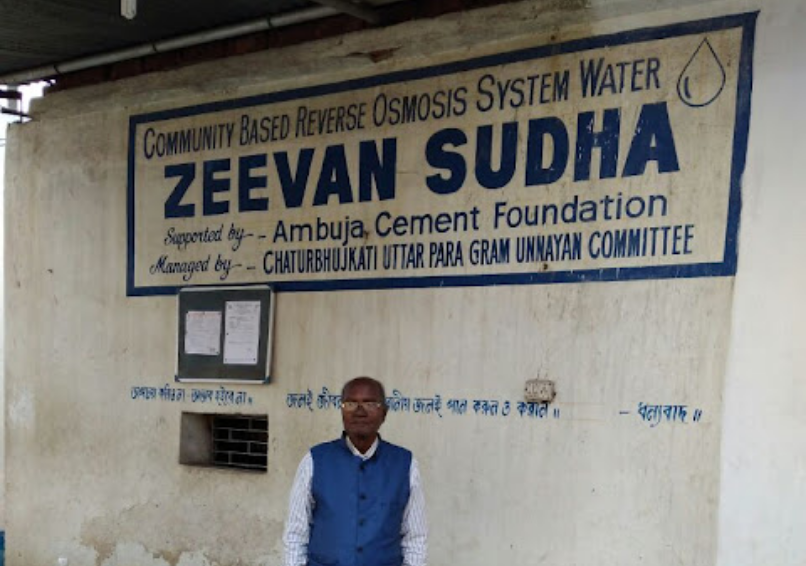
The Background
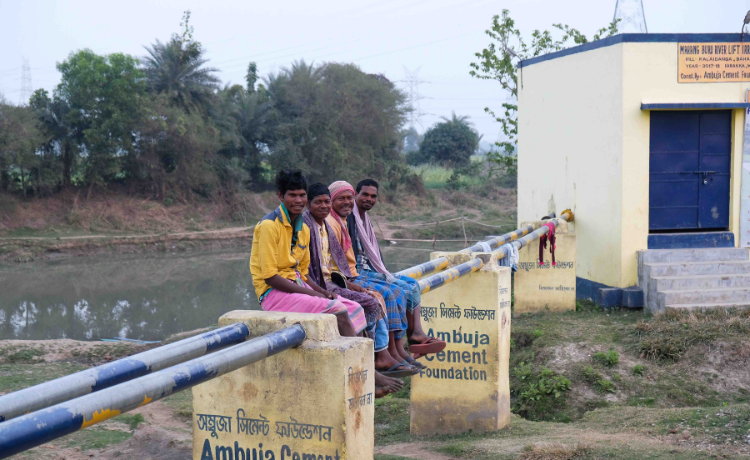
Back in 2013, villages of Sankrail Block (Howrah Dist. West Bengal) were gripped with a potable water crisis. Without piped water, communities depended on depleting and contaminated groundwater, leading to high incidences of waterborne diseases.
Ambuja Foundation's intervention
To address this, Ambuja Foundation installed Community RO Plants in five villages starting in March 2014. Success hinged on local ownership: while the Foundation funded the RO plant itself, installation and operational costs were borne by the community. A 12-member informal group of local leaders, panchayat members, influencers, teachers, and elders led awareness efforts and handled practical tasks like site selection and permissions.
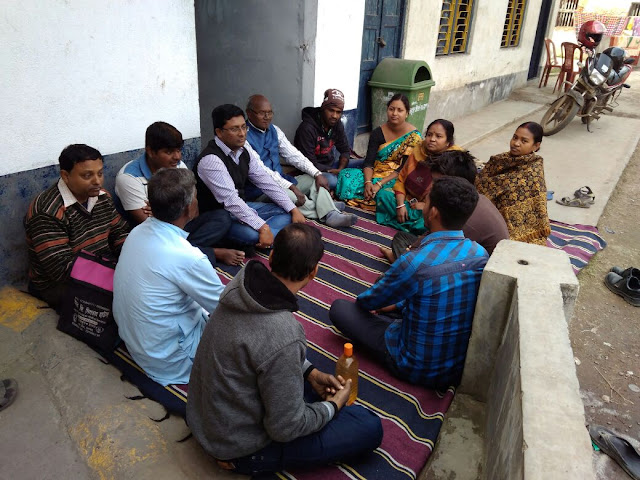
The Initial Years
The project advanced gradually. Ambuja Foundation intentionally stepped back to let the local committee lead. Acting as mentors, the Foundation guided and motivated when needed. The registered water user committee, Chaturbhujkati Maa Sitala Swajaldhara Samiti, took charge of pricing, while the Foundation helped establish accounting systems, management protocols, and water testing schedules to ensure sustainability.
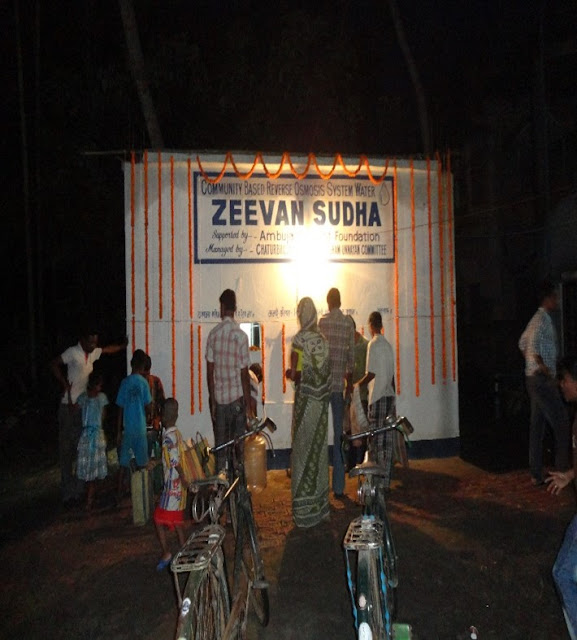
The Impact
In 7 years, nearly 3000 households gained safe drinking water; waterborne diseases dropped, and women, freed from fetching water, engaged in productive work. Twelve local youths were employed as plant assistants. Increased demand led to building a second RO plant, funded entirely from profits of the first. Today, Ambuja Foundation’s role is limited to oversight — ensuring meetings, informal audits, and plant maintenance.
Since inception, Ambuja Foundation’s guiding philosophy has been to create and empower People’s Institutions, supporting rural self-reliance. The Chaturbhujkati Swajaldhara Samiti is just one of over 2769 institutions established across 11 states, creating lasting social change in agriculture, water management, women’s empowerment, and community health.
.png)