


November 15, 2022

Village 100% Educated

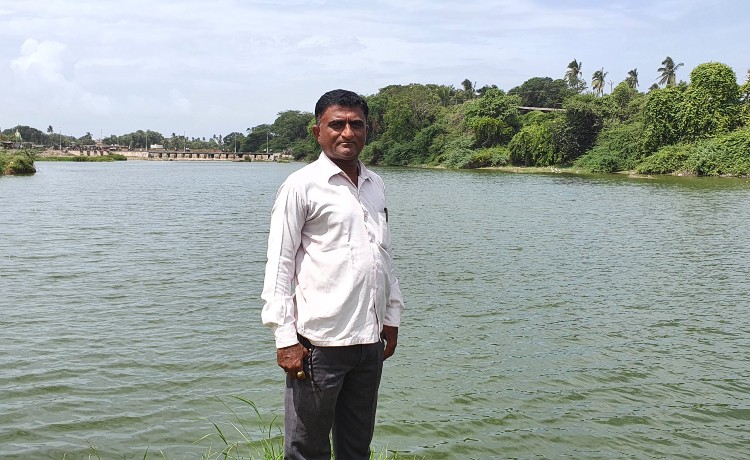
“20 years ago, we grew one crop of groundnuts a year – the crop was always poor because the groundwater we used was saline. Salinity had crept in 15 kms from the coast and we even struggled to find sweet water to drink. A government pipeline delivered drinking water to us from 30 kms away, but by the time it reached us, we had no idea of the water quality.


The harvest we had was never enough to survive on, so we all used to migrate to find work in other villages – mostly labouring on farms because farming was what we knew.


This was until Ambuja Foundation constructed check dams, renovated the waste weir, and ungated the Goma tidal regulator and recharged irrigation wells close to our farms. This not only helped provide water for the community but also helped recharge groundwater and push salinity back towards the coast. They encouraged us all to invest in rooftop rainwater harvesting systems which we did and helped us work with WASMO to install tap connections. And suddenly thing began to turn around.


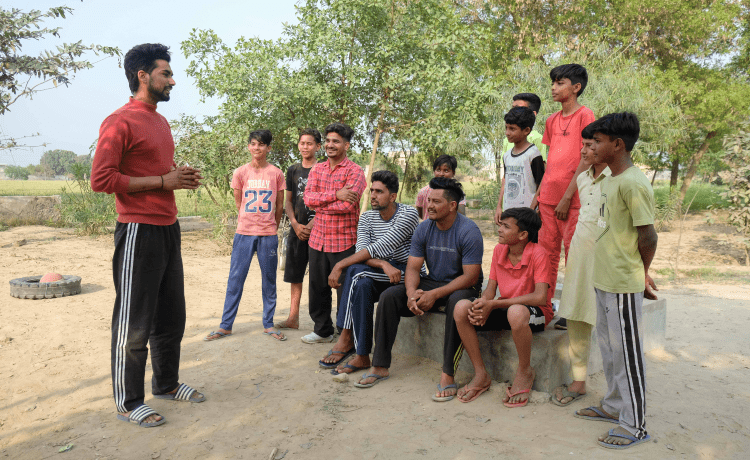
It’s not hard to describe the difference between then and now. Before, the entire village lived in mud huts, but today we all have concrete houses. Once water came we grew 3 crops a year – cotton, sugarcane, wheat – and even got into animal husbandry. Today our village is considered 100% educated – all the kids go to school, the older ones have secure jobs or are attending college. All because of water.


Me? Where once I couldn’t afford to send my kids to school, today my son is a mechanical engineer and my daughter has a Bachelor of Science and is appearing for the government exams. Earlier I had just 3 bigha (1.2 acre) of land, but today I have 30 bigha (12 acres). Where once I was forever away from home for labour work, today I’m the ‘king’ of my own humble ‘castle’ – and we are all the happier for it” - Haribhai, Pipli Village, Kodinar, Gujarat
November 15, 2022

RELATED POSTS
  • Farmers Prosper in Thach, Darlaghat
    February 13, 2017
    Farmers in Thach Village have seen an increase in annual income of between Rs. 20,000-50,000, thanks to the construction of a 52500 litre capacity water storage tank for collection of natural water, along with irrigation channels - benefiting 12 households and 1.5 hac of land.
  • Humans of Ambuja - Veerpal Kaur
    October 08, 2017
    My mother married me off just before I was to appear for my tenth grade exams. And marriage was more of a shock than a joyful experience for me.
  • Humans of Ambuja - Ogadhbhai Dodiya
    January 04, 2018
    Today, Oghadbai K Dodiya is an important person in his village. Not only is he a forester in the Government Forest Department, but he gained additional trust and reputation when he helped solve the drinking water crisis in Dhamlej - his village.
  • Platform to Boost Sustainable Production & Market Linkages
    January 04, 2018
    In order to promote partnerships and collaboration, Ambuja Foundation has been creating platforms for brainstorming ideas and devising solutions to realise rural prosperity. One such event was a participatory dialogue '<b>Creating Synergies on Sustainable Production and Marketing Linkages</b>' held in New Delhi on 23<sup>rd</sup> November 2017.
  • Converting 'Waste' into Livelihood - Biomass Innovation Applauded!
    July 23, 2018
    Ambuja Foundation Chandrapur has been recognized for its innovative 'biomass' initiative which helps generate an alternative source of income for farmers by utilizing agricultural waste (such as cotton stalk) as fuel for industrial usage.
An Opportunity to Support
SUBSCRIBE TO OUR NEWSLETTER & BLOGS
Stay updated on the latest insights from Ambuja Cement Foundation.
GET CONNECTED

Village 100% Educated

“20 years ago, we grew one crop of groundnuts a year – the crop was always poor because the groundwater we used was saline. Salinity had crept in 15 kms from the coast and we even struggled to find sweet water to drink. A government pipeline delivered drinking water to us from 30 kms away, but by the time it reached us, we had no idea of the water quality.


The harvest we had was never enough to survive on, so we all used to migrate to find work in other villages – mostly labouring on farms because farming was what we knew.


This was until Ambuja Foundation constructed check dams, renovated the waste weir, and ungated the Goma tidal regulator and recharged irrigation wells close to our farms. This not only helped provide water for the community but also helped recharge groundwater and push salinity back towards the coast. They encouraged us all to invest in rooftop rainwater harvesting systems which we did and helped us work with WASMO to install tap connections. And suddenly thing began to turn around.


It’s not hard to describe the difference between then and now. Before, the entire village lived in mud huts, but today we all have concrete houses. Once water came we grew 3 crops a year – cotton, sugarcane, wheat – and even got into animal husbandry. Today our village is considered 100% educated – all the kids go to school, the older ones have secure jobs or are attending college. All because of water.


Me? Where once I couldn’t afford to send my kids to school, today my son is a mechanical engineer and my daughter has a Bachelor of Science and is appearing for the government exams. Earlier I had just 3 bigha (1.2 acre) of land, but today I have 30 bigha (12 acres). Where once I was forever away from home for labour work, today I’m the ‘king’ of my own humble ‘castle’ – and we are all the happier for it” - Haribhai, Pipli Village, Kodinar, Gujarat
LinkedIn Post
Ambuja Foundation