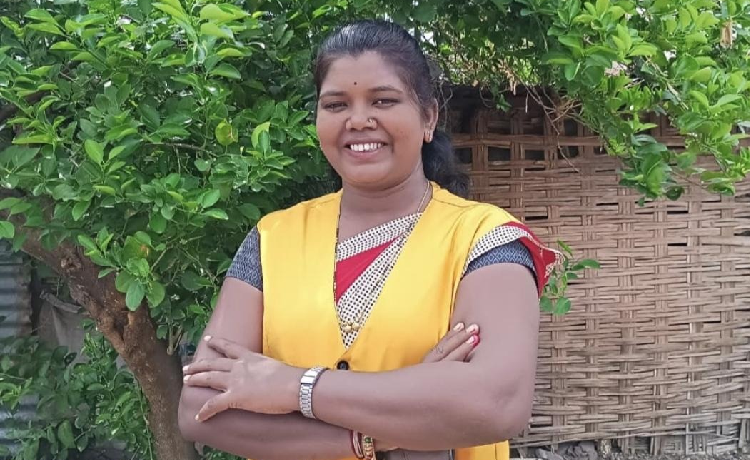



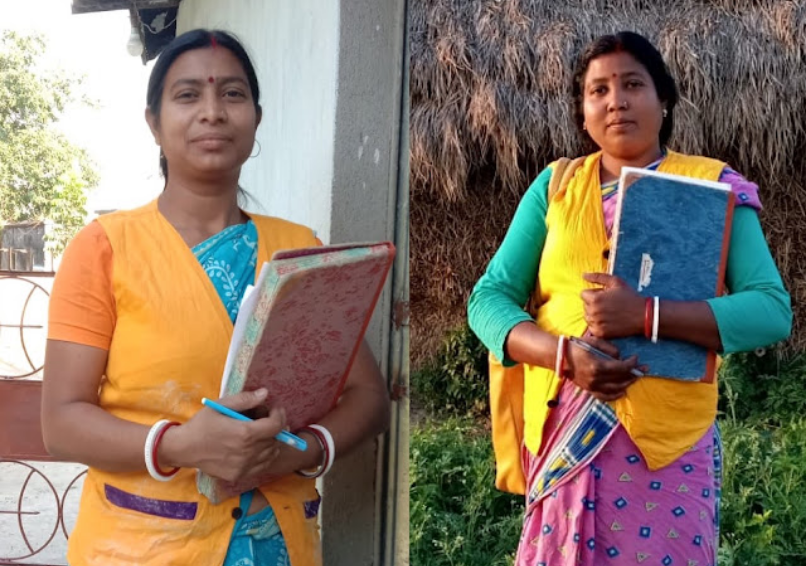
(File Image: Chinu Mandal (Left) and Rakhi Singha (Right))
Ambuja Foundation works with over 144 Sakhis across locations who today play a major role alongside village health authorities to stop COVID-19 from entering the villages. Ambuja Foundation spoke with two Sakhis from Farakka, West Bengal — Chinu Mandal and Rakhi Singha — who are working tirelessly on the ground.
Both Chinu and Rakhi became Sakhis in 2014 after receiving health training through the foundation. In 2018, Rakhi also became a government ASHA (Accredited Social Health Activist) worker but has continued her involvement with Ambuja Foundation’s Maternal Child Health Program. She was recently honored at the district level for helping pregnant women reach hospitals during severe floods. Together, these frontline workers oversee the health of residents in 5–6 villages in Farakka district.

(Image: Sakhi creating awareness in the village)
“During the early phase of the virus, we received training from the Ambuja Foundation health team and authorities. This helped us start awareness sessions in our villages early on,” shares Rakhi.
Farakka, located near the Bangladesh border, is home to highly marginalized communities where many residents migrate to cities for work. Chinu explains, “Now, with many villagers returning home, health authorities are taking extra precautions.”
Chinu’s role includes tracking returnees from cities, educating them about quarantine, and informing the local health team. Rakhi, on the other hand, checks if these residents show symptoms, monitors their temperature, and distributes informational leaflets.

(Image: Sakhi tracking villagers and creating awareness in the family)
Testing remains a major challenge. The nearest testing center is in Kolkata, about 282 km away, and results can take up to a week. The closest isolation ward is in Jangipur, 45 km from Farakka. “So we must be extremely vigilant to ensure villages follow strict precautions,” Rakhi says.
Yet, not everyone understands the urgency. “In some villages, people still gather in public places. Sometimes, we must go with police to disperse them and remind families to stay indoors,” Chinu adds.
Both women take strict personal precautions: using sanitizer, masks, and avoiding direct contact with surfaces. Rakhi, who interacts more closely with suspected patients, wears protective gear and sanitizes thoroughly before returning home.
“Our families support us completely and feel proud of our work. They know it matters,” Rakhi says. Chinu adds, “If health workers like us step back now, who will protect our villages?”
Despite the pandemic, they continue to support maternal and child health services. “Luckily, no deliveries or vaccination days are scheduled right now. But if anything comes up, we are ready,” says Rakhi.
Chinu concludes with a message: “We’re fortunate COVID-19 hasn’t reached our villages yet. But everyone must help by staying home and following guidelines.” Rakhi adds, “There’s no vaccine yet, but by staying alert and indoors, we can defeat this virus and return to normal life.”