


In 2017, the Central Government launched an initiative to 'double farmer incomes' as a key way to tackle widespread poverty and farmer suicides across the nation.
The bold strategy highlights seven key areas to improve farmer income. Ambuja Foundation has long worked across each of these areas through its Agriculture Programme, seeing tangible results.
According to NITI Aayog, “strong measures are needed to harness all possible sources of growth in farmers’ income both within, as well as outside, the agricultural sector.” These major sources, aligned with Ambuja Foundation's strategy, include:
- Increase in productivity of crops: Organising Farmer Learner Groups, training Agriculture Extension Officers, and adopting scientific techniques to boost yields across crops.
- Increase in production of livestock: Promoting Goat Based Livelihoods (GBL) among women and communities to diversify and raise household income.
- Improvement in efficiency of input use (cost savings): Creating Farmer Federations and farmer malls to buy inputs in bulk at lower prices and better quality, supported by expert advice.
- Increase in cropping intensity: Educating farmers on crop rotation to grow 2–3 crops annually instead of just one, optimising soil health and boosting income.
- Diversification towards high-value crops: Researching market trends to help farmers move beyond paddy and maize to vegetables, wadi and other high-value crops.
- Improved price realisation for farmers: Supporting farmer groups to sell directly on exchanges or create branded products, cutting out middlemen and increasing profits.
- Shift to non-farm jobs: Through Skill & Entrepreneurship Development Institutes, enabling youth from farming families to pursue other viable careers and diversify family income.
The government's strategy emerged in response to alarming farmer suicides, highlighting the urgent need to support farmer livelihoods.
Previously, national strategies focused mainly on increasing output and food security. Since the 1960s Green Revolution, India's food production grew 3.7 times, while population grew 2.55 times—raising per person food production by 45% and turning India into a net food exporter.
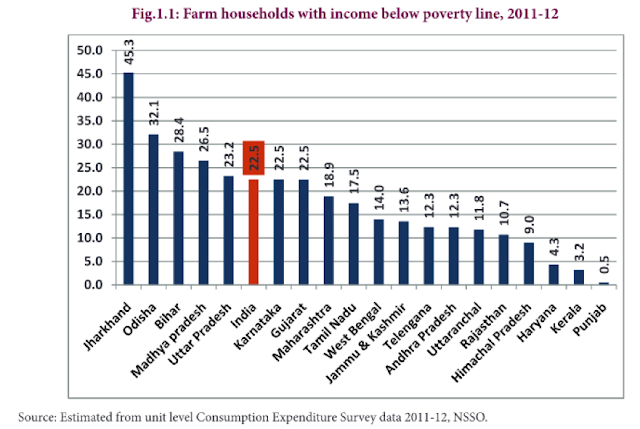
Yet, this focus did not directly address farmers' income. NSSO data (2011–12) showed that over a fifth of rural households primarily dependent on agriculture lived below the poverty line.
Ambuja Foundation’s needs assessments confirmed these low livelihood levels and built its strategy around improving livelihoods and prosperity.
“We found that if we could improve livelihoods in rural villages, there was a ripple effect — better health, education, and business growth,” said Pearl Tiwari, CEO of Ambuja Foundation.
“With agriculture as the base of most household incomes, it has become our largest programme vertical — and our investment is delivering real impact for the families and communities we work with,” she added.
“We’re proud to help the government achieve its goal of doubling farmer incomes by 2022, and aim to scale our agricultural programme to reach even more rural families and farmers,” she concluded.