


Ambuja Foundation with Asian Paints working on water security and water for Livelihood
In Patancheru, where factories sit beside farms, water once flowed in only one direction — away. Downstream. Depleted. Disappearing. Today, some of that water is finding its way back.
A check dam slows the runoff. A farm pond holds monsoon rain a little longer. A village water budget maps what is used and what must be saved. Beneath the surface, groundwater levels begin to recover.
Through its Watermark initiative, Asian Paints is working with Ambuja Foundation for the past 7 years to strengthen water security across the landscapes surrounding its plants in Vizag and Patancheru in Andhra Pradesh — regions where industrial water use and agricultural livelihoods intersect most directly.
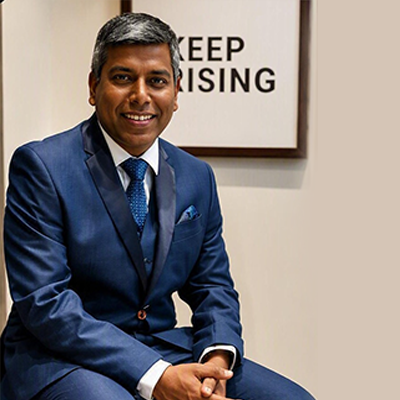
As the AGM and Head of CSR for APL manufacturing locations, Mr Sunil P explains, "We have plants in eight states, and wherever we operate, we work within a 20 to 30 kilometres radius around the plant. We believe that true progress is achieved when communities prosper and natural resources are sustained for generations to come. Recognising water as one of the most critical shared resources, we launched the Watermark programme in 2007–08 with a vision to strengthen water security through science-based, community-led interventions. What began as a water conservation initiative has evolved into a long-term commitment to create measurable and lasting impact. Today, our aspiration is to replenish five times the water we consume, contributing to resilient communities, healthier ecosystems, and a more water-secure future for all."
Nearly two decades later, that journey has touched 460 villages. "It has paid dividends in strengthening water security for both the company and surrounding communities," he adds.
Understanding the Land
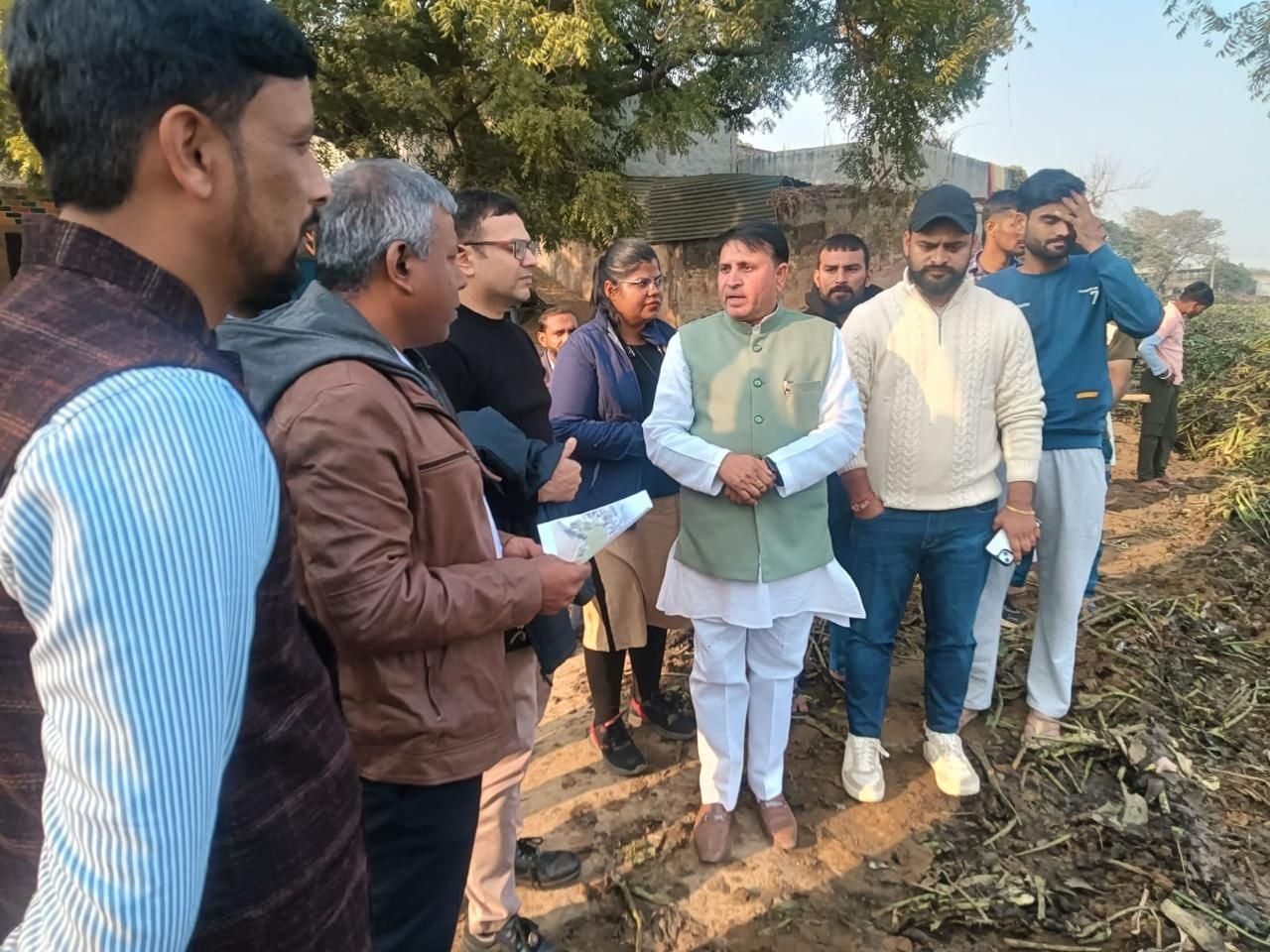
Every intervention begins not with construction, but with understanding. Geospatial surveys analyse catchments. Drainage lines are mapped. Runoff is calculated. Groundwater tables are assessed. The approach has become increasingly data-based — with catchment analysis, scientific modelling, and technology guiding where and how structures are built.
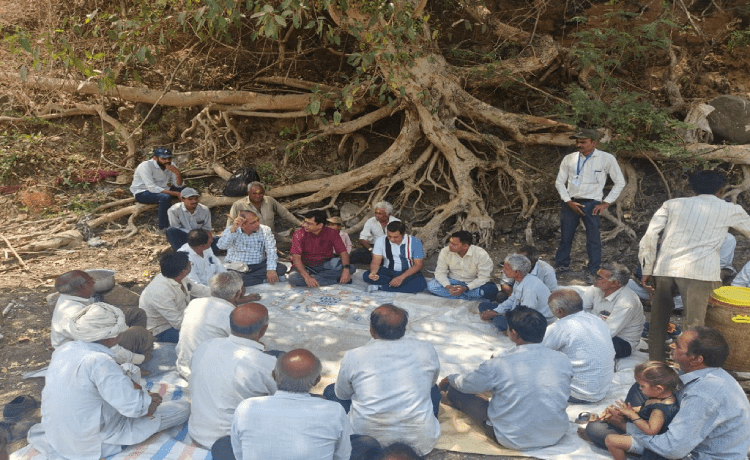
But science alone is not enough. "Before we enter any project, a needs assessment is essential — done with the community, who are integral from beginning to end. We believe the community is at the centre of any intervention," Mr Sunil P says.
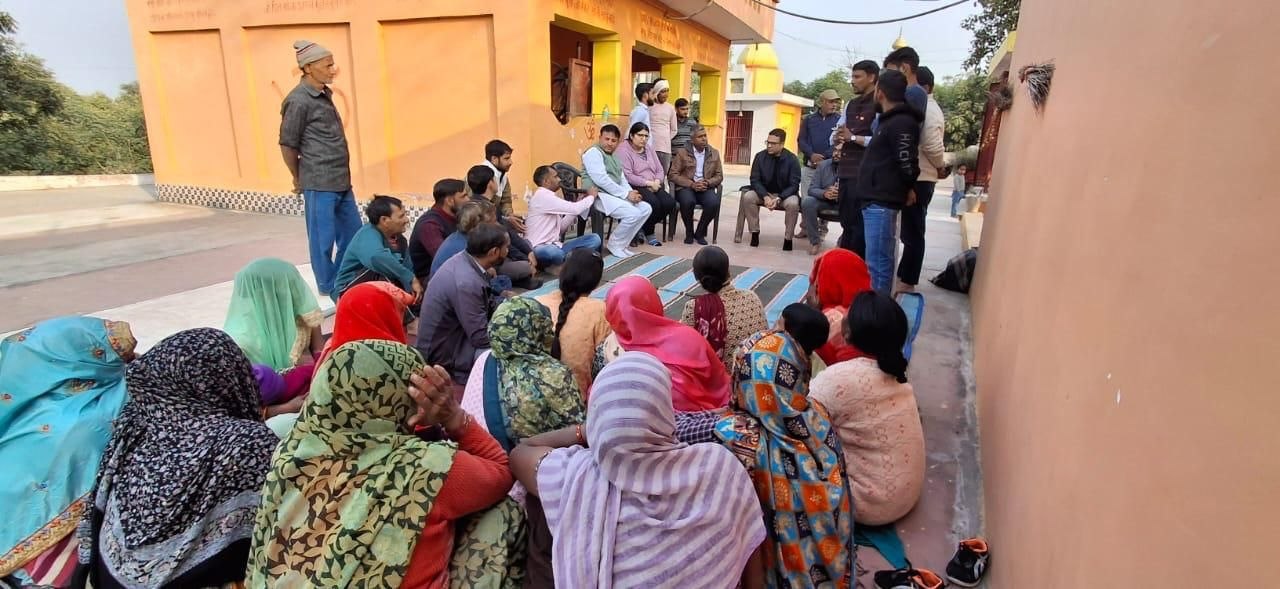
Water budgeting sessions bring villagers together to calculate demand versus supply — for crops, cattle, and households. Where deficits emerge, interventions are designed collectively. Recharge structures like check dams, farm ponds, and percolation tanks begin slowing what once rushed downstream.
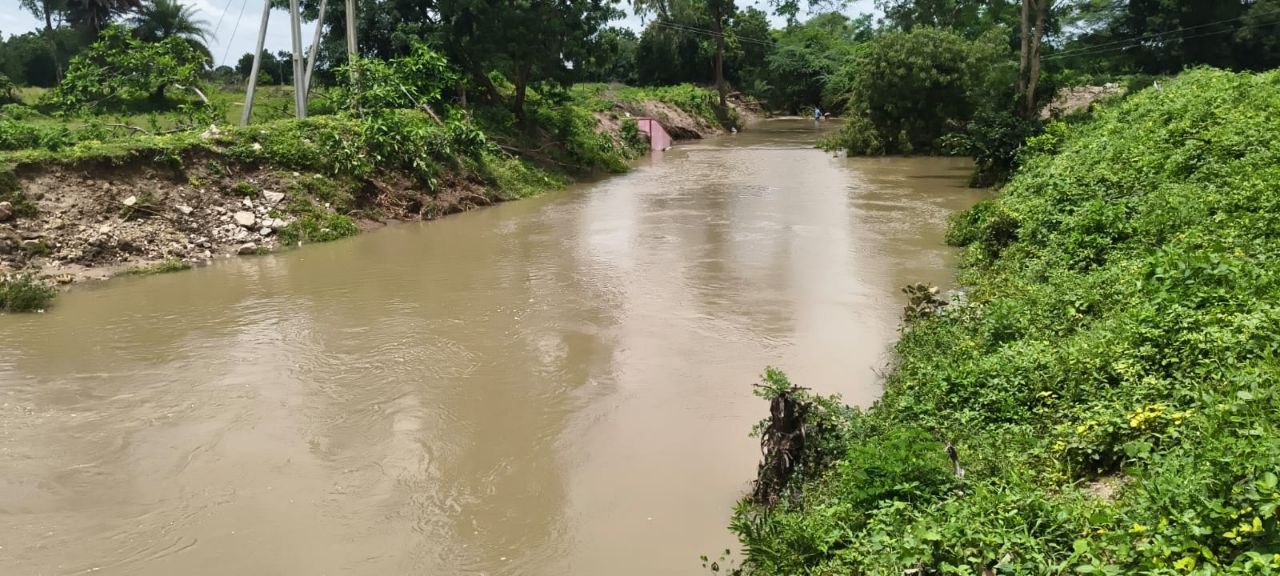
Recognizing that every landscape presents distinct water challenges, the Watermark programme tailors its interventions to local needs. In Khandala, ridge-to-valley watershed treatments enable rainwater to be retained and absorbed within the catchment. In Haryana, canal lining improves water-use efficiency by reducing seepage losses and ensuring reliable water distribution. In Vizag, rejuvenating traditional water bodies and strengthening irrigation infrastructure has enhanced water storage and accessibility, helping communities secure a more dependable water supply. Through such context-specific solutions, Watermark contributes to sustainable water management across diverse geographies.
"Since India is geographically varied, water interventions must adapt to land and terrain. This is something we learned along the way," he notes.
On the Ground
Across Vizag and Patancheru, this approach takes shape in practical, place-specific ways.
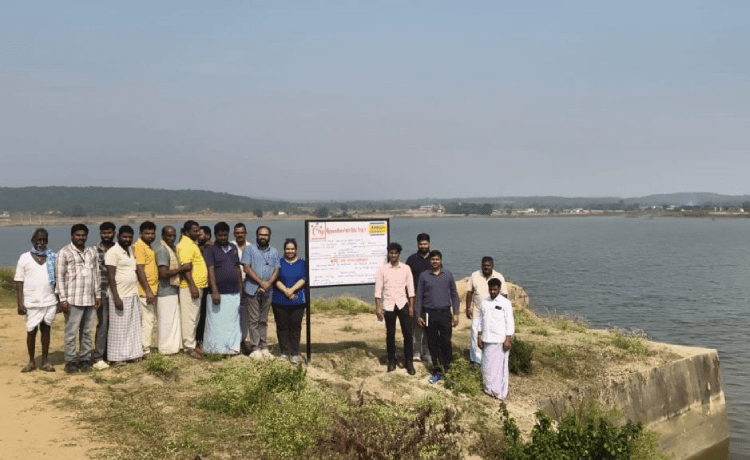
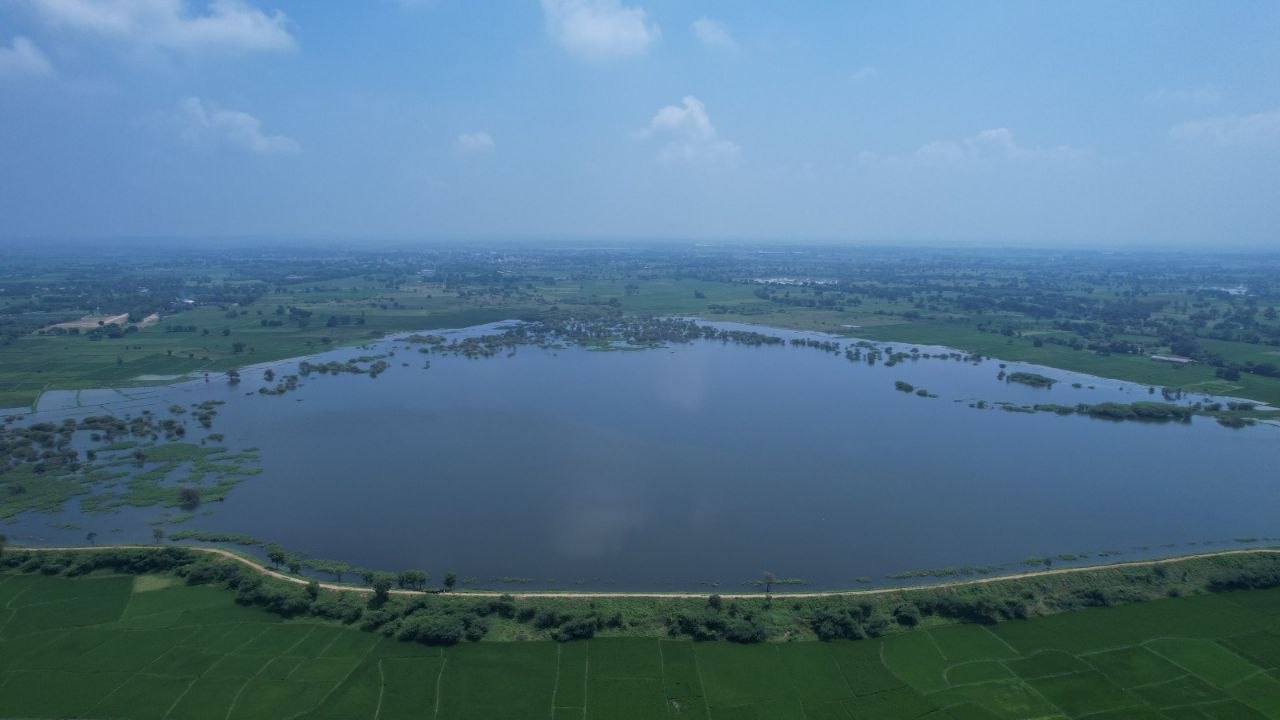
In Patancheru, traditional tanks and ponds that had lost capacity due to years of siltation are being restored in partnership with Ambuja Foundation. Over the past year, 12 water bodies across 13 villages have been rejuvenated — restoring more than 140,000 cubic metres of storage and supporting over 3,600 households.
Desilting improves not just storage but soil health, as nutrient-rich silt is reapplied to farmland. Smaller structures — check dams and bunds — slow runoff and recharge groundwater.
In Vizag, the focus includes repairing canal systems and improving water distribution alongside restoring ponds — strengthening irrigation access across farming communities.
Alongside infrastructure, farmers are supported to adopt more efficient practices such as drip irrigation, mulching, and crop diversification — in some cases reducing water use by up to 30–40 percent.
What emerges is a connected system — where storage, use, and management are addressed together.
Every Drop Counts
Infrastructure expands supply. Behaviour protects it. Across project villages, farmers are shifting from water-intensive crops toward diversified and resilient systems. Drip irrigation, mulching, and soil conservation improve output per drop, while crop cycles align more closely with seasonal availability.
The philosophy is simple. "Water is fundamental to life. Without it, neither humans nor animals can exist — it is the foundation on which life on earth depends," says Mr Sunil P.
Yet freshwater availability is shrinking even as pressures rise. Pollution is increasing. Urbanisation is accelerating. Climate volatility is intensifying — bringing drought in one season and floods in another.
"Water availability is shrinking, and it is increasingly polluted. With rapid urbanisation and climate change, CSR must move toward building climate-resilient and water-wise communities," he adds.
Efficiency, then, becomes creation. Water conserved becomes water available for another crop cycle, another livelihood, another season of stability.
Building Ownership
If water is the visible resource, community is what sustains it. "The most important resource in this process is the community. Water resources are used by the community — we are enabling greater access, awareness, and adoption of water literacy and technologies," says Mr Sunil P.
Desilting a pond is not a one-time event — it is a recurring responsibility. Government schemes/Asian Paints may provide structural support, but communities contribute labour, diesel, and machinery. Farmers transport nutrient-rich silt to their fields, improving soil fertility while restoring water bodies.
"Ownership is critical. Once communities take ownership, they maintain the water resources. This is not a one-time activity — it is not a grant, and we are not spectators," he emphasises.
What emerges is shared stewardship.
Lessons from the Past
India's relationship with water was once deeply cultural. "The people of ancient India were water-wise and actively protected water sources. Many traditions reflect this — water bodies were given the names of female deities, recognising them as life-giving," says Mr Sunil P.
Entire communities took responsibility for maintaining water bodies. Each summer, villages desilted tanks in preparation for the monsoon. Water governance was embedded in daily life.
Modernity has altered that relationship. Water now arrives through taps and tankers, distancing people from its source. Urban populations are increasingly disconnected from rivers, aquifers, and rainfall cycles.
"We need to reconnect with traditional knowledge and practices. Today, water often comes through taps or tankers, but earlier, people linked closely with water sources and understood their importance. Being water-wise must once again become a priority," he says.
The Watermark initiative, in many ways, brings these strands back together — combining scientific planning with traditional knowledge and community practice.
Over Time
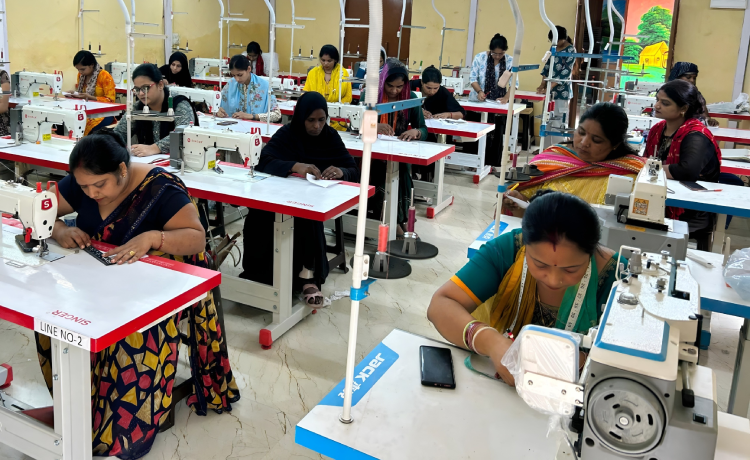
What began in 2007–08 as a replenishment goal has evolved into a systems approach to water resilience. Four hundred and sixty villages later, the results are not dramatic. They are quieter — stabilised groundwater, diversified crops, improved farm incomes, and stronger local institutions.
Water that once flowed away now lingers. It percolates. It returns. And in that return lies something larger — security for communities, resilience for landscapes, and a shared understanding that water, finite and fragile, must be managed with care.
.png)
.png)