


.png)
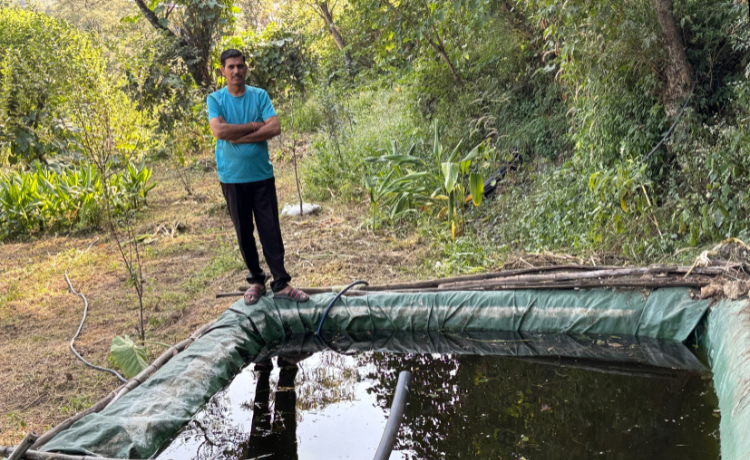
Name: Dadi Shiva
Title: Farmer & Water User Group Member
Location: Visakhapatnam District, Andhra Pradesh
As a 12-year-old boy, Dadi Shiva along with his father would sleep beside the canal regulator during irrigation season. Night after night, farmers guarded the fragile wooden planks, sandbags, and branches used to control water flow through the canal system. If the barriers shifted – or if another farmer secretly removed them during the night – water would either flood fields or bypass farms entirely. During heavy rains, farmers sometimes had to swim into the canal to remove sandbags before fields submerged.
For Shiva, these are memories of what farming once demanded just to keep water flowing.
- Reviving a Failing Irrigation System
- Bringing Reliability Back to Farming
- Reducing Conflict Around Water
- Strengthening Community Water Governance
- Restoring Confidence in Agriculture
Shiva’s story was not in isolation. Across the canal network in coastal Andhra Pradesh, many regulator structures dated back to the British era. Over time, gates corroded, structures weakened, and maintenance stopped. For nearly three decades, farmers relied on makeshift arrangements - using wooden planks, paddy stalks, sandbags, and branches simply to direct water toward their fields.
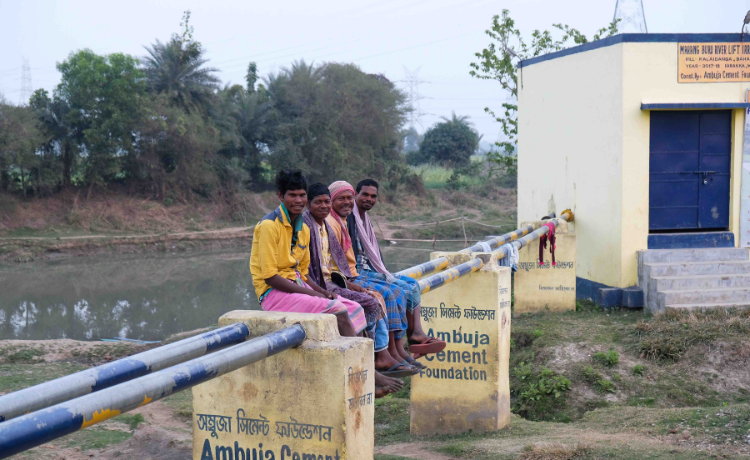
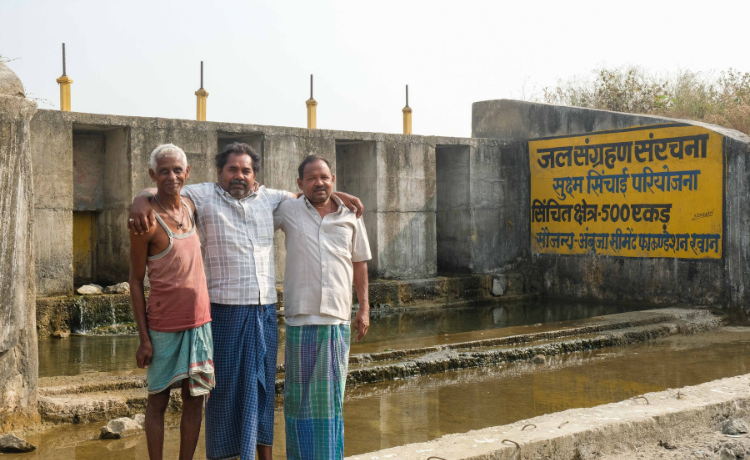
To change the narrative, Ambuja Foundation in collaboration with Asian Paints, restored damaged canal regulators, repaired side walls, and replaced temporary systems with durable iron shutter gates that could regulate water flow effectively. Across the region, 72 canal regulators and 154 iron gates have now been revived, helping restore irrigation reliability for 9,740 farming families.
Earlier, irrigation remained unpredictable. Tail-end farmers often struggled to receive water, while leakages through damaged structures wasted large quantities during critical crop periods. Families spent significant time and money manually diverting water into their fields. With functioning regulators restored, irrigation flows became reliable. Farmers who once worried constantly about whether water would arrive could now plan cultivation with greater confidence.
Water distribution had long been a source of tension between upstream and downstream farmers. During irrigation periods, disputes frequently emerged over diverted flows and damaged barriers. The restored regulator systems improved the fairness and transparency of water distribution. With stronger infrastructure and clearer management systems in place, conflicts around irrigation began reducing significantly.
The transformation extended beyond infrastructure itself. Water User Associations were strengthened, with farmers forming committees responsible for maintenance planning, water sharing, record keeping, and conflict resolution. Today, communities meet regularly, contribute toward maintenance costs, and coordinate irrigation schedules collectively.
The impact on farming has been immediate. Earlier, many farmers harvested around 18 quintals of paddy per acre due to irregular irrigation. With reliable water access restored, yields have increased to nearly 22–24 quintals per acre.
The restored canal system has changed more than water flow. For Dadi Shiva and other farmers, it has replaced years of uncertainty with something far rarer in agriculture today: the ability to finally sleep peacefully at night.