


Name: Suman & Rajveer
Title: Farmers
Location: Jhunjhunu, Rajasthan
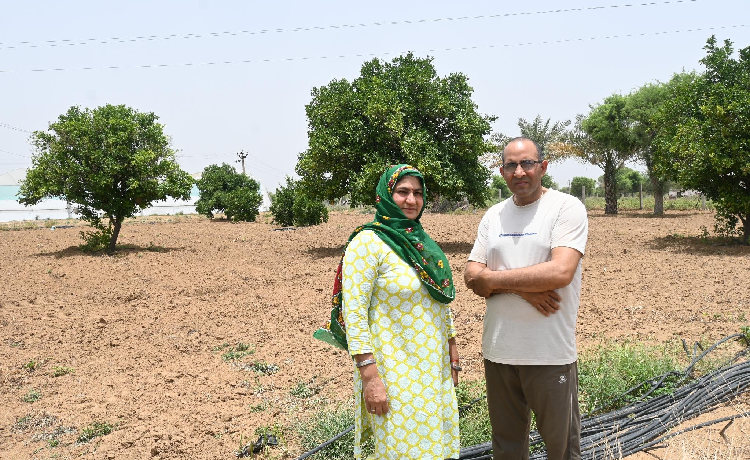
When you think of farming incomes in India, you think in thousands. Rarely in lakhs. And almost never double digits – Rs. 28 lakh a year is almost unheard of. Yet, on a small patch of land (2.7 ha) in Jhunjhunu, Rajasthan, that is exactly what Suman and her husband have built. Not through a single breakthrough—but through a series of deliberate, well-timed shifts.
- A Move Away from ‘Safe’ Crops Like most farmers around them, they once grew wheat, chickpeas, cluster beans, millet and mustard - reliable, but limiting. The turning point came with an idea that felt unfamiliar at the time: jojoba and date palm. What began cautiously is today a strong, high-value income stream, with jojoba reaching markets like Jaipur and Kolkata for oil extraction used in beauty products. Alongside this, a small kinnow orchard and ber cultivation add further diversity to their farm.
- Securing Water, Securing the Future In a groundwater-stressed region, farming is only as strong as water access. With support from Ambuja Foundation and Narotam Sekhsaria Foundation, they invested in a farm pond and drip irrigation. It changed everything, bringing predictability to what was once uncertain, and allowing them to plan beyond a single season.
- A Decade of Organic Farming Over the past ten years, the couple has steadily transitioned to certified organic farming. Preparing their own inputs (jeev amrut and other bio-inputs) they have improved soil health, reduced input costs, and built long-term resilience into their farm. The results are tangible - not just in healthier soils, but in stronger returns. Their organic watermelons, for instance, fetch nearly Rs. 20/kg, double the typical market rate, reflecting the growing value of quality produce.
- High-Value Cultivation in Small Spaces Two polyhouses, simple in design but efficient in output, support cucumber cultivation twice a year. They generate close to Rs. 15 lakh, making this small area one of the farm’s most productive assets.
- Diversifying Beyond Farming: Over time, the couple began building additional income streams beyond crop cultivation. With just a few cattle, Suman turned homemade ghee production into a small premium business. They also built a cottage on their farm and started a homestay for tourists and students from a nearby university, creating a steady supplementary income. Together, these ventures have made the farm more resilient - combining agriculture, hospitality, and small-scale enterprise side by side.
With plans to experiment with saffron, the couple continues to evolve - building steadily on each success. At the centre of it all is how they work, together. Married for 27 years, every major decision is shared, weighed, and agreed upon - a partnership they credit deeply for their success. Today, their earnings support their children’s education, healthcare, and continued investment into their land.
There is nothing dramatic about their journey at first glance - no single turning point. Just steady progress and thoughtful choices, season after season. And in that quiet consistency something powerful has emerged – a couple changing the narrative of what is possible for farmers in India.