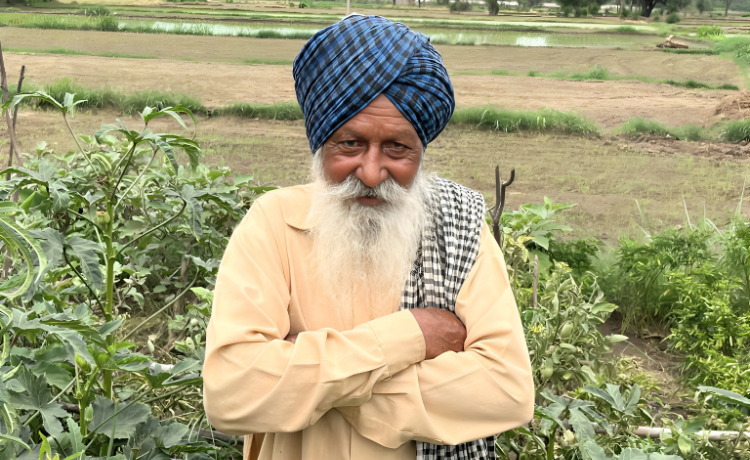
Karnail Singh, a 79-year-old farmer from Ratyour village, Solan, Himachal Pradesh, proves it’s never too late to learn and prosper! For the past 15 years, he has steadily adopted new farm practices with support from Ambuja Foundation - today earning a premium for his natural produce, which he sells direct to a restaurant, riding his bicycle!
Where he once earned just Rs. 50,000–60,000 a year from a traditional paddy–maize–wheat crop pattern, he now earns over Rs. 5,00,000 annually through vegetable cultivation, dairy, and the sale of high-quality seeds. His transformation is a testament to what consistent effort, timely guidance, and openness to change can achieve—even at 79.
1. Crop Diversification – Training and exposure visits motivated Karnail to grow vegetables like cauliflower, radish, spinach, pumpkin, and kharif onion on his one-acre land. He also began cultivating improved crop varieties, significantly boosting his output. His success showcases the benefits of adopting the right cropping pattern for higher profits and better land use.
2. Market Linkages – By selling directly to local restaurants and a factory mess, he bypasses the mandi and earns a better price. His partnership with Durga Seeds, initiated to supply him with radish seeds through Ambuja Foundation, has evolved. Impressed with his consistency in quality, Durga Seeds now procure seeds from him—making him not just a farmer, but a trusted supplier.
3. Dairy Production – Karnail strengthened his income by adding dairy to his portfolio. He now owns nine milch animals, mainly buffaloes, producing around 3,600 litres of milk annually. After meeting household needs, the surplus is sold to nearby dairy units – earning him Rs. 2,78,000 a year. The steady income from milk sales helps balance seasonal fluctuations in his crop income.
4. Natural Farming – Embracing low-input natural farming practices, he has eliminated chemical pesticides in favour of cow dung-based inputs and homemade vermicompost. This not only cut costs but also improves soil health and produce quality—helping him build a loyal customer base that values clean, chemical-free vegetables.
5. Kuhl Water Piping – With technical guidance, he harnessed nearby kuhl water more efficiently by investing in a piped irrigation system. This ensured a steady supply of water to his fields, reduced dependency on unpredictable rainfall, and made his farm more resilient to climate change—a small innovation with big results.
Karnail Singh’s journey has transformed not just his farm, but his family’s future too. With better income, he has renovated his house, bought a car, and ensured quality education for his children and nine grandchildren – something he takes immense pride in.
Looking ahead, he has invested in a residential plot in the growing town of Nalagarh and plans to buy more farmland to expand his operations.
“While I’m alive, I’ll continue my farming - until my last breath,” he says.