


India’s vocational training ecosystem has long measured success through a single metric: placement rates. Training institutes often spruik how many candidates secure jobs after completing their courses, and partners often use these figures as the primary indicator of success. But those working closely within the skilling ecosystem know that this metric tells only part of the story.
The real challenge begins after the job offer is accepted.
In many cases, “placement” simply means that a candidate has accepted a job offer. For partners and employers, however, the benchmark of success is whether that candidate stays in the job for at least three to six months. That period becomes the real test of the training ecosystem.
In other words, the issue is not placement. It is retention.
“This is a tricky situation in more ways than one,” says Ravindra Nayse, Chief Operating Officer of Ambuja Foundation’s Skill Development Program. “We have to understand the ecosystem from where these youth come from. Many times, they are first-generation learners, unexposed to the world outside their village and away from immediate family and community. This is where retention becomes difficult.”
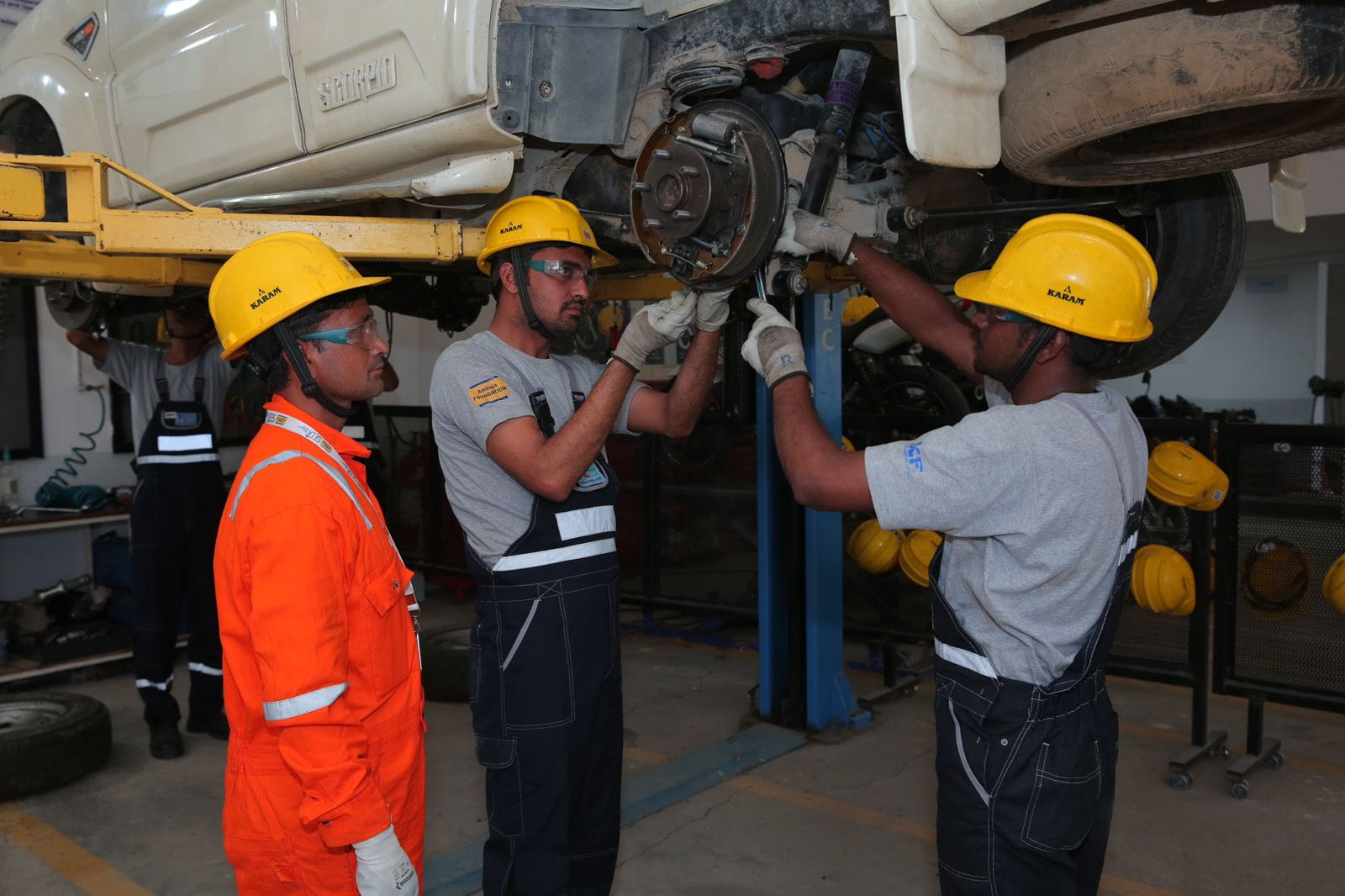
When the Reality of Work Sets In
For many young people entering the workforce through vocational training, securing their first job is a moment of excitement and pride. But once the initial euphoria fades, the reality of adjusting to a new environment can be overwhelming.
Jobs are often located far from home. Young workers must adapt to unfamiliar workplaces, rigid shift timings, safety protocols, and shared accommodation. For those who have rarely left their villages before, these changes can be daunting.
“The first few months could be a struggle,” explains Nayse. “New location, a work ethic with rigid shift timings, rules and regulations, safety culture and shared living space. Also, some find it hard to emotionally connect—making friends, dealing with new colleagues can be daunting.”
While some candidates gradually adjust and build successful careers, others struggle with homesickness, illness, financial pressures, or simply the emotional strain of living far from their support systems.
The first month itself can be particularly challenging. Settling into a new city often requires upfront expenses for accommodation, food, and transport—costs that employers rarely cover.

When Placement Numbers Mislead
These realities reveal a deeper problem in how success is measured in vocational training.
Once a candidate accepts a job, partners typically require documentation such as offer letters and salary slips as proof of placement. Yet employment opportunities available to rural youth are often within the unorganised or semi-organised sector, where such documentation may not always exist.
“This is an issue,” says Nayse. “The ecosystem of providing employment is not always very organised and not in control of a training institute.”
Many trainees also prefer local employment in their communities, where documentation practices are informal. In such situations, training organisations may struggle to produce the paperwork required to validate placements—even when candidates are working.
Career pathways are also rarely linear. Some candidates leave their first job after a few months but move into another role, shift sectors, or begin small independent ventures.
“Sometimes a candidate may leave a job and start working in a different field or even start an independent venture,” Nayse explains. “Partners are reluctant to consider self-employment as placement because there is no salary slip or income proof.”
As a result, placement numbers can sometimes become misleading indicators of real livelihood outcomes.

Employers and the Retention Challenge
Retention is also shaped by how industries engage with trained candidates.
Many employers recruit through third-party labour contractors who supply large pools of workers with minimal screening. Companies often hire far more workers than required, anticipating that a significant number will leave over time.
“More than twice the number are selected because employers are aware that around half will anyway quit sooner or later,” says Nayse.
This approach reduces incentives to invest in worker retention. Even candidates who have completed structured vocational training are frequently treated no differently from unskilled recruits, receiving similar entry-level wages and little recognition of their training.
At the same time, industries often assume new recruits will need to be trained after joining, overlooking the skills already developed through vocational programs.

Supporting Graduates Beyond Placement
Recognising that retention challenges extend far beyond the classroom, Ambuja Foundation’s SEDI has increasingly focused on supporting students long after they enter the workforce.
“Many trainees are leaving their villages for the first time and stepping into unfamiliar urban environments. Helping them navigate this transition is critical to ensuring they remain in their jobs.” Ravindra said.
SEDI provides mentoring and counselling before and after placement, helping students understand workplace expectations and prepare emotionally for relocation. Group placements are often encouraged so trainees move to new cities together, easing the transition and reducing feelings of isolation.
Accommodation also plays a role. In some locations, hostel facilities and shared living arrangements help students settle into their new environments during the early months of employment.
The institute also maintains active alumni networks, allowing former students to stay connected with each other and with trainers. These networks create informal support systems where graduates can seek advice, share experiences, and encourage peers facing similar challenges.
Mentoring, counselling, peer support, and alumni engagement may appear simple interventions, but they address some of the most common reasons young workers leave their first jobs: loneliness, uncertainty, and difficulty adjusting to new surroundings.
The Last Line of Skilling
Ultimately, vocational training should not be judged solely by how many young people secure their first job. The true measure of success lies in whether they are able to build stable careers and livelihoods.
Retention stabilises incomes, strengthens confidence, and creates lasting change for families, households and communities.
“At the end of the day,” says Nayse, “retention stabilises not just the individual but also the family and the community at large, in the long run.”
If India’s skilling ecosystem is to deliver meaningful impact, it must look beyond placement numbers and focus on the final mile—the ability of young people to stay, grow, and thrive in the world of work.