


October 27, 2021

Fostering 'Enterprises' in the Rural Economy

In an economy as large as India, 95% of the industrial units in the country consist of small businesses which churn out 40% of total industrial output. Again, small businesses bag around 45% of the total exports from India, and after agriculture, small business is the second largest employment provider in the Indian economy.


However, where small enterprises in countries like Taiwan and China contribute to 85% and 60% of the GDP respectively, in India the contribution is a mere 17%. There is clearly a profitability gap that needs addressing – particularly in rural India where rural entrepreneurs are so vital to the local economy.


India has a widespread culture of entrepreneurship, with the Indian entrepreneurial spirit rising remarkably in recent years. India is the third fastest growing ‘startup’ country in the world - just after the US and the UK.


So what needs to be done to help foster greater success and profitability in our many budding entrepreneurs?


Fostering Entrepreneurship Development at SEDI


To help develop entrepreneurs at the grassroots level, and equip them with the skills necessary for success, Ambuja Foundation’s SEDI has been nurturing entrepreneurs since inception, and last year formally launched its Enterprise Development Program.


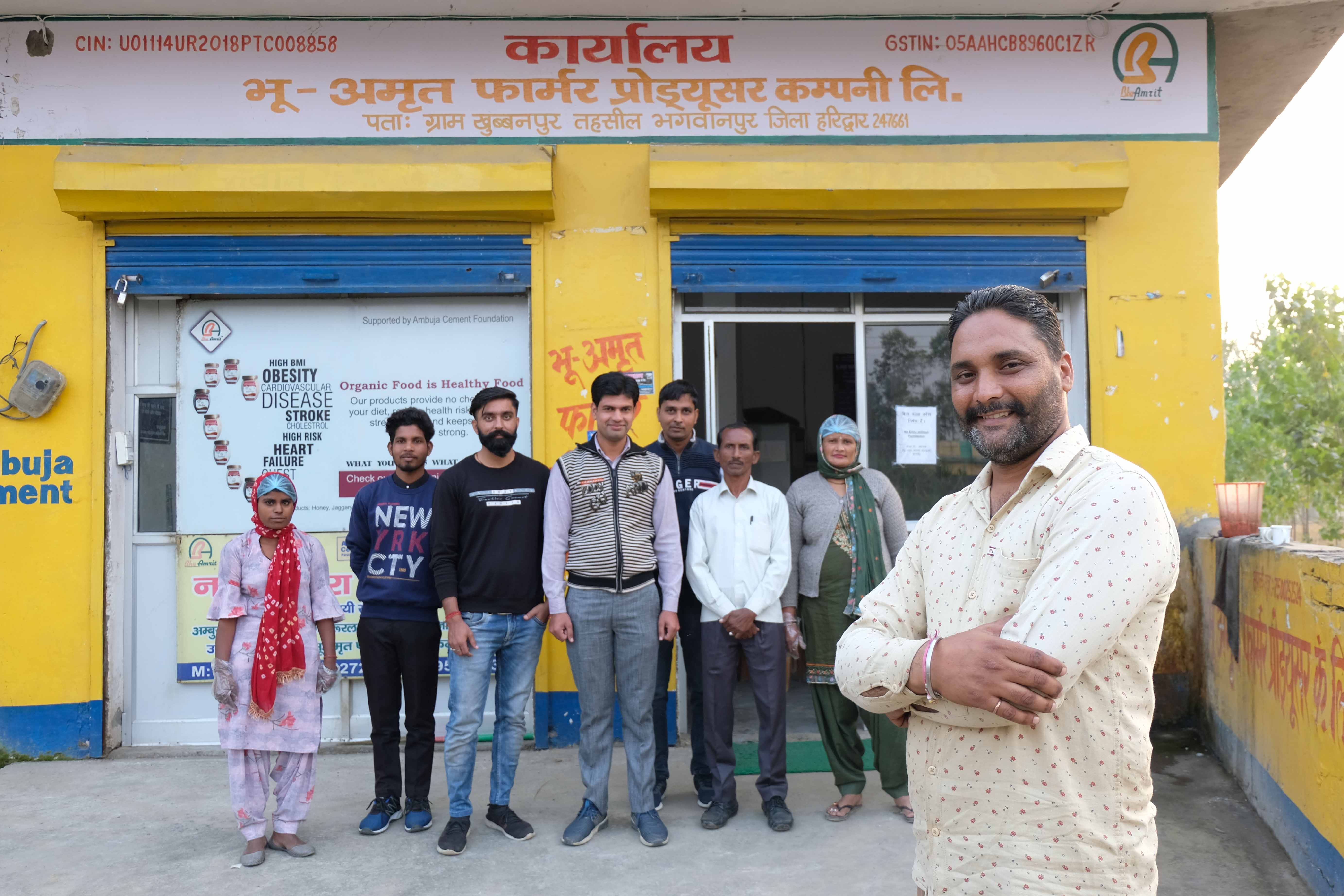
Since its establishment, SEDI has adopted courses with the potential for self-employment and enterprise development and the continued efforts in promoting self-employment amongst SEDI graduates has resulted in 404 businesses being established till date.


Small businesses contribute to local economies by bringing growth and innovation to the community in which the business is established, and also help stimulate economic growth by providing employment opportunities to local people. It is integral for a flourishing rural economy.


However, many challenges present major roadblocks in establishing these businesses as local employment providers, or in scaling them up. Poor credit worthiness, unavailability of skilled manpower, and a lack of marketing and managerial expertise are hurdles rural entrepreneurs must jump.


To help entrepreneurs better tackle these challenges, SEDI took the advice of many leading organisations working in this field, and incorporated a number of changes to the Enterprise Development Program, including:


• Youth with potential entrepreneur’s mind-set are now identified during the mobilization process itself. They are either existing entrepreneurs with a small business but struggling to stabilise and scale, or those with an inclination to start their own enterprise.

• After a process of counselling and motivation they are taken through a short EDP course which culminates in the development of the business idea and a sketch of the business plan.

• Financial institutions are roped in early on to establish the credibility of the entrepreneurs and to help support securing a business loan in the future. This is a time-consuming process as some of the enterprises have never transacted with banks in the past. The financial analysis of the business is verified at various levels and the investment and interest of the individual is mapped to ascertain his/her capacity to handle crisis situations.

• Business proposals are vetted thoroughly by mentors in similar industries to guide the entrepreneurs in commencing their entrepreneurial journey.

• Licensing, registration of PAN, GST, Shop Act, and other legal formalities are also facilitated.

uploaded picture


Looking Forward


At Ambuja Foundation we believe entrepreneurship will be a key driver of rural prosperity in the future. In order to foster and spur entrepreneurship at a grassroots level, SEDI hopes to hone its program further by bringing on board in-house expertise to facilitate small business project proposals, financial analysis, business plan, and branding and marketing, among other things.


We also hope to develop production clusters for small enterprises producing the same goods. In this way, bargaining power is increased as the cluster helps in dealing with larger volumes. Similarly there is scope to develop community organizations like producer companies, federations, and entrepreneurial groups to support rural entrepreneurs in scaling their businesses.


Small and micro enterprises are great contributors to the local economy and help in addressing unemployment. However start-ups have a very high risk of failure. By providing the necessary skills, and support to first time entrepreneurs, we can optimise their chance of success. Similarly, repeat entrepreneurs deserve opportunity for a ‘second chance’ so that they can learn, and mature from, their failures.
uploaded picture

- Authored by Ravi Nayse, Vice President, Skill & Entrepreneurship

Tags: Skills
October 27, 2021

RELATED POSTS
  • Girls as Breadwinners!
    July 06, 2017
    Its World Skills Day this month and to celebrate, we applaud the power of women as family bread-winners and earners.
  • Ambuja Foundation Fosters Collaboration with ‘Skill India, Kolkata’
    October 08, 2017
    To strengthen and foster collaborations for skill development, Ambuja Foundation organised the event 'Skill India - Enhancing Capabilities, Empowering Lives' on 15th September in Kolkata. This was a closed group meeting that aimed to provide a platform for various organisations to share their experiences in skilling, explore synergies and discuss opportunities and challenges.
  • First Vocational Centre for Differently-abled!
    October 08, 2017
    Ambuja Foundation recently joined hands with Cipla Foundation to launch its first vocational training centre for the differently-abled at Ambuja Manovikas Kendra in Ropar, Punjab.
  • 3 New SEDI Centres Launched
    April 30, 2018
    Ambuja Foundation recently launched three new skill training centres in Gujarat and Uttarakhand - taking the total number of SEDI to 27. The newly launched centres are in Rajula (Gujarat), Roorkee (Uttarakhand) and Haridwar (Uttarakhand).
  • Studying By Day, Stitching By Night - How Taufique Ahmed Battled the Odds to Secure a Better Future
    July 23, 2018
    On 7th July 2018, the honourable Prime Minister of India, Shri Narendra Modi, visited Rajasthan to seek feedback from around 2.5 lakh beneficiaries of various central and state-run public welfare schemes under the 'Pradhan Mantri Jansanwad' programme.
An Opportunity to Support
SUBSCRIBE TO OUR NEWSLETTER & BLOGS
Stay updated on the latest insights from Ambuja Foundation.
GET CONNECTED

Fostering 'Enterprises' in the Rural Economy

In an economy as large as India, 95% of the industrial units in the country consist of small businesses which churn out 40% of total industrial output. Again, small businesses bag around 45% of the total exports from India, and after agriculture, small business is the second largest employment provider in the Indian economy.


However, where small enterprises in countries like Taiwan and China contribute to 85% and 60% of the GDP respectively, in India the contribution is a mere 17%. There is clearly a profitability gap that needs addressing – particularly in rural India where rural entrepreneurs are so vital to the local economy.


India has a widespread culture of entrepreneurship, with the Indian entrepreneurial spirit rising remarkably in recent years. India is the third fastest growing ‘startup’ country in the world - just after the US and the UK.


So what needs to be done to help foster greater success and profitability in our many budding entrepreneurs?


Fostering Entrepreneurship Development at SEDI


To help develop entrepreneurs at the grassroots level, and equip them with the skills necessary for success, Ambuja Foundation’s SEDI has been nurturing entrepreneurs since inception, and last year formally launched its Enterprise Development Program.


Since its establishment, SEDI has adopted courses with the potential for self-employment and enterprise development and the continued efforts in promoting self-employment amongst SEDI graduates has resulted in 404 businesses being established till date.


Small businesses contribute to local economies by bringing growth and innovation to the community in which the business is established, and also help stimulate economic growth by providing employment opportunities to local people. It is integral for a flourishing rural economy.


However, many challenges present major roadblocks in establishing these businesses as local employment providers, or in scaling them up. Poor credit worthiness, unavailability of skilled manpower, and a lack of marketing and managerial expertise are hurdles rural entrepreneurs must jump.


To help entrepreneurs better tackle these challenges, SEDI took the advice of many leading organisations working in this field, and incorporated a number of changes to the Enterprise Development Program, including:


• Youth with potential entrepreneur’s mind-set are now identified during the mobilization process itself. They are either existing entrepreneurs with a small business but struggling to stabilise and scale, or those with an inclination to start their own enterprise.

• After a process of counselling and motivation they are taken through a short EDP course which culminates in the development of the business idea and a sketch of the business plan.

• Financial institutions are roped in early on to establish the credibility of the entrepreneurs and to help support securing a business loan in the future. This is a time-consuming process as some of the enterprises have never transacted with banks in the past. The financial analysis of the business is verified at various levels and the investment and interest of the individual is mapped to ascertain his/her capacity to handle crisis situations.

• Business proposals are vetted thoroughly by mentors in similar industries to guide the entrepreneurs in commencing their entrepreneurial journey.

• Licensing, registration of PAN, GST, Shop Act, and other legal formalities are also facilitated.


uploaded picture


Looking Forward


At Ambuja Foundation we believe entrepreneurship will be a key driver of rural prosperity in the future. In order to foster and spur entrepreneurship at a grassroots level, SEDI hopes to hone its program further by bringing on board in-house expertise to facilitate small business project proposals, financial analysis, business plan, and branding and marketing, among other things.


We also hope to develop production clusters for small enterprises producing the same goods. In this way, bargaining power is increased as the cluster helps in dealing with larger volumes. Similarly there is scope to develop community organizations like producer companies, federations, and entrepreneurial groups to support rural entrepreneurs in scaling their businesses.


Small and micro enterprises are great contributors to the local economy and help in addressing unemployment. However start-ups have a very high risk of failure. By providing the necessary skills, and support to first time entrepreneurs, we can optimise their chance of success. Similarly, repeat entrepreneurs deserve opportunity for a ‘second chance’ so that they can learn, and mature from, their failures.

uploaded picture

- Authored by Ravi Nayse, Vice President, Skill & Entrepreneurship

LinkedIn Post
Ambuja Foundation