


When you visit a village in Rajasthan, you are bound to find a 'talab' close by - a village water pond that supplies water for drinking, domestic and livestock purposes. One of the most ancient and traditional structures for rainwater harvesting in the dry desert state, it is estimated that there are about 83,000 talabs in Rajasthan.
But the changing social milieu has meant that many of these water bodies have fallen into disrepair - due to improper maintenance and the advent of modern forms of water supply. Across communities, talabs seep water, have become polluted and are full of silt - reducing the quality and volume of water available.
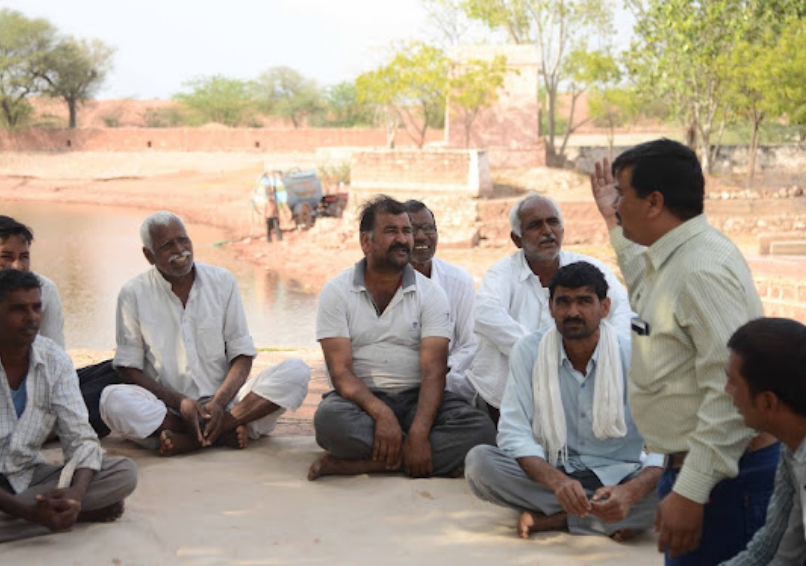
In 2003-04, Ambuja Foundation decided to revive 4 talabs in Rabriyawas but knew, that in order to make the project sustainable for the future, they must involve the local community - to ensure they embrace and manage each talab for future generations. They got to work mobilizing the communities of Balada and Lakholav - Ambuja Foundation outlining their commitment to supply machinery for the de-silting of ponds, whilst outlining the need for the huge manpower and transportation required for the removal of silt soil from the site, to be provided by the community.
Whilst there was initial push back, Ambuja Foundation took the time to explain the benefits to them - the soil was high in nutrients and provided a great resource to add top soil to farmer fields and build farm bunds to trap and channel water.
So, hand in hand, they got to work. Ambuja Foundation deployed machinery for pond excavation, shaping and de-silting, whilst women and men rolled up their sleeves - bringing in tractors from fields to shift the huge quantum of soil to nearby paddocks.
Together they revived the talabs, resulting in an additional 10,880 m³ water storage capacity in Balada, and 3,626 m³ additional water storage capacity in Lakholav. And the ripple effect in the community was unbelievable ...
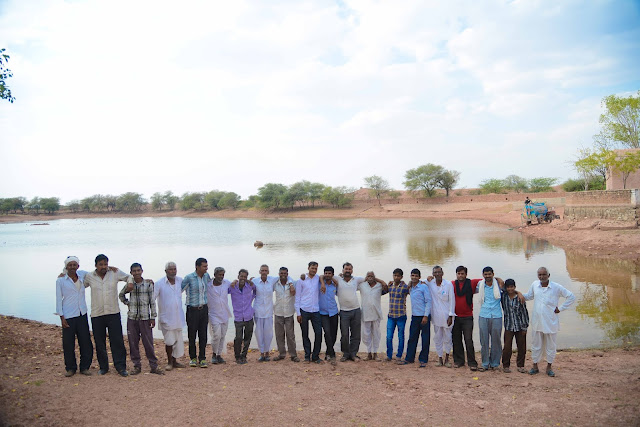
Farmers were able to bring 120 acres more land under cultivation, wells in the surrounding area were recharged, and soil fertility improved. There was a 66% decrease in dependency on piped water and 57% decrease in tanker water. Expenditure on water reduced 67% in Lakholav and 14% in Balada, and expenditure on health reduced by 22% (Balada) and 47% (Lakholav).
And the best part? By getting community buy-in in the beginning, Ambuja Foundation ensured that the community would take responsibility for protecting the resource for the future.