


February 03, 2024

Grassroots Approach Required to Catch Breast Cancer Early

Breast cancer is the most common cancer among women globally - also topping the list of cancers among women in India. However in rural India, women barely know about breast cancer, fear examination and have to defend a host of social and cultural taboos - leading to delayed detection, and a higher risk of mortality.


Sadly in India, nearly 60% of Breast Cancer cases are diagnosed at stage III or IV of the disease, with most patients turning up at healthcare facilities only when the disease has advanced or there are visible changes to the skin. A general lack of awareness about the disease - especially in rural areas – is largely to blame. And the lack of quality care, and access to affordable treatment, compound the issue.


With a chasm in shortage of manpower and facilities, experiments done by grassroots organizations to educate community women and health workers about the disease, and techniques for self and clinical examination, provide a glimmer of hope, and could be the key to tackling this pressing problem. India has just over 2000 oncologists for 10 million patients, and the number of oncologists unevenly favours metropolitan areas. Although nearly 70% of the Indian population live in rural areas, about 95% of facilities for cancer treatment exist in the urban areas of the country.


The answer therefore lies in empowering rural women, and community health workers with the relevant knowledge and skills to catch the disease early in its tracks. Community mobilisation on this issue, with the engagement of local health systems and local government, can go a long way in rolling out a comprehensive cancer screening strategy across India’s rural and remote communities.


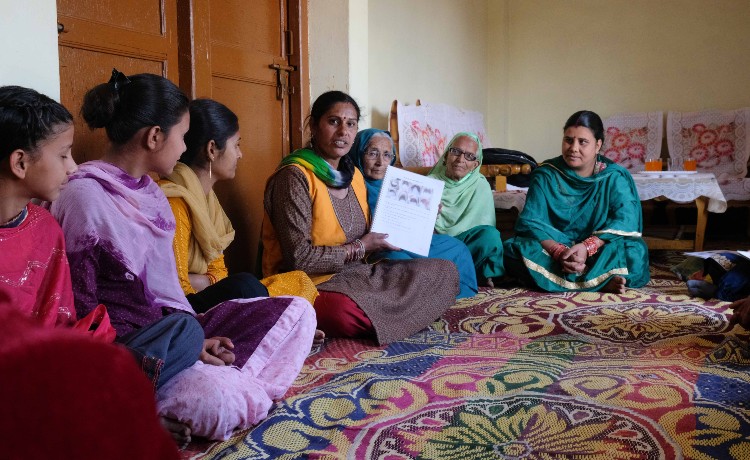
By taking on responsibilities like awareness-raising, conducting clinical breast examinations, teaching self-examination skills, making referrals and supporting patients as they subsequently navigate treatment, community health workers could fill the vast void across remote rural areas when it comes to breast cancer screening.


Since mammography screening is simply not feasible in many rural settings, low-cost screening approaches like breast self-examination and clinical breast examination, have an important role to play. Used in combination with advocacy and awareness campaigns to promote early detection of breast cancer, this approach could provide the tipping point rural India so desperately needs to turn the tide on Breast Cancer.


However, building grassroots workers alone is not enough. There is also a desperate need to simultaneously make local healthcare facilities available for further diagnosis and treatment, through private partnerships. There is also a need to promote insurance schemes that cover the cost of high level treatments, and to ensure that as advanced treatments are made available in urban India, so too should they be made available in rural India via government hospitals.


Clearly there is much work to be done, particularly in a complex country like India, where cancer is growing disproportionately.


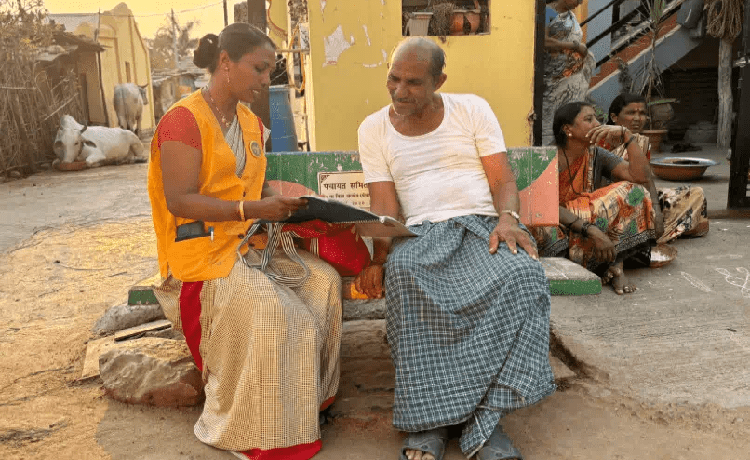
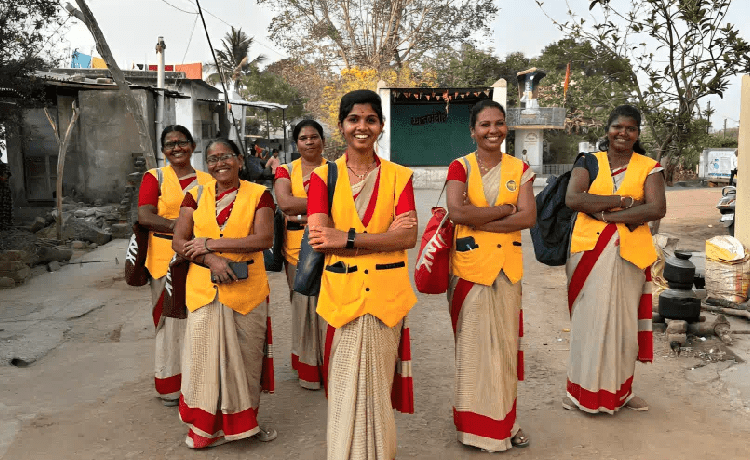
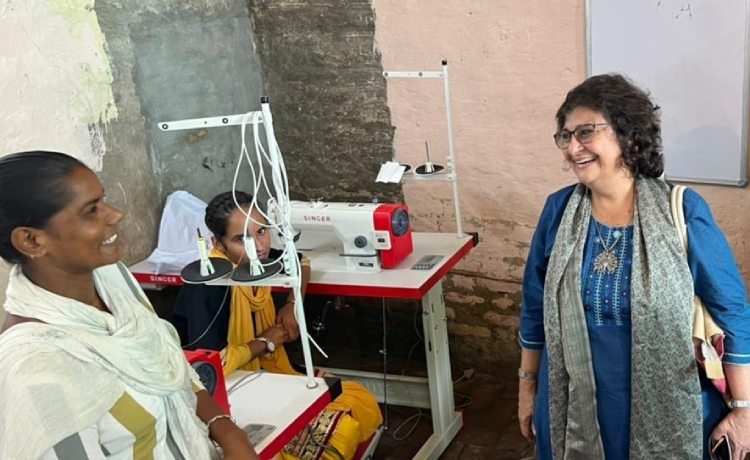
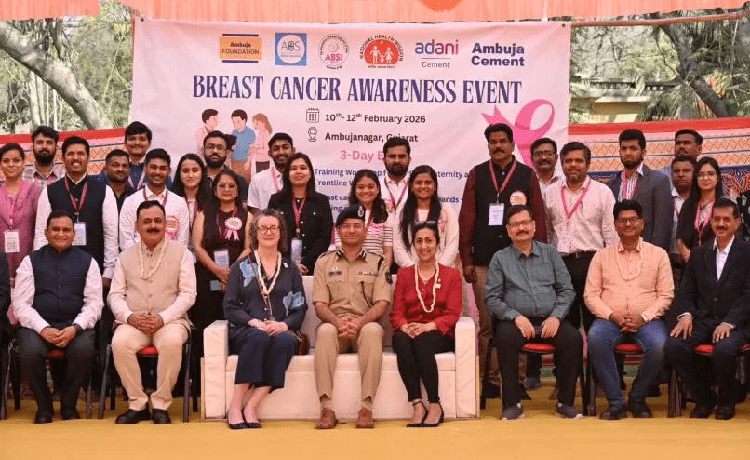
Last year, Ambuja Foundation along with Association of Breast Surgery, UK (ABS) and its counterpart Association of Breast Surgeons in India (ABSI) and Tata Cancer Care Program, Chandrapur, introduced Continuous Medical Education specific training on Cancer Awareness in the rural communities of Chandrapur, Maharashtra. This has continued into awareness creation and follow-ups in communities with our Sakhis driving the intervention, organizing cancer screening camps along with the local health centres and also assisting prospect patients to hospitals and treatment.


Sources:


https://www.ncbi.nlm.nih.gov/pmc/articles/PMC8966510/


https://www.ncbi.nlm.nih.gov/pmc/articles/PMC8966510/#:~:text=In%20India%2C%20nearly%2060%25%20of,chest%20wall%20changes%20are%20visible
February 03, 2024

RELATED POSTS
  • Farmers Prosper in Thach, Darlaghat
    February 13, 2017
    Farmers in Thach Village have seen an increase in annual income of between Rs. 20,000-50,000, thanks to the construction of a 52500 litre capacity water storage tank for collection of natural water, along with irrigation channels - benefiting 12 households and 1.5 hac of land.
  • Humans of Ambuja - Veerpal Kaur
    October 08, 2017
    My mother married me off just before I was to appear for my tenth grade exams. And marriage was more of a shock than a joyful experience for me.
  • Humans of Ambuja - Ogadhbhai Dodiya
    January 04, 2018
    Today, Oghadbai K Dodiya is an important person in his village. Not only is he a forester in the Government Forest Department, but he gained additional trust and reputation when he helped solve the drinking water crisis in Dhamlej - his village.
  • Platform to Boost Sustainable Production & Market Linkages
    January 04, 2018
    In order to promote partnerships and collaboration, Ambuja Foundation has been creating platforms for brainstorming ideas and devising solutions to realise rural prosperity. One such event was a participatory dialogue '<b>Creating Synergies on Sustainable Production and Marketing Linkages</b>' held in New Delhi on 23<sup>rd</sup> November 2017.
  • Converting 'Waste' into Livelihood - Biomass Innovation Applauded!
    July 23, 2018
    Ambuja Foundation Chandrapur has been recognized for its innovative 'biomass' initiative which helps generate an alternative source of income for farmers by utilizing agricultural waste (such as cotton stalk) as fuel for industrial usage.
An Opportunity to Support
SUBSCRIBE TO OUR NEWSLETTER & BLOGS
Stay updated on the latest insights from Ambuja Cement Foundation.
GET CONNECTED

Grassroots Approach Required to Catch Breast Cancer Early

Breast cancer is the most common cancer among women globally - also topping the list of cancers among women in India. However in rural India, women barely know about breast cancer, fear examination and have to defend a host of social and cultural taboos - leading to delayed detection, and a higher risk of mortality.


Sadly in India, nearly 60% of Breast Cancer cases are diagnosed at stage III or IV of the disease, with most patients turning up at healthcare facilities only when the disease has advanced or there are visible changes to the skin. A general lack of awareness about the disease - especially in rural areas – is largely to blame. And the lack of quality care, and access to affordable treatment, compound the issue.


With a chasm in shortage of manpower and facilities, experiments done by grassroots organizations to educate community women and health workers about the disease, and techniques for self and clinical examination, provide a glimmer of hope, and could be the key to tackling this pressing problem. India has just over 2000 oncologists for 10 million patients, and the number of oncologists unevenly favours metropolitan areas. Although nearly 70% of the Indian population live in rural areas, about 95% of facilities for cancer treatment exist in the urban areas of the country.


The answer therefore lies in empowering rural women, and community health workers with the relevant knowledge and skills to catch the disease early in its tracks. Community mobilisation on this issue, with the engagement of local health systems and local government, can go a long way in rolling out a comprehensive cancer screening strategy across India’s rural and remote communities.


By taking on responsibilities like awareness-raising, conducting clinical breast examinations, teaching self-examination skills, making referrals and supporting patients as they subsequently navigate treatment, community health workers could fill the vast void across remote rural areas when it comes to breast cancer screening.


Since mammography screening is simply not feasible in many rural settings, low-cost screening approaches like breast self-examination and clinical breast examination, have an important role to play. Used in combination with advocacy and awareness campaigns to promote early detection of breast cancer, this approach could provide the tipping point rural India so desperately needs to turn the tide on Breast Cancer.


However, building grassroots workers alone is not enough. There is also a desperate need to simultaneously make local healthcare facilities available for further diagnosis and treatment, through private partnerships. There is also a need to promote insurance schemes that cover the cost of high level treatments, and to ensure that as advanced treatments are made available in urban India, so too should they be made available in rural India via government hospitals.


Clearly there is much work to be done, particularly in a complex country like India, where cancer is growing disproportionately.


Last year, Ambuja Foundation along with Association of Breast Surgery, UK (ABS) and its counterpart Association of Breast Surgeons in India (ABSI) and Tata Cancer Care Program, Chandrapur, introduced Continuous Medical Education specific training on Cancer Awareness in the rural communities of Chandrapur, Maharashtra. This has continued into awareness creation and follow-ups in communities with our Sakhis driving the intervention, organizing cancer screening camps along with the local health centres and also assisting prospect patients to hospitals and treatment.


Sources:


https://www.ncbi.nlm.nih.gov/pmc/articles/PMC8966510/


https://www.ncbi.nlm.nih.gov/pmc/articles/PMC8966510/#:~:text=In%20India%2C%20nearly%2060%25%20of,chest%20wall%20changes%20are%20visible
LinkedIn Post
Ambuja Foundation