


NABARD has played a critical role in promoting people's institutions across India as a key tool for sustainable rural development, and was the first to promote the concept of the Self Help Groups in India in the 1980's.
With over 35 collaborative projects together, NABARD and Ambuja Foundation have been working hand in hand to bring change in rural communities by harnessing the power of people's institutions, otherwise known as community based organizations (CBOs).
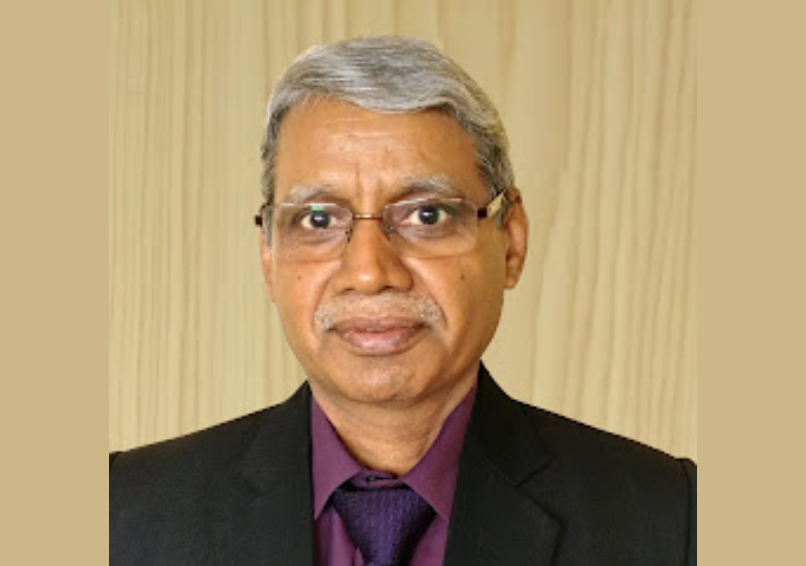
Ambuja Foundation's Thrive spoke to Mr Ranbir Singh, Chief General Manager NABARD (Regional Office, Shimla) about the role of the community in such projects.
"All our programs at NABARD are based on participatory development, relying essentially on CBOs for community participation, and implementing partners like Ambuja Foundation help to guide and facilitate the process." Mr Singh said.
Participatory Watershed Development has proved to be one such successful community based initiative in enhancing agricultural productivity and improving the livelihood security of rural communities - one that relies on a strong people's institution for its long term success. NABARD has been a pioneer in this space, implementing watershed development projects since the inception of Indo German Watershed Development Programme (IGWDP) in the 1990s.
Ambuja Foundation began working with NABARD on Watershed Development Projects in Himachal Pradesh in 2007 (3 projects completed and 4 currently ongoing) and the success of this longstanding partnership can be attributed to the proactive role played by all the agencies involved.
According to Mr Singh, "Watershed challenges are unique to a geography; hence such projects necessitate a participatory approach involving all concerned, i.e. the village watershed community, implementing agencies such as Ambuja Foundation and technical support organizations - as integrated watershed development involves a variety of skills, disciplines and competencies."
"An organization such as Ambuja Foundation is needed to play the role of catalyst, to bring about the transformation envisaged in the Watershed program, but it is the community coming together to drive it, which is the true indicator of sustainability."
But forming and sustaining successful CBOs is no easy task, and according to Mr Singh, the most challenging phase of participatory development projects, is the inception phase.
"At the project inception stage in Himachal Pradesh, we faced numerous challenges - mainly in convincing the community to accept their role in their development. CBOs rely heavily on voluntary contributions for labour, material and mobilizing people to volunteer their 'shramdaan' for project implementation - which is extremely difficult." he said.
"The village watershed committees lacked financial skills and the ability to work together as a group and there were numerous other such challenges. Our implementing partner Ambuja Foundation, was able to sort out all these issues through their capacity building efforts, fortunately" He recalls.
NABARD on its part ensured smooth and continuous flow of funds along with the convergence of Government (Central & State) schemes, knowledge sharing and provision of technical training on numerous aspects of the project. In Himachal Pradesh in particular, soil erosion and low moisture retention proved to be very testing challenges. NABARD delegated its technical experts to find appropriate solutions to tackle these issues, also providing training through its regional offices to the project implementation staff of Ambuja Foundation.
But by working together, collaboratively, with each stakeholder pooling their skills, the Watershed project in Himachal Pradesh, along with many others, was a success! The watershed areas under these projects have been transformed as evidenced by a Social Return on Investment (SROI) Study conducted in 2017. The social return was calculated as 1:8.44 i.e every rupee invested in these watershed projects, has generated a social return of Rs 8.44.
.png)