


Working on the ground in remote areas of Himachal Pradesh presents a variety of unique challenges for on-ground implementation teams. To understand these challenges and how Ambuja Foundation overcame them, Thrive spoke to Sanjay Sharma, Area Program Manager Ambuja Foundation, to gain insights into what it took to reach out to a population of over 65,000 people sprinkled across this rugged terrain.
"In HP we are working in 2 locations - Darlaghat which is 40km from Shimla and Nalagarh, 1.5hours from Punjab/Chandigarh." Sanjay said. "Darlaghat is a totally hilly terrain and Nalagarh has some sub-mountain area due to being the border area of Punjab. But there were more challenges at Darlaghat due to a mountaineous terrain."
1. Topography & Engaging People in Isolated, Remote Villages
When you visit this area the complexity that this hilly terrain presents hits you hard, as you see a nearby village, and then spend hours wending and winding your way up and down hills, to reach it. The problem was accessing villages and spending quality time there due to their isolation.
"We had a full-fledged team in both locations but there were not enough people to provide services to the remote villages - so we identified local volunteers in each village who have been trained." He said.
"Every program has volunteers in the villages. For example, for Agriculture we have a team of 2 members and that is not sufficient manpower to approach 50-60 villages in faraway places where it takes a long time to reach. So we trained 43 Agri Extension Volunteers to help us in our work there."
"We have also set up committees in each community - we tap into the power of the village institutions, reaching the entire community via these groups and volunteers. It becomes much easier for us to provide community activities that impact everyone."
"We also tackled this by involving people in every activity. We were a small team and we found that by involving a variety of stakeholders (women, farmers, youth etc.) and getting them involved in the actual work, we could sustain these programs.
"We said to them - 'Your participation is necessary. We can do some of these works though contractors but it will not last and sustain!' They agreed and today all the work is sustained by people's / village institutions where they have their ownership of these activities. Even infrastructure works are being done by the people and these institutions."
"To get this participation we worked very hard. There were so many challenges in the meetings with people exclaiming: 'But how can we do such works? We have no capacity? We have no training.' So we did all that - built their capacity, trained them, guided them … and they got to work." He said. "Today, any work in the villages is their own work - Ambuja Foundation is just supporting them."
2. Identification of 'Actual' Needs
"When Ambuja Cements set up its plant in early 90's, villagers met with local Ambuja Cement Officials and expressed their needs. The demand was mainly for infrastructure works such as construction of community centre, roads, drains among other things." He said.
"This was a demand driven approach and not an actual 'need' based approach. Whilst there was merit in some of those early projects, we soon realized that this way of working was not effective, sustainable or efficient," he said. "Ambuja Foundation came into the picture and we had a clear road map of how to provide and start community activities in these remote villages."
The starting point was a Participatory Rural Appraisal where we came to know about their actual basic needs (beyond infrastructure) - like the need for skill development, ways to make agriculture more profitable, issues with accessing health services and lack of water in the region.
3. Involvement of Women
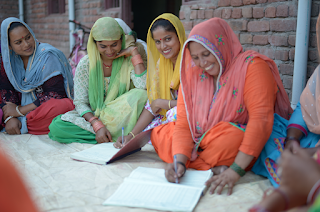
"The empowerment of women was a big challenge. In this hilly area, women were very much 'behind' men and they have less say in their family and restrictions about leaving the home," Sanjay said.
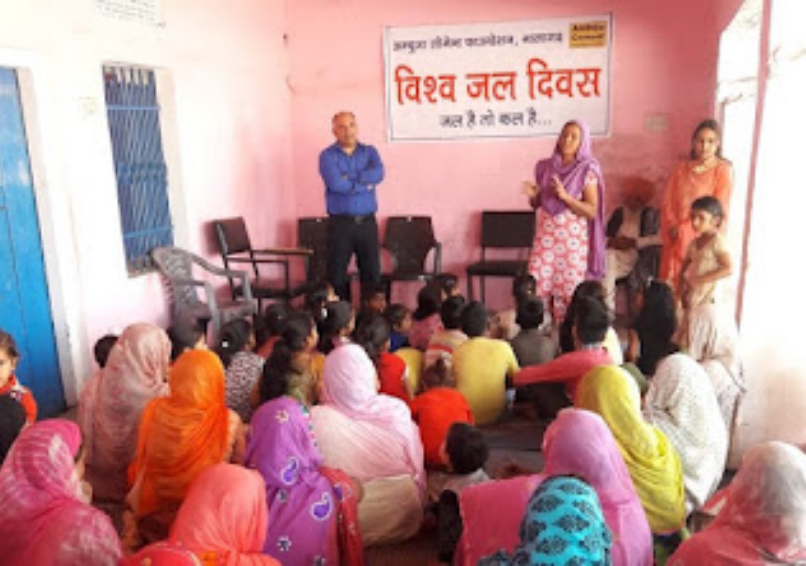
"This was a huge challenge - how to involve women in community activities. So we worked on them very hard and the SHG program was started in 2002 to involve women in each activity. Via SHGs we built their capacity, undertook training and now there are more than 3000 women who have formed a Women's Federation to oversee and manage social evils in society like domestic violence."
"We also kickstarted a variety of other initiatives that involved women across programs. The Sakhi Health Program was started for women to provide basic health services to the community, which helped elevate their status. Today there are 30 Sakhis in Darlaghat providing services to people."
"Additionally we started the Pashu Swastika Sevika initiative to engage women in providing basic animal husbandry and livestock health services to farmers. It solved a huge challenge for farmers and made them see women in a different light - as paravets." Sanjay said.
"Our focus on income generation has seen women also start their own cooperative societies - Shivam Milk Dairy Cooperative, Amrit Dara Dairy Coop Society and Anardana Cooperative - women are now family breadwinners and thus have a voice in their household. We also engage women in other village institutions like Watershed Committees. Now these women are taking decisions in their communities."
The SROI impact study conducted in Darlaghat showed that the Women empowerment program yielded a 20Rs return for every 1Rs invested - proof that change is in fact delivering results.
Conclusion
Every location has its own challenges and development teams must tailor their approach to the unique needs of the local community and location. Ambuja Foundation has mastered this approach by working closely with local people, listening to the traditional wisdom of communities and working alongside existing groups to collaborate and foster change.
.png)