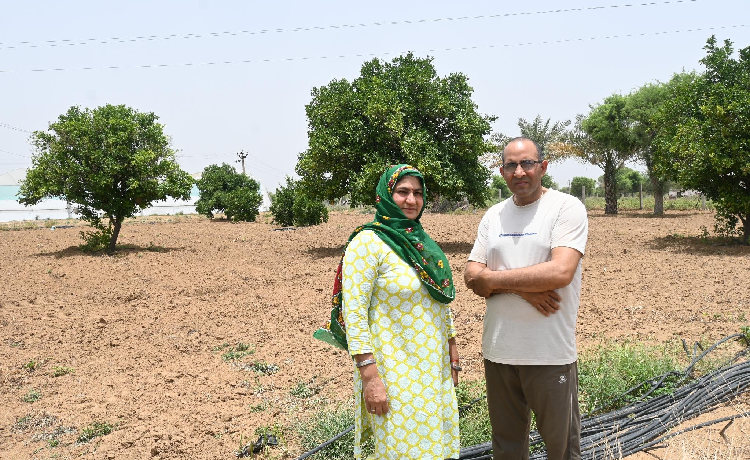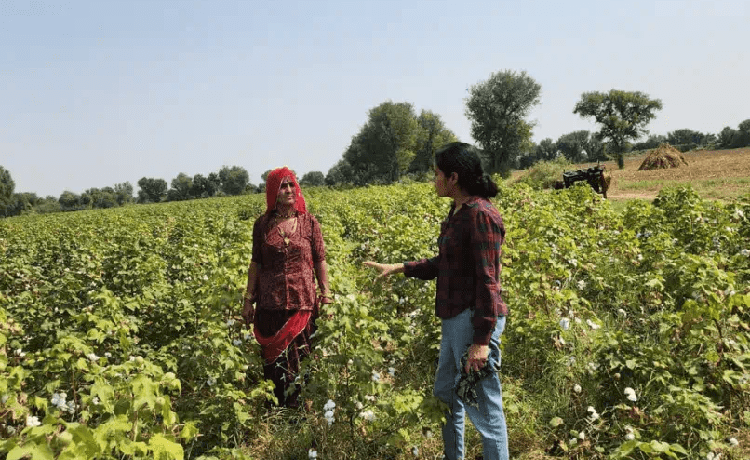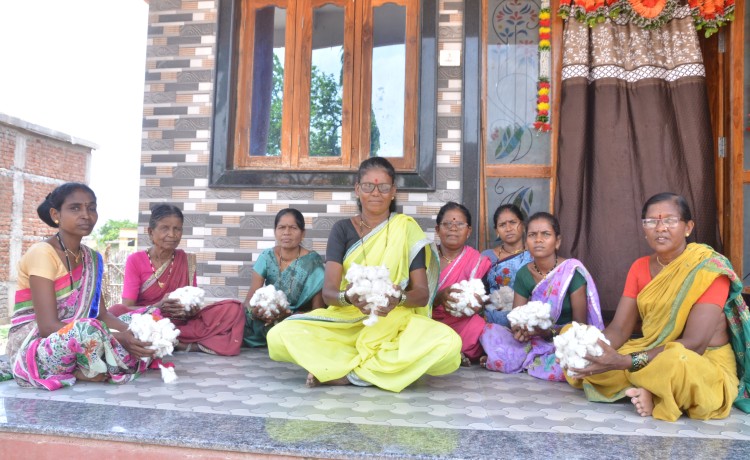



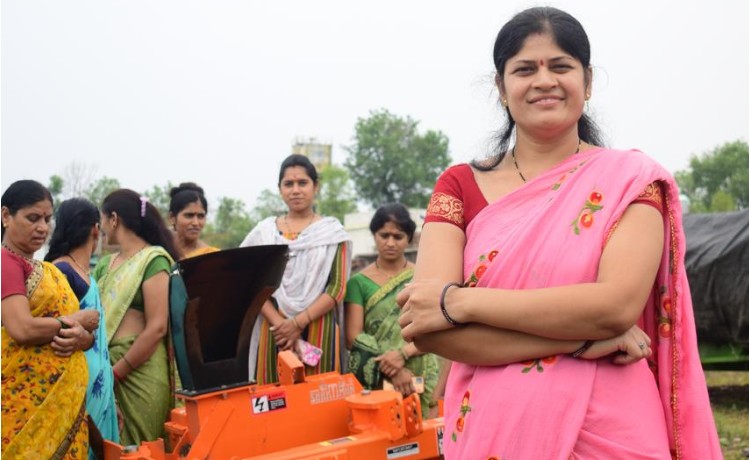
In 2023-24, the women of Maa Santoshi Swayam Sahayta Mahila Self Help Group ventured into the farm machinery business - capitalising on the high demand for cotton shredding machines among farmers, to shred left over crop residue like stalks, once cotton has been picked.
It’s a win for the women who now have an additional form of income generation, but also the environment, which benefits significantly from the incorporation of crop residue to enrich soil fertility, and crop production.
India is the largest cotton producer in the world with 3.36 mn bales, and ranks first in the world in area under cotton cultivation, with 1,29,000 hectares. A huge quantity of residue is being generated as a result, of which, a large portion is being burnt on farm to clear the field for sowing. But this widespread practice is leading to environmental pollution and the emission of greenhouse gases. Further, valuable plant material is being lost which otherwise can be used for productive purposes.
Researchers have found that in situ incorporation of crop residue enriches soil fertility, enhances crop productivity and conserves the environment – boosting the carbon content of soil, recycling nutrients, improving soil moisture holding capacity and porosity, and reducing the costs of inputs like fertilisers.
Working with 2,13,000 cotton farmers, Ambuja Foundation and Better Cotton put their heads together to address this issue – approaching the self help group with a business proposal which they just couldn’t refuse! Working together, Better Cotton and Ambuja Foundation provided support to the SHG to acquire a cotton shredding machine - encouraging the ladies to get to work!
And the shredder has been good business for the women! In the first 3 months, Maa Santoshi Swayam Sahayta Mahila SHG managed a profit of Rs. 24,000 by shredding cotton stalks across 80 acres owned by 30 farmers. It is the first baby steps of a significant opportunity, which not only puts much needed money in their pocket, but helps both farmers and the environment at the same time. By providing machines to farmers for rent at an affordable cost, they make a profit of 17% on each rental. The women are already targeting Farmer Producer Companies (FPCs) to promote this initiative and have their sights set on covering 250 acres of 100 farmers in the next financial year.
It’s a big step into business for the women who, prior to this venture, were either homemakers or working in fields as farm labourers. But the ladies from Maa Santoshi Swayam Sahayta Mahila SHG were just the first, the initiative has taken off and today 9 SHGs are renting out cotton shredding machines to 92 farmers – shredding cotton stalk and boosting the fertility of soil across 212 acres. And in the coming year, all 9 SHGs have cumulatively targeted to reach out to 2000 farmers across 4000 acres.
Happy farmers; happy women; happy environment!