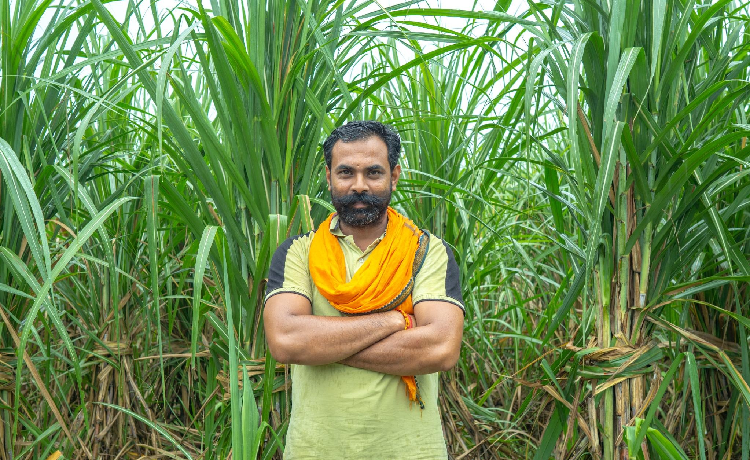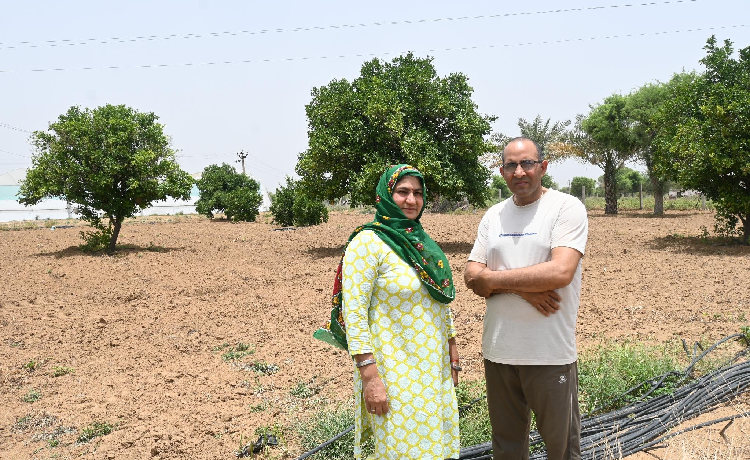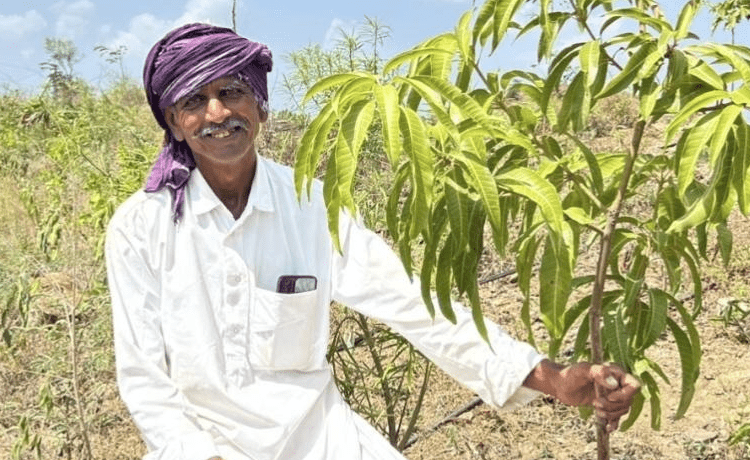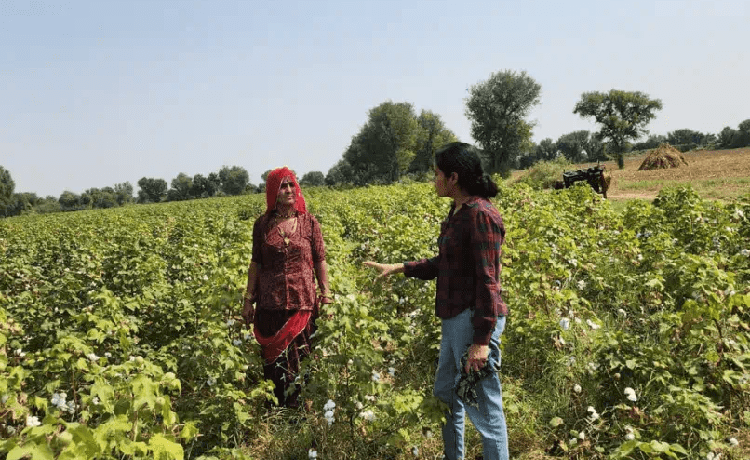



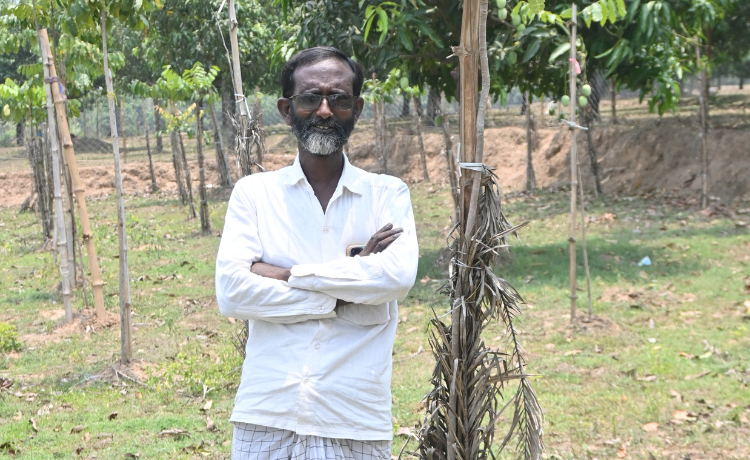
When one thinks of Farakka in West Bengal, bordered close to Bangladesh, it’s often seen as a marginalised and backward region. But progressive, forward-thinking farmers like Ismail Sekh are rewriting that narrative. Along with 17 other farmers, Ismail has embraced agroforestry by planting 350 lombu (African mahogany) trees— transforming what was once barren land into a future-ready ‘family trust fund’, poised to yield rich dividends when the trees mature.
That’s only part of his story. Ismail has gone above and beyond, adopting innovative agricultural practices and emerging as a community leader and a source of inspiration for other farmers. A natural orator with a confident presence, he has played a pivotal role in motivating fellow farmers to take bold steps toward sustainable farming.
1. Tackling Water Scarcity with Lift Irrigation - It all began when Ambuja Foundation mobilised local farmers to address the region’s chronic irrigation related water issues. Working together, they constructed a check dam and installed lift irrigation systems to draw and distribute water efficiently. Two water user groups were formed, and Ismail was elected secretary of one—marking the beginning of his leadership journey.
2. Increasing Yields Through Multi-Cropping - Previously limited to growing paddy during a single season, the now available water enabled Ismail to introduce wheat cultivation in Rabi season. His adoption of improved farming practices led to a remarkable twoand-a-half times increase in crop yield, significantly boosting his overall farm productivity.
3. Pioneering Agroforestry - To make use of the previously uncultivated two-acre land, Ismail planted 350 lombu trees. These trees are not only a source of long-term income—each projected to fetch Rs. 25,000–30,000 in 15–18 years—but are also powerful agents in combating climate change. This plantation has potential of 1462 MT carbon sequestration and potential of adding 820 million litres of oxygen into the atmosphere over the period of 15 years.
4. Maximizing Land Use with Intercropping - One of Ismail’s most innovative ideas was to intercrop Ool (elephant foot yam) between the young lombu saplings, ensuring no portion of land went unused. This smart land optimisation strategy provided short-term income while the trees matured.
5. A Leader in the Field - The transformation of Ismail’s land became a beacon for the community. Farmers who had long depended on monocropping began diversifying their fields. Those with idle or barren plots were inspired to explore agroforestry. The impact was tangible—higher yields, better land use, and improved farm incomes across the area.
Ismail Sekh’s journey is a powerful example of how innovation, leadership, and sustainability can transform not just one farm, but an entire community.