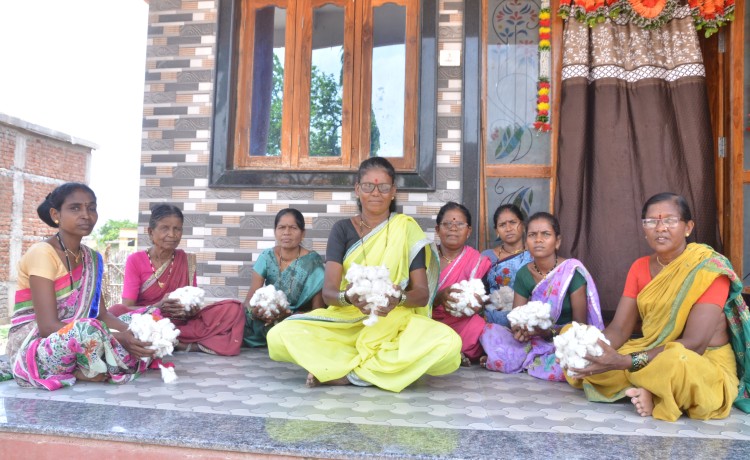



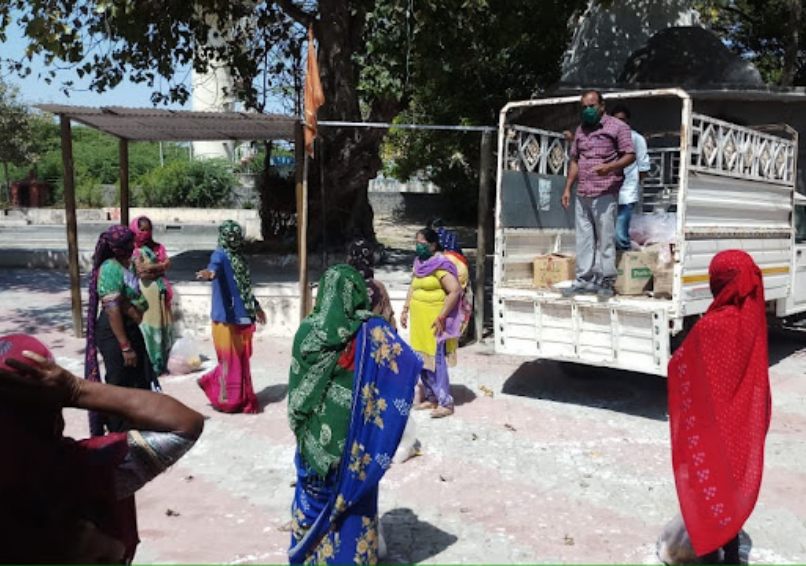
Women from Sorath Mahila Federation have come together to prepare 1,200 ration kits for deprived communities in Kodinar District of Gujarat. Each ration kit contains 7 kg of wheat, 2.5 kg of rice, 1 kg of oil, and 2.5 kg of potatoes — enough to feed a family for four weeks.
The federation has been running a Food Grain Bank, where women who grow wheat, rice, or bajra (millet) deposit surplus produce. During disasters like floods, cyclones, or droughts, these grains are voluntarily distributed by the same women to help the most deprived community members.
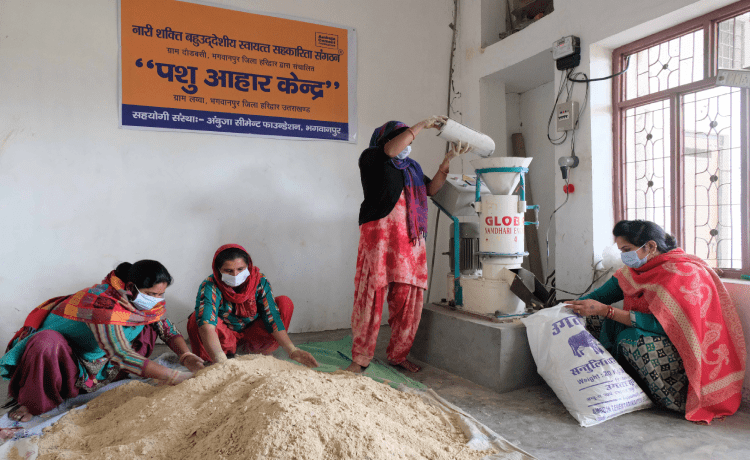
The idea for the ration kits emerged when members of the Siddi Tribe approached Motiben, President of Sorath Mahila Federation, asking for help during the lockdown. In response, the federation quickly set up a Ration Kit Distribution Centre, where 16–17 women coordinators assembled the kits.
Within just one week, the federation used Food Grain Bank resources to create and distribute 1,200 kits across 36 villages. They now plan to produce at least 500–600 more kits to reach another 35–40 villages. To support distribution, they have hired a vehicle. While preparing kits, the women follow safety protocols by sanitizing hands, using gloves, and wearing face masks.
Showing compassion in crisis, federation members are contributing generously from their own grain reserves. Some have even agreed to use profits from the welfare fund to buy additional rations.
About Sorath Mahila Federation
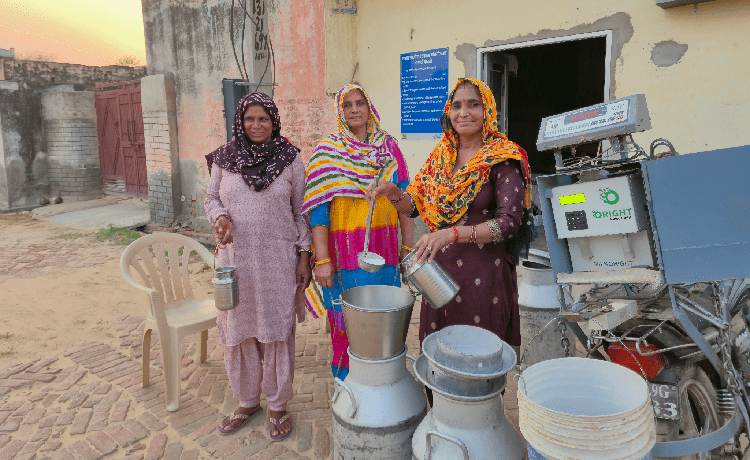
An award-winning federation supported by Ambuja Cement Foundation, Sorath Mahila Federation includes 8,500 women from 88 villages in Gujarat’s Gir Somnath region. Founded in 1999 as a consortium of self-help groups to promote financial empowerment, it has become a platform for women to make community decisions, voice opinions, and become socially independent. Ambuja Foundation supports seven such federations across different regions.
Wider support from Ambuja Foundation
Ambuja Foundation has also distributed ration kits with the help of ACL staff to communities near plant areas. In Raigarh, Chhattisgarh, 100 kits reached villagers 55 km from the plant area; and in Rajasthan, 1,600 kits were distributed to vulnerable families in Rabriyawas and Mundwa.