


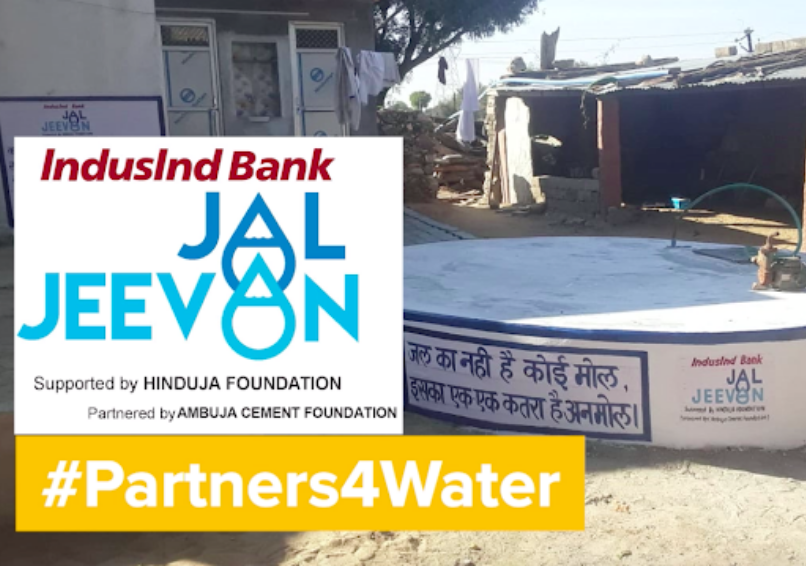
In order to overcome water and livelihood issues faced by people across 30 villages in Jaitaran block of Pali District, western Rajasthan, Ambuja Foundation joined hands with IndusInd Bank under its Jal Jeevan initiative in 2018-19 to 'Strengthen & Augment Rural Awareness & Livelihood' – with a key focus on harnessing the power of water harvesting to revitalize the area. Today, these communities are water self-reliant, which has better equipped them to prevent the onset of COVID-19.
Communities in this remote region face a hostile climate with maximum temperatures soaring above 50°C, along with frequent droughts creating famine conditions. Overexploitation of groundwater has impacted both the quantity and quality of water for household and livelihood use — with high TDS and fluoride content making it unsafe for drinking.
Fetching water traditionally fell on women, who spent 4-5 hours daily making 3–4 trips to store enough water for their families and livestock.
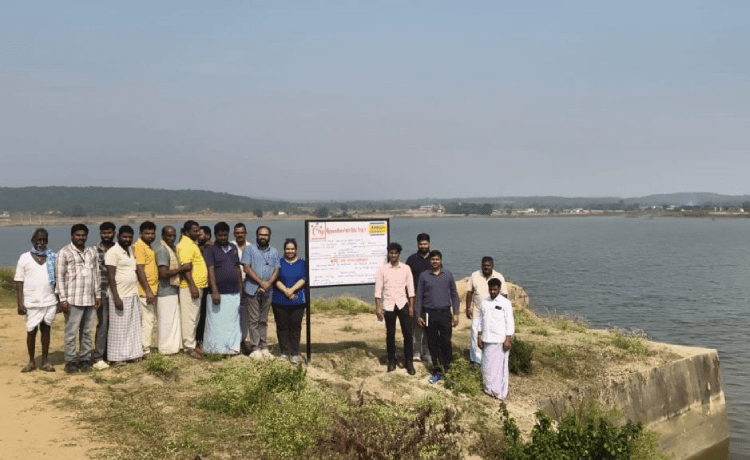
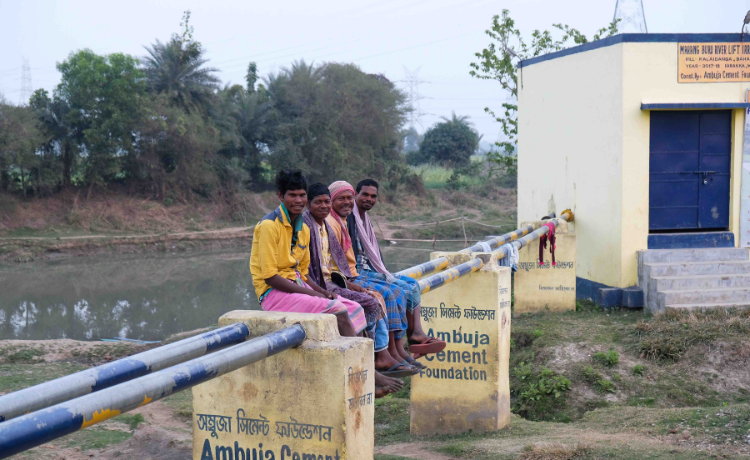
To tackle this, the project area was divided into two clusters. Ambuja Foundation promoted and built Rooftop Rainwater Harvesting Systems (RRWHS) and revived village ponds and khadins to bring safe water back to the community.
In a short time, working hand-in-hand with a shared vision, Ambuja Foundation and IndusInd Bank helped harvest an additional 10,19,773 cubic meters of rainwater, benefiting 6,000 households and 25,021 livestock. There has been a 30% increase in land under irrigation during the Rabi season and a significant decrease in women’s drudgery due to water availability at their doorstep. Notably, 66% of the project costs were contributed by the community — with each family saving about Rs. 6,000 that was previously spent on purchasing water tankers.
Key Achievements
Rooftop Rainwater Harvesting Systems (RRWHS) & Farm Tankas
- 650 RRWHS constructed
- 8,476,637 litres of rainwater harvested
Revival of Village Ponds
- 22 ponds revived
- 599,773 cubic meters of rainwater harvested
- 53,505 people and 19,915 livestock benefited
Revival of Khadins
- 2 Khadins revived
- 420,000 cubic meters of rainwater harvested
- 3,970 livestock benefited
Repair of Hand Pumps and Toilets
- 50 hand pumps repaired, benefitting ~1,300 households
- 90 toilets repaired, ensuring access with storage tanks
Extensive groundwater recharge and revival of traditional water harvesting systems have increased capacity and year-round water availability, meaning village communities are not facing water shortages during this critical COVID-19 period. Households with RRWHS are now self-sufficient in water and can maintain social distancing.
Sushila Devi from Ber Kalan: "RRWHS is like my family member. I am very happy that now I don't have to go out to fetch water and we got rid of our daily problem. Now I am also focusing on supporting my family by earning and can look after my children. I thank the entire team of Ambuja Foundation and IndusInd Bank."
Indra Devi from Garrnia: "RRWHS has brought happiness and prosperity in our life. I am able to give more attention to family. I am very thankful to Ambuja Foundation and IndusInd Bank team. May God bless and give you everything."
Future Plans (2020–2022)
- 1,100 RRWHS to harvest 13,200 cubic meters of rainwater for drinking, saving 50% cost of buying tanker water
- 40 ponds revived to harvest 400,000 cubic meters of rainwater, augmenting recharge of 150 wells and benefiting 25,000 livestock
- 60 farm tanks to help 60 families harvest rainwater for drinking, ensuring water availability for 5 months
- 20 farm ponds to conserve 18,000 cubic meters for agriculture, reducing groundwater use and providing additional livelihood sources
- 2 Khadins and 240 hand pumps to harvest 400,000 cubic meters of rainwater, recharging 10 wells & tube wells
- 40 acres of micro-irrigation to reduce agricultural water use by 60% and increase efficiency by at least 20%
- Aligned with Ministry of Jal Shakti (GOI) — "Har Ghar Jal" by 2024 for all rural households
.png)