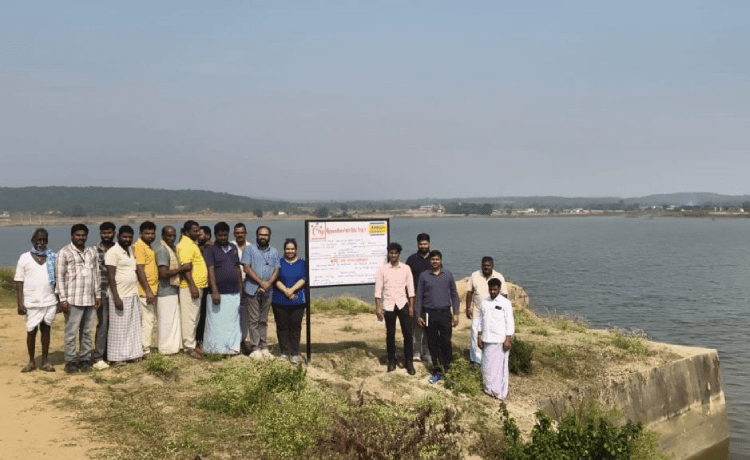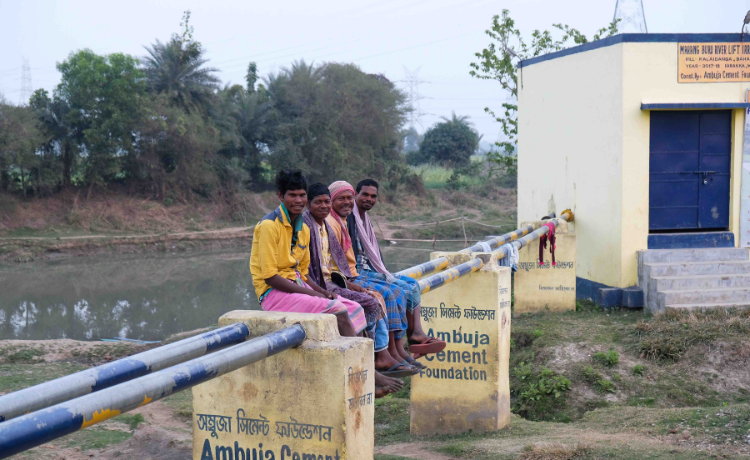



India's water problems are vast and complex and require a collaborative approach to solving them — one which sees all stakeholders working together, putting personal agendas aside to help transform the lives of those most vulnerable and impacted: rural communities. The current pandemic puts even more impetus on stakeholders coming together to address critical problems such as the availability of safe drinking water & water conservation
With the right intentions, partners can pool resources and work to their strengths, resulting in a highly impactful partnership. While many believe that such a collaboration is not possible, Ambuja Foundation has proved that it is, in fact, achievable.
In 1993, the coastal area of Kodinar, Gujarat was severely affected by salinity ingress. Salinity had seeped inland up to 15 km, and Total Dissolved Solids (TDS) levels were over 4000 mg/litre, compared to the recommended 350–400 mg/litre. Intensive agriculture and over-exploitation of groundwater were identified as primary causes — as groundwater sources depleted, salinity crept inland via underground aquifers, contaminating supplies. Consequently, the local community had no potable water, and agricultural yield suffered, impacting livelihoods.
Ambuja Foundation took a holistic approach to address this: on the supply side, building mass water harvesting infrastructure; on the demand side, mobilising farmers to adopt drip irrigation and promoting drinking water solutions to ensure sufficient water for the community.
The region is home to ~200,000 people, so scale demanded collaboration. After three years of refining the model, Ambuja Foundation partnered with the Sir Ratan Tata Trust, pooling funding, technical expertise, and ideas to reach 103 villages.
Within six years, the partnership showcased strong impact, convincing the Gujarat Government to join, funding 60–80% of future measures.
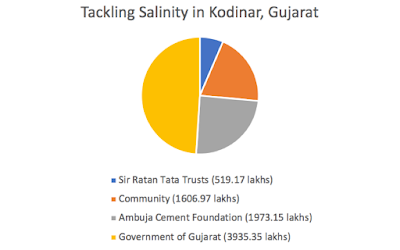
Today, the Coastal Salinity Prevention Cell (CSPC) has been established — a coordinating body working on policy and programs across the Gujarat coastline. It includes Ambuja Foundation, Sir Ratan Tata Trust, Aga Khan Rural Development, GGRC, and the Gujarat State Government.
Impact
- TDS reduced from 4000 mg/litre to 1200 mg/litre
- 226 check dams built
- Over 3,970 rooftop rainwater harvesting structures created
- 2,817 farmers adopted drip irrigation across 12,657 acres
- 69.26 km of canals interlinking ponds, rivers, and bandharas
- 119 ponds built
- 1,268 percolation wells & recharge wells created
- Water storage capacity increased by ~38.78 million cubic meters
- Water availability extended from just 4 months in monsoon to 8 months post-monsoon
By putting aside agendas and working together, Ambuja Foundation, Sir Ratan Tata Trust, Government of Gujarat, and local communities transformed the region.
Today, more than ever, there is a need for more partners with an aligned vision to come together and #partner4water to collectively solve India’s water challenges.
To partner with Ambuja Foundation in tackling water issues across rural India, reach out to: brajeshsingh.tomar.ext@ambujafoundation.com
.png)