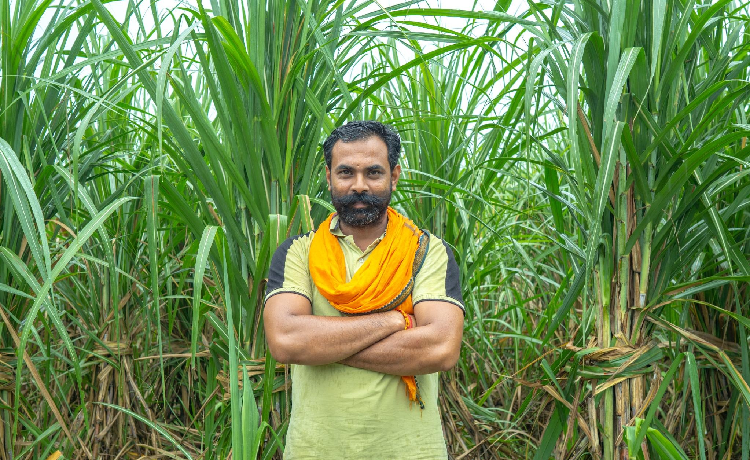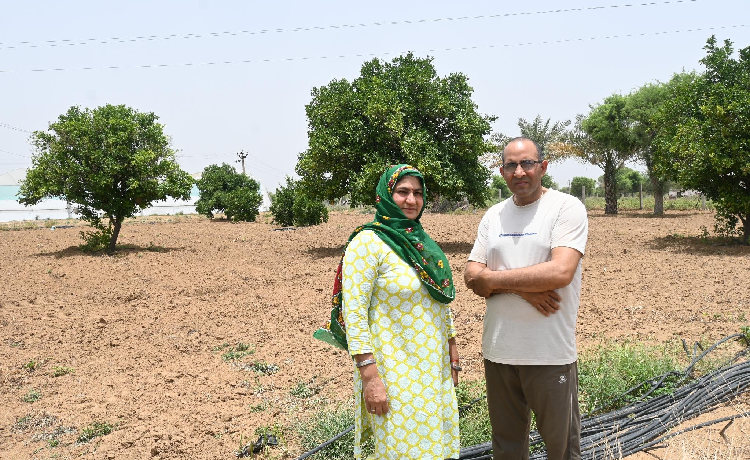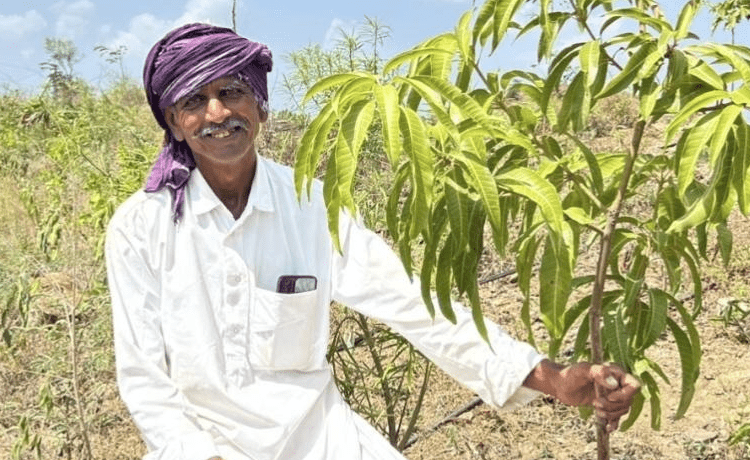



927 farmers are embracing the use of cow dung and urine to replace costly chemical inputs which impact soil health, and to increase their yield and profitability - thanks to a series of trainings and exposure visits facilitated by Ambuja Foundation.
Being an agrarian country, cows used to be the backbone of agriculture in India - before the introduction of machinery and chemical compositions. With the introduction of chemical fertilizers and pesticides, while produce has increased, the chemicals have damaged soil health and the overall system of farming.
Today farmers are turning back the clock, and reverting to the use of cow based farming for better yield. This method harnesses cow manure as a fertilizer, which is rich in nutrients, along with fermented cow urine which enhances soil fertility and can be turned into a liquid fertilizer used as a pesticide for crops.
In fact, the Indian Council for Agriculture Research (ICAR) has proven the value of cow urine in supplementing the soil's nutrients and helping in managing insects, pests and diseases. This drastically helps farmers as they are able to reduce the cost of cultivation, increase soil moisture capacity, reduce irrigation and increase soil fertility.
ICAR put a stamp on the use of cow urine and cow dung for organic farming following a high level decision made at the National Institution for Transforming India (NITI) Ayog in October 2017, to conduct a study on the use of cow dung/urine and bio-waste for organic farming. Today in India, nine states - Karnataka, Mizoram, Kerala, Andhra Pradesh, Himachal Pradesh, Madhya Pradesh, Tamil Nadu, Maharashtra and Gujarat have an organic farming policy and law.
When Farmer Gopal Vashrambhai Charaniya joined one of Ambuja Foundation's farmer groups, who knew he would bear fruit with his cows and bullocks?
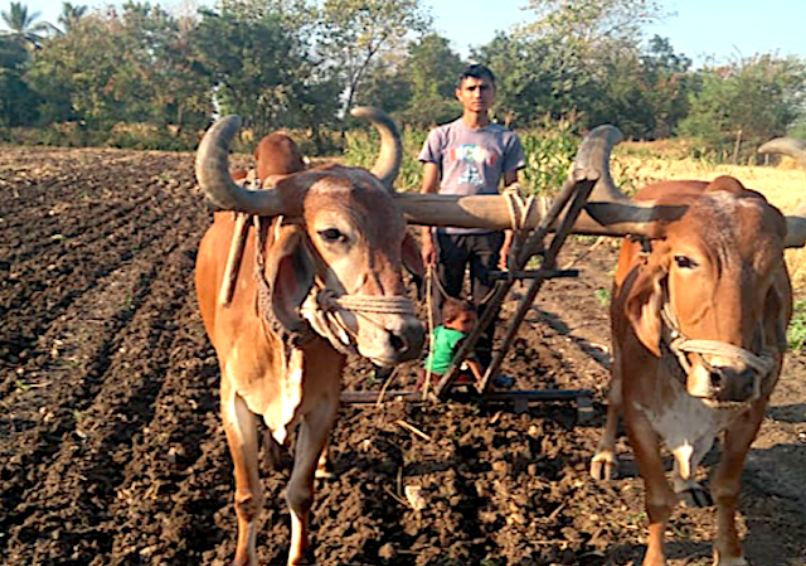
Gopal belongs to the Kajardi district of the Gir Somnath region, Gujarat and is the only breadwinner of his family, owning only 10 bighas of land. Previously, he used the traditional methods of farming with chemical fertilizers and pesticides - using two cows, two bullocks and a buffalo to help him plough the field.
Ambuja Foundation personnel held a training to educate farmers on the techniques of 'cow based farming', and Gopal could not believe that his existing herd of cattle could help cut his costs and support more sustainable farming. Farmers received 3-days training on how to use 1 cow for a 20 bigha land without pesticides and fertilizers. They were trained on the importance of mixing cow urine, cow dung and buttermilk for farming. Reference books were also prepared for them to utilize while practicing.
'It has been over a year where I have not used pesticides on any crop and only used cow based farming. It has benefited me as I have gained produce in 1620 kgs of cotton and groundnut in 0.6 acres with 1500 rupees saved by avoiding the purchase of chemical pesticides.' Says Gopal contented with his produce.
Today, Gopal trains 15 farmers from his village on cow based farming and has also generated a whatsapp group, adding farmers from nearby villages providing information and benefits of using this type of fertilization.
"I will convince all farmers to use cow-based farming and tell them my story on how I have benefited environmentally and financially. This will help them reduce costs of farming and produce good quality crop too." Says Gopal proudly.
JP Tripathi, Senior Manager-Programs, Ambuja Foundation states, "Cow based farming maintains an economical balance in a household as it is not only used as a farming mechanism but can also be used in diary, soil fertility, composting and dietary element."
The government is promoting organic farming in the country through a cluster approach and dedicated schemes namely Paramparagat Krishi Vikas Yojana (PKY) under the National Mission for Sustainable Agriculture. With good results in their produce, many farmer are now moving to 100% cow-based farming in villages.