



.png)
Education is the all-round drawing out of the best in the child - body, mind and spirit-- Mahatma Gandhi
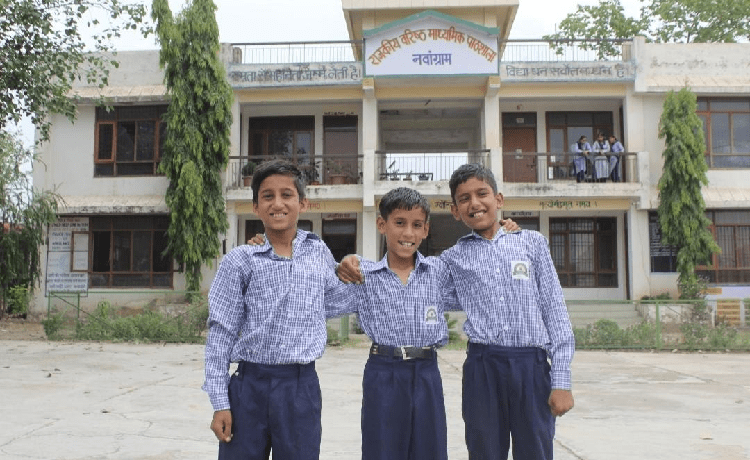
Ambuja Foundation has been at the forefront of working with government schools in eight rural locations where it already has a presence – Bhatinda, Ropar (Punjab); Darlaghat, Nalagarh (HP); Chandrapur (Maharashtra); Ambujanagar (Gujarat); Roorkee (Uttarakhand); and Bhatapara (Chhattisgarh).
A total of 155 government schools with ~16,000 students are being provided with an “enabling environment”. What exactly does this imply?
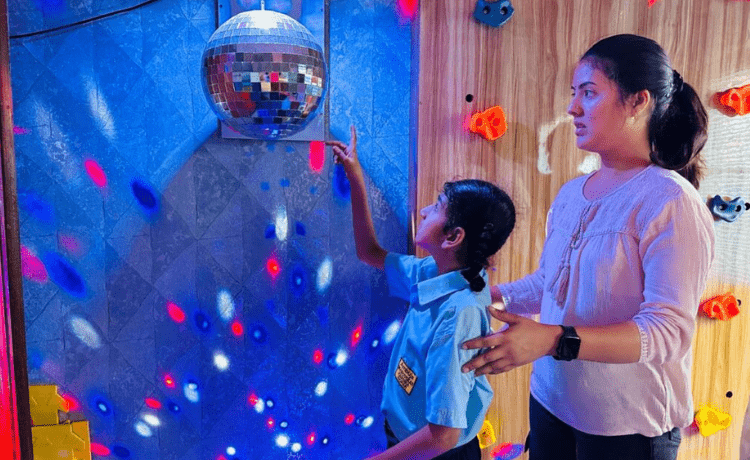
Shubhangi Sohoni, Head of Education, Ambuja Foundation, replies, “An enabling school environment is a safe space which children look forward to coming back every day. A friendly environment, conducive to learning and teaching. Teaching methods employed are to kindle curiosity and conceptual learning using a hands-on and play approach.”
“Most children enrolled in government schools in rural India are first-generation learners,” said Ms Sohoni. It has been observed that a systemic, child-centred school environment in rural India improves attendance, ensures learning outcomes are met and leads to increased confidence among children, she adds.
Beyond Infrastructure
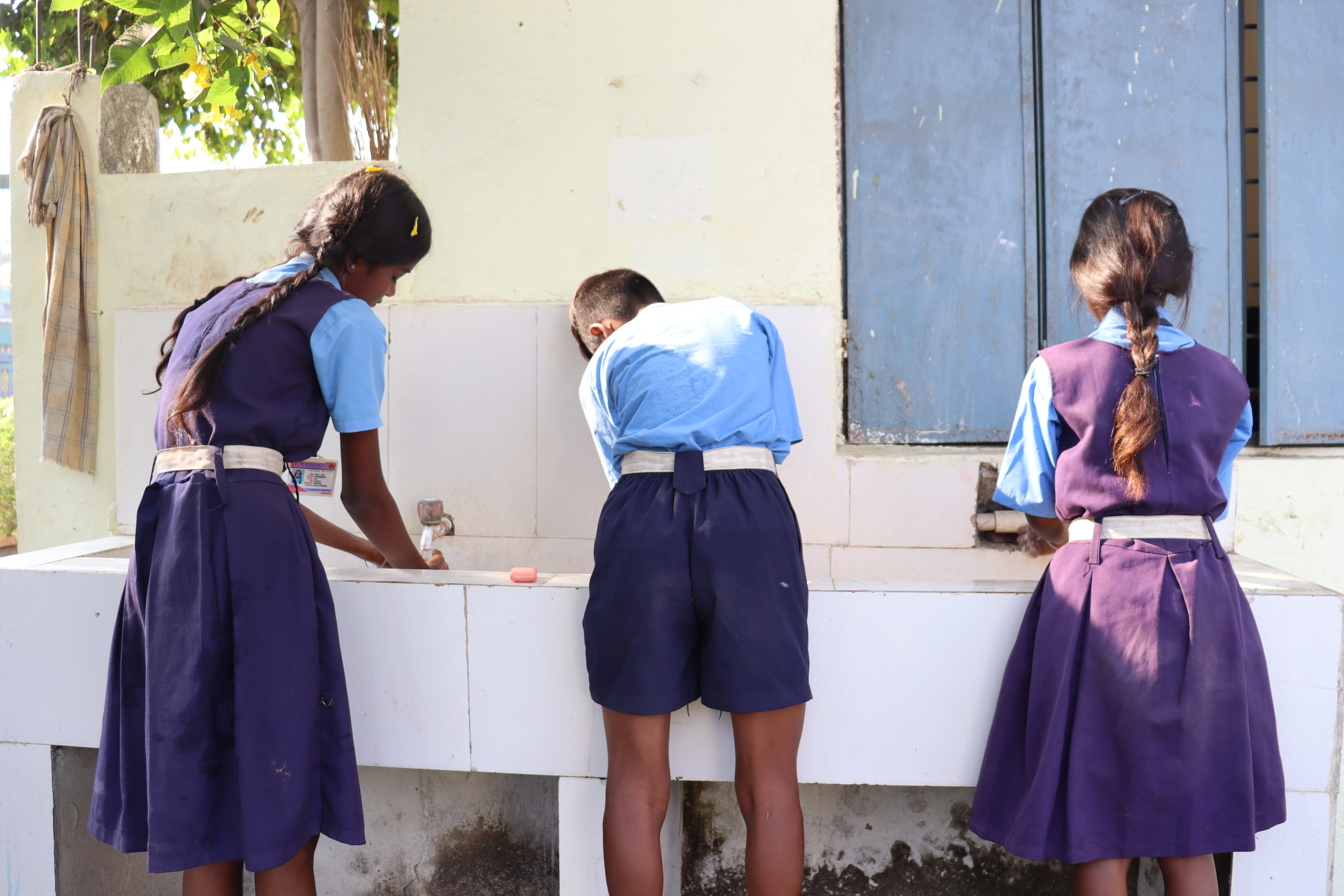
An organised school infrastructure is equally important – attractive, cheerful walls with BaLA paintings that depict health and hygiene; comfortable seating arrangements in classrooms, laboratories and library, including a hygienic area earmarked for mealtimes with access to clean drinking water.
Appropriate sanitation facilities with separate washrooms for boys and girls, proper hand washing stations, sanitary vending machines and incinerators to ensure menstrual hygiene are all indicators that the child is the centre of the school system and is taken care of.
Implementation of WASH in schools has had a ripple effect, said Pramod Kumar, a parent from Saidpur village (Roorkee, Uttarakhand). Pleased with the awareness programs on hygiene conducted by Ambuja Foundation in schools, he said, “We observed a change in our children's hand washing practices – the art displayed on the school walls is inspiring as it constantly reminds them to always inculcate healthy habits.”
Mamta Devi, SMC member from Parnoo (Darlaghat, HP) said the hygiene awareness organised by Ambuja Foundation for students has been effective. “Children listen carefully to the doctor’s advice and share this with all at home.,” she said. Yet another parent, Anu Bansal said that Ambuja Foundation is playing a very important role in creating awareness among children on health and hygiene.
Changing Classroom Culture
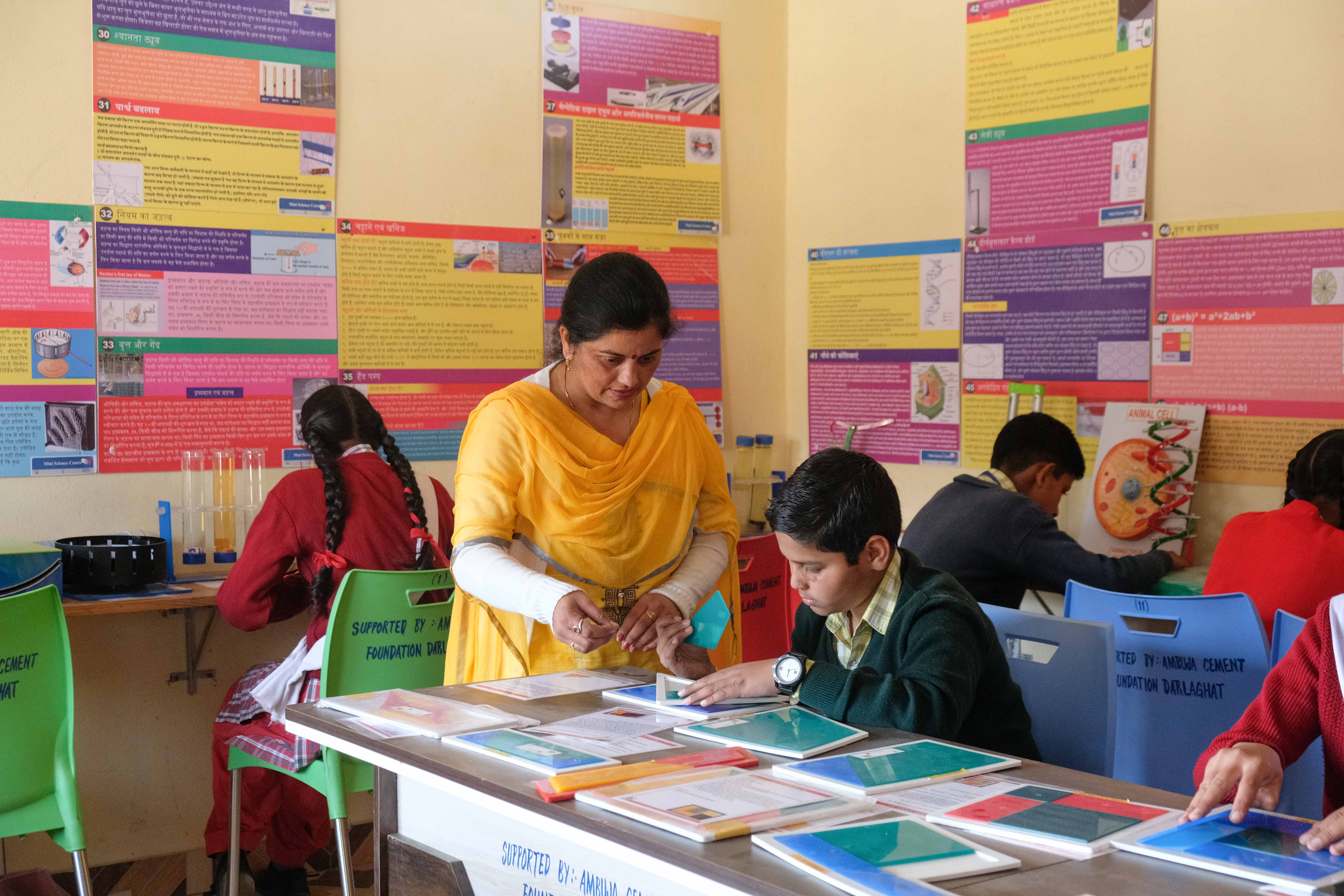
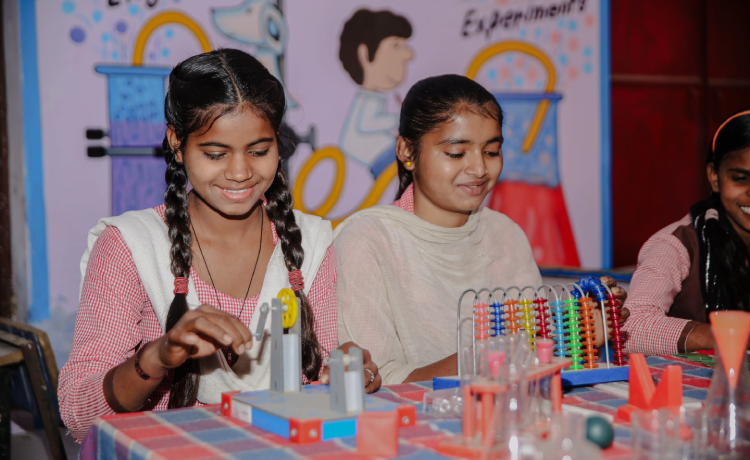
Ambuja Foundation facilitated the setting- up of STEM (Science, Technology, Engineering, Mathematics) labs in various government schools. Equipped with various models, materials and equipment, these labs are used as a teaching method where students are exposed to hands-on and experiment-based experiences.
Principal Vinod Shirsagar from Lakhmapur (Chandrapur, Maharashtra) said this initiative has not just increased the students' interest in STEM subjects but also reflected positively in their academic performance.
Principal Giridhar Panghate from Upparwahi (Chandrapur, Maharashtra) observed that thanks to STEM lab, concepts in science subjects are clearer; and students have developed observation, critical thinking and problem-solving abilities.
In short, for positive learning outcomes, the whole school eco system should support students. “However, infrastructure is not alone. It has to be combined with changing the culture whether it is digital classrooms or kitchen gardens,” added Ms Sohoni.
Yes, digital classrooms have also been introduced in several schools and using audio visuals to teach primary students leads to easy recall of concepts. However, this has to be managed and limited to a few hours every day.
Learning Gaps
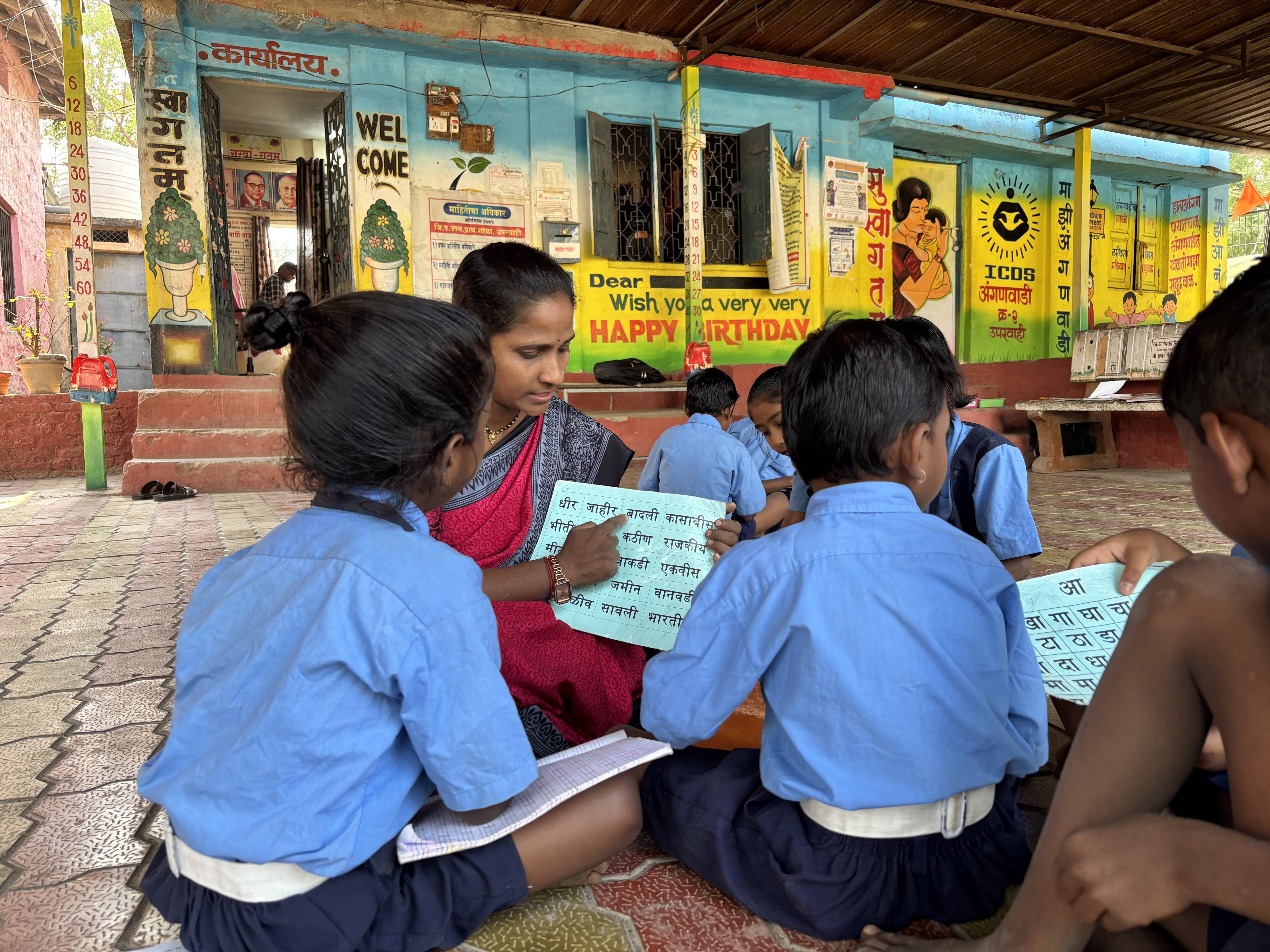
Since most students in rural government schools are first-generation learners, it was observed that one of the learning gaps was reading. To address this issue, Ambuja Foundation piloted the promotion of a reading program.
A partnership with Pune-based Door Step Schools (DSS) kickstarted the ‘Networking & Nurturing’ program – where village volunteers who had passed the 10th grade were identified and trained to become pustak fairies and worked with students from grades 1-8.
Yet another program was ‘Grow with Books’ -- a reading promotion program targeting tribal language speaking children from schools in Chandrapur to strengthen their Marathi. Here, a wide variety of books and newspapers was introduced through special sessions focused on reading, vocabulary games, singing and storytelling. Buoyed by the success of this program, it was then extended to other regions.
In Bhatinda (Punjab), pustak langars (mobile libraries) set up in open, community spaces to engage students and community members in reading and writing and also encouraged drop-outs and out of school children to access the libraries. In Darlaghat (Himachal Pradesh), the reading promotion program was initiated at the primary level and age specific books provided to students; ‘Read Aloud’ and other reading competitions were conducted.
SMC member Pinky of Khali village shared, “Bal Mitra Promila distributes story books. Children read new stories and also explain it to us at home. This is a good initiative by Ambuja Foundation.”
Meanwhile, the reading competition has inspired students to borrow books and read. Moksh from Parnoo village said he enjoys reading stories in English. “Earlier I used to borrow books but put them aside, barely reading it. But, once I enrolled for the competition, I started reading regularly and now enjoy it a lot.”
Jyoti, a Bal Mitra from Khirtal (Chhattisgarh) shared that the training she received under the Reading Promotion Program for English language, has increased her confidence in teaching students and helping them explore the language better. Yogmaya, also a Bal Mitra from Mudhipar (Chhattisgarh) said, “These programs are essential in rural areas where students have limited exposure to the English language and need regular support to build their language skills.”
“Reading and physical education are promoted by Ambuja Foundation as foundational activities that support the overall learning, development and well-being of children”, said Ms Sohoni.
Wholistic development
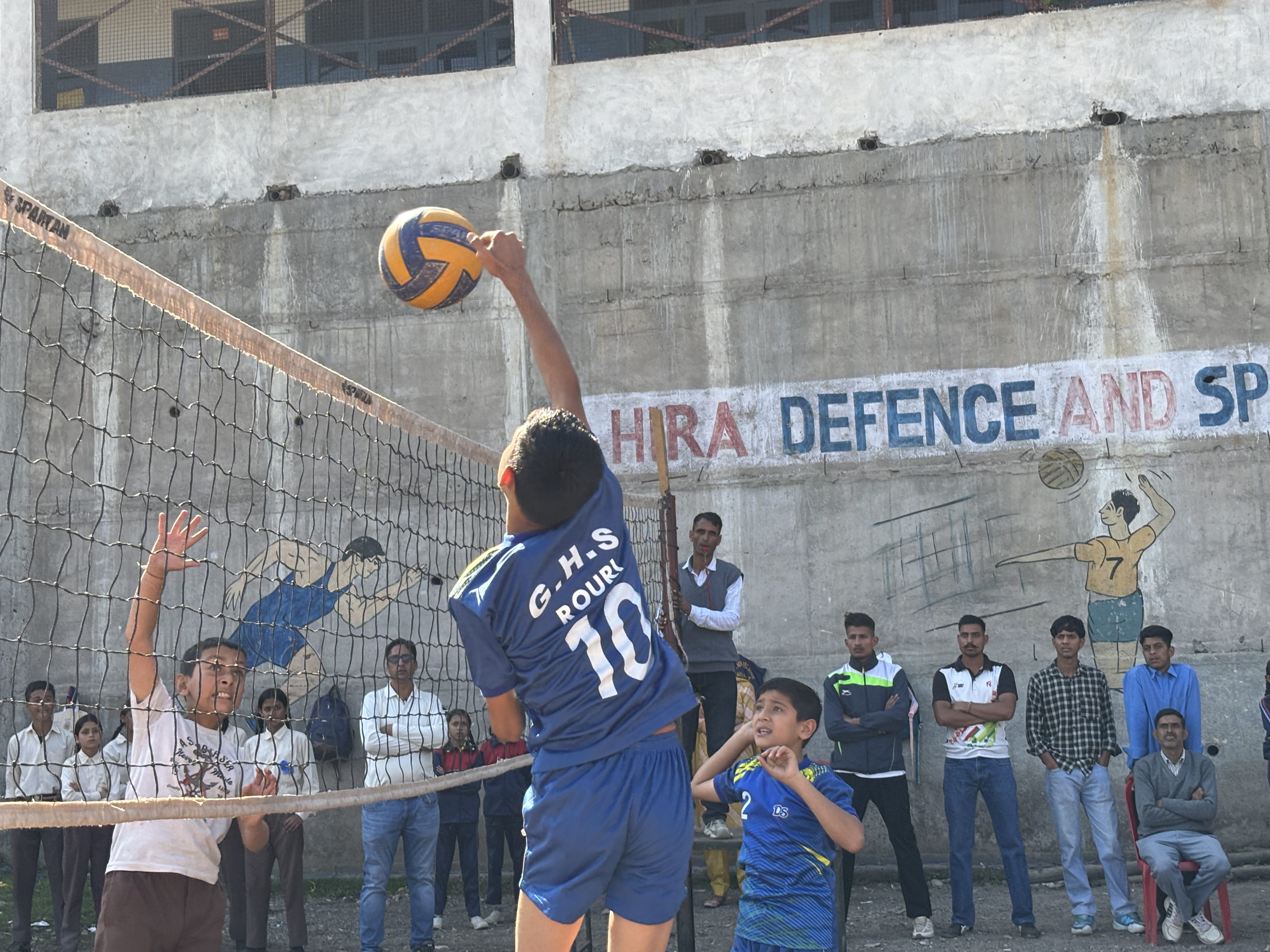
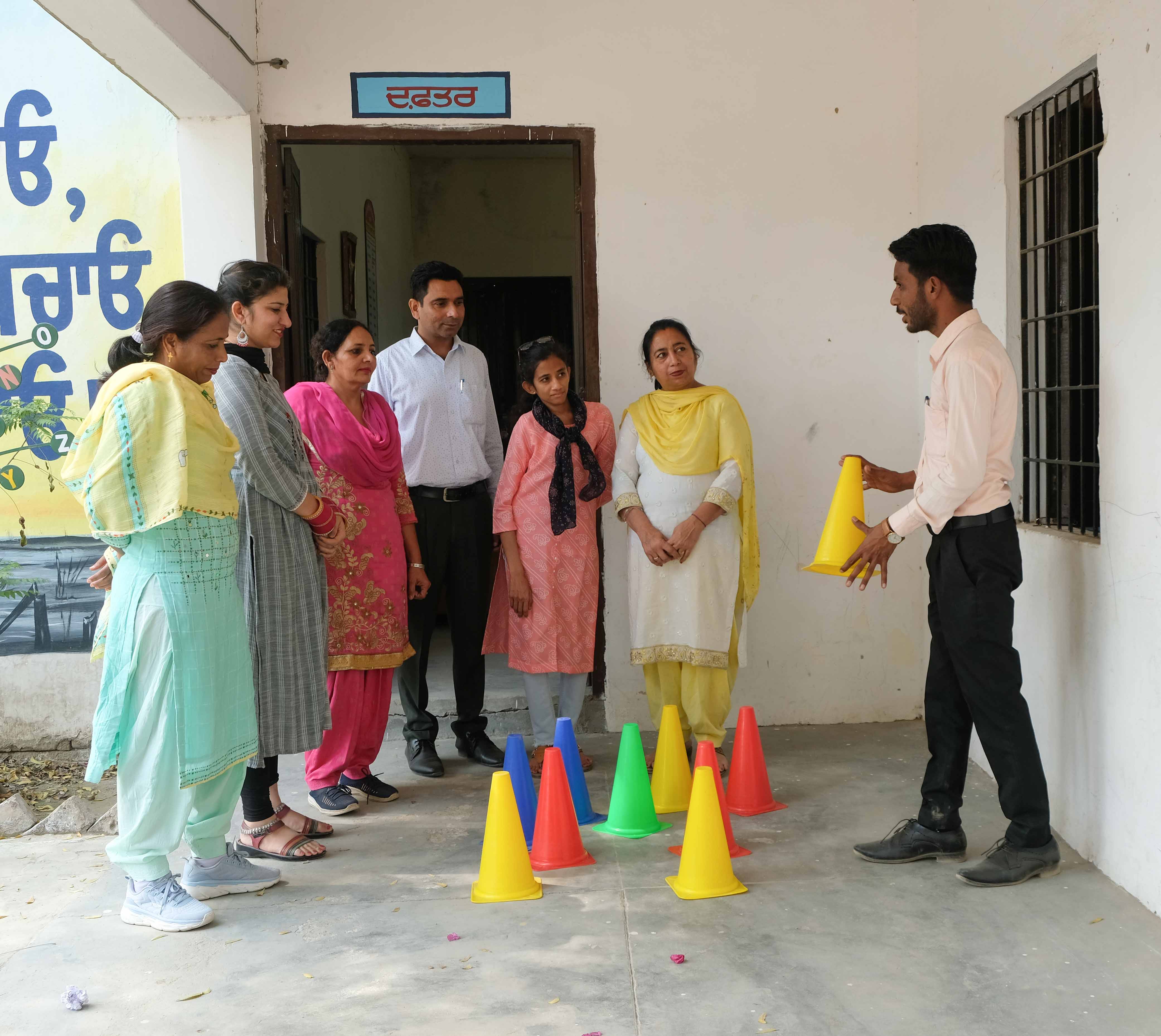
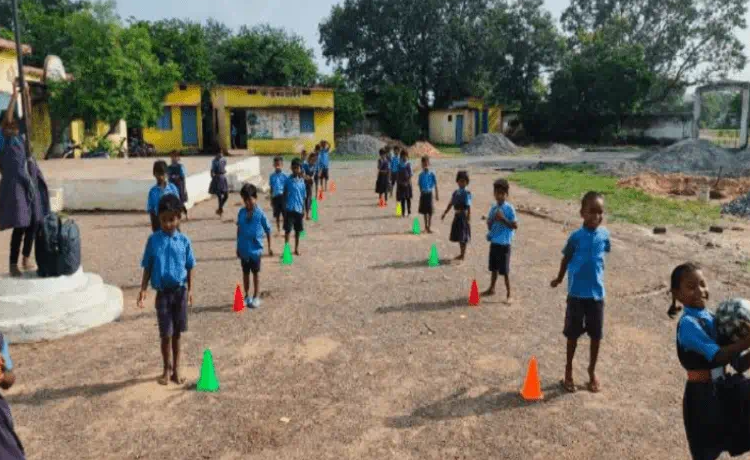
Physical Education teachers are trained to develop their capacity to deliver engaging, impactful sports programs. Sports equipment is provided and playground upgraded to ensure adequate and safe space for children to participate in sports. Students also participate in Khel Mela sports events. As one PE teacher from Darlaghat observed, “The training we received was a great initiative - we learnt to assess and understand the fine motor skills of children.”
Coaching in sports was organised for schools in Chandrapur. Medha Jillawar, a 5th std student from Thutra village said, “We love playing building and bulldozer games because we get to limp, run, bend and learn new activities which is a lot of fun. Prasana Bhoyar, 6th std student from Lakhmapur village said, “Our coach Chaitali tai has taught us new skills in kabbadi – like how to slip, back kick etc. Also, how to prepare the kabbadi field before the game. Later, we discuss the game; and also there is a relaxation session.”
Addressing challenges
Besides, being a role model for students, a teacher wields a great deal of influence not just on a student’s behaviour and self-confidence; but also on engaging parents and the community. In rural India, where drop-out rates are high due to migration or lack of awareness on the importance of an education, it is important that the child’s progress is frequently communicated with an increased focus on the wholistic development of student.
The School Managing Committee (SMC) includes members from the community and parents too – hence this platform is key to ensure the sure and steady progress of the school, encouraging the inclusion of activities and events for the wholistic development of the child. As partners in education -- SMC members, parents and the local community are key to ensure students do not drop out nor have long periods of absenteeism.
Since most students in rural government schools are first generation learners, the onus of their regular attendance, retention and confidence to continue falls on both parents and teachers. Lack of teachers in rural sector also implies that attention to meet with specific needs of a child are constrained. To mitigate this, the volunteer support program called Bal Mitra (Friend of the Children) was set up to provide additional learning support to children from 1st – 6th grades. Bal Mitras improve foundational literacy and help build confidence among students – they drive activity-based learning, promoting health and hygiene, grooming and safety awareness – thus making a difference to the development outcomes of rural children.
Clearly, real learning happens when schools become safe, engaging, well-resourced ecosystems — not just physical structures. And as Ms Sohoni puts it: “Ambuja Foundation has gone beyond ‘repairing schools’ to ‘activating schools’.”
.png)