


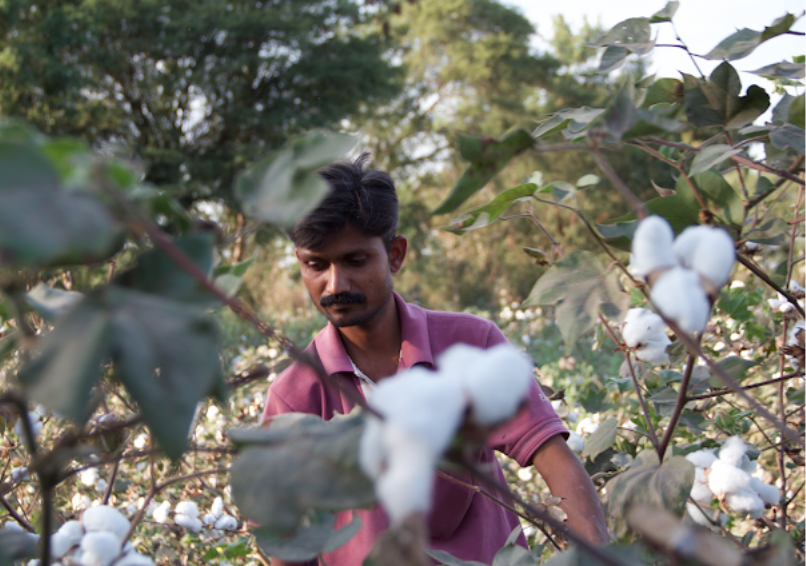
For the first time in India, Farmers are selling Cotton directly on MCX, and earning a profit!
Cotton farmers in Somnath, Kodinar, are moving up the value chain. In 2018, for the first time ever in India, their farmer producer company delivered & sold value-added cotton directly on the Multi Commodities Exchange — bypassing middlemen & resulting in an extra Rs 5.2 profit, per kilo, for every farmer.
Just 7 years ago, each farmer was working in isolation, struggling to make farming profitable with overpriced inputs, outdated practices and market and climate vagaries.
But in 2012, Ambuja Foundation organised them into a Farmer Producer Organisation to create an easy learning environment, collectively solve problems and jointly procure seeds and fertilisers.
Ambuja Foundation invested in training and capacity building of the members, in accounting and governance to help the company become independent and take firm steps towards sustainability.
Up until 2017 Somnath Farmers Producer Company Limited (SFPCL) members were individually selling raw seed cotton to local ginners or middlemen, who would process it in bales to sell in the larger market.
So when the Multi Commodities Exchange reached out to Ambuja Foundation to explore the possibility of farmers bypassing middlemen and selling directly on the platform — Somnath Farmer Producer Company Ltd (SFPCL) jumped at the opportunity to collectively sell their produce.
The Multi Commodity Exchange of India Ltd (MCX) is an independent commodity exchange that offers options trading in gold, and futures trading in non-ferrous metals, bullion, energy, and a number of agricultural commodities.
The Farmers value-added the cotton themselves by investing in processing — resulting in two commodities for sale: cottonseed and raw cotton lint. They soon felt confident enough to play in the larger market by themselves.
In December 2018, 63 farmers from the SFPCL sold and delivered 100 bales of cotton on the MCX, as a pilot project, with the transaction yielding an extra Rs 2,59,000 in profit — over and above what they would have got from selling on the traditional market. Additionally, farmers were able to fix and hedge their prices which helped the farmer against market fluctuations.
The pilot spells big things for the future — not only for SFPCL farmers but for cotton farmers across Ambuja Foundation locations. SFPCL cotton farmers produce approximately 6000 metric tonnes of cotton every year, and so this initiative has the potential to generate an additional 3.12 crores of profit for farmers in similar market conditions. Ambuja Foundation is currently engaged with over 1.2 lakh Cotton Farmers across India; so this initiative could be a 'game changer' when scaled up.