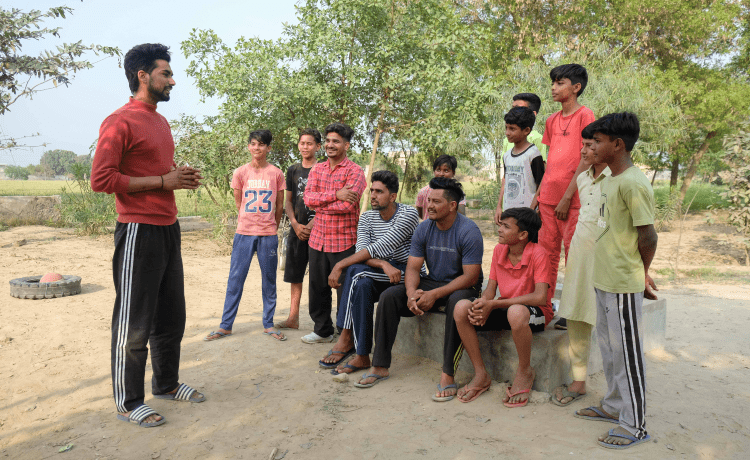



When it comes to developing a rural community, unfortunately many interventions are undertaken by an external party and participation of the community in their own development is not always considered. At best, a general assessment of the needs of a community is undertaken and the willingness of the community to undertake certain activities is assessed during project formulation. As a consequence, when the project becomes operational, it is often misaligned with the community's aspirations and priorities, even taking the target groups by surprise.
On the other hand, community mobilisation, a concept closely linked with peoples participation, is a process whereby local groups are supported in clarifying and expressing their needs and in taking a leadership role in implementing development activities rather than just being the 'recipients' of grants and services. It is based on the philosophy that the people within communities, are better placed to identify their needs and priorities and solutions for addressing them.
Community participation, engagement, and mobilization has been the crucial underpinning of all our projects at Ambuja Foundation - be it water resource management, livelihoods, or health. Our learnings from the ground support our belief that development for the people is unsustainable; on the other hand, development along with the people involving the communities from the commencement of the project and building their capabilities along the way, is the key to sustainability. Rather than passive participation or a cursory engagement, we aim to inspire true mobilisation, where communities organize and take initiative independent of any external actors. That way, communities reduce their dependence on outside aid, as they become adept at identifying and solving their own problems.
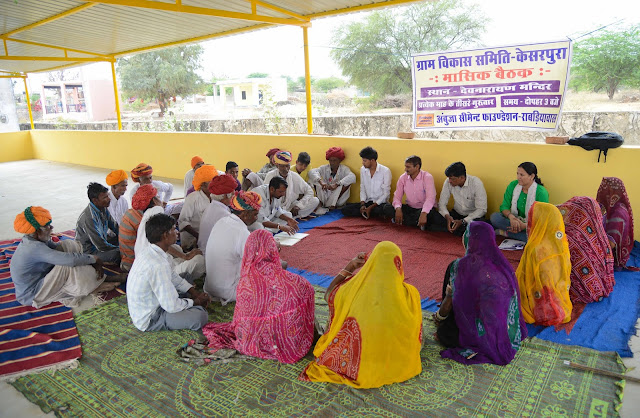
A key highlight of all projects at Ambuja Foundation has been the amalgamation of modern scientific methods with traditional wisdom and traditions. Traditional wisdom is considered static and outdated, and one tends to minimize or devalue it, but our experience has been to the contrary. Community members provide deep insights of local conditions be it climatic, soil, cultural or social contexts. This knowledge about the context in which projects are to be implemented, contributes to sustainable and equitable development. Community involvement brings crucial information to any decision, making the difference between a good and poor decision.
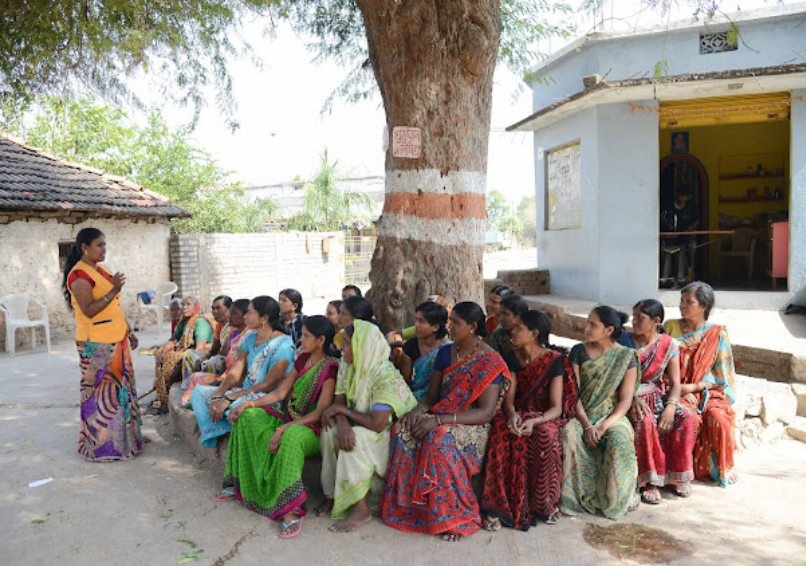
For community mobilisation to happen effectively, it is not enough to merely 'invite or welcome participation'; community members need training in 'participatory' skills, activities to build their confidence, as well as measures to unite them around common goals. This is especially important for women who may lack the experience of contributing as also for the broader community members who may be diffident. By building the requisite skills and confidence, every member of a community truly has the opportunity, directly or through representation, to participate in the project, with a higher likelihood that the program accurately reflects their real needs and aspirations.
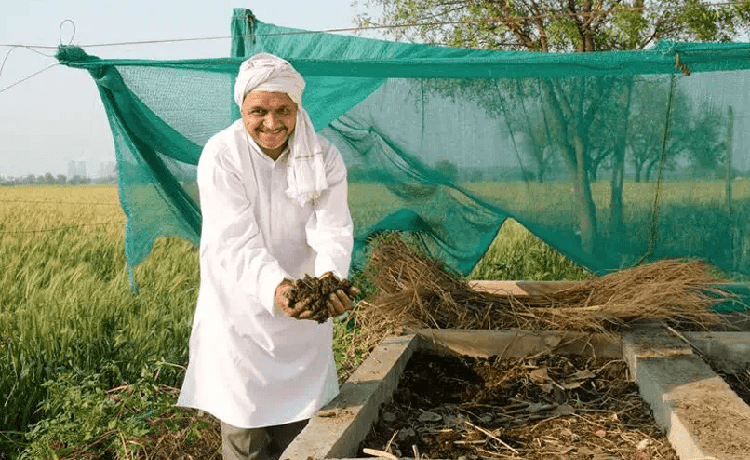
We have experienced over two decades of work, pan-India, how community participation has ultimately led to structural changes within communities, leading to lasting change. For instance, in our agriculture interventions, we've been able to mobilise farmers and collectivise them into Farmer Producer Organisations, developing a stronger capacity for collective bargaining. The FPO's are now taking the lead on environmental issues as well. For example, burning of chaff in the fields and residue that remains in a field once a crop is harvested, to prepare the plot for the next season, a familiar sight in rural India. This harmful practice is one of the causes of poor air quality and is detrimental to the soil as well. A small group of farmers in Rabriyawas, Rajasthan, found a solution and took the lead in selling this crop residue (also known as biomass) to local industries, as an alternative fuel source - taking home a small amount of income as a result. The FPO's have since taken up the sale of biomass on a larger scale, eliminating middlemen, thus making it a profitable venture for the farmers. Another example is from our healthcare projects. We utilise the power of grassroot healthcare providers and train them to manage a range of conditions - from child and maternal healthcare to communicable and non-communicable diseases. These front line workers - Sakhis, belong to the communities in which they work, hence intimately understand community needs and the underlying socio-cultural issues, and are thus able to engage with the community very effectively. Our Sakhis have played a vital role in increasing institutional deliveries and immunisations achieving 100% coverage in all our intervention villages.
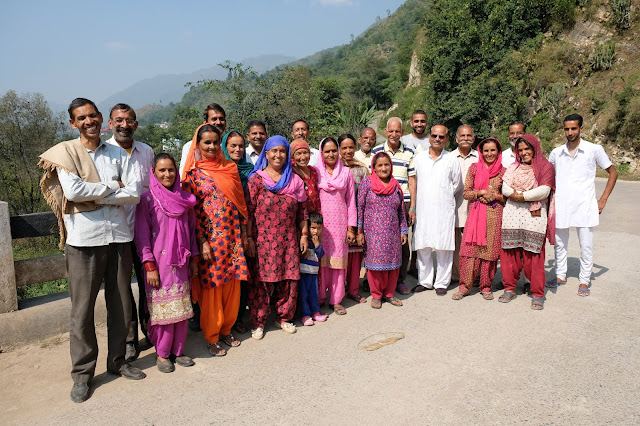
A lot can be achieved when communities are united around a common goal and actively participate in both identifying needs and being part of the solution. Community mobilization is a powerful tool to help empower communities, enabling them to participate and control their own development.
.png)