


The pandemic has exposed just how vulnerable India's labour force is. An estimated 450 million internal migrant workers make up 92 percent of the labour force in India - with the majority of them hailing from rural India.
The turmoil caused by the pandemic and the ensuing lockdown resulted in a mass exodus of millions of these workers, most daily labourers who'd lost their livelihood, in a reverse migration back to their villages. Several months later, many have returned to the cities in the absence of employment in the villages - a recent study[1]found that nearly two-thirds of migrant workers, who had left for home due to the coronavirus-induced lockdown, have either returned to cities or wish to do so due to economic pressures and the lack of livelihoods.
The key question therefore is how should we alleviate the plight of this largely unskilled migrant workforce from rural India? How can we prevent such a situation from arising again?
Exactly how skilled is our Labour Force?
The proportion of formally skilled workers in India is extremely low at just 4.69% of the total workforce. Compare this to 24% in China, 52% in the US, 68% in the UK, 75% in Germany, 80% in Japan and 96% in South Korea.
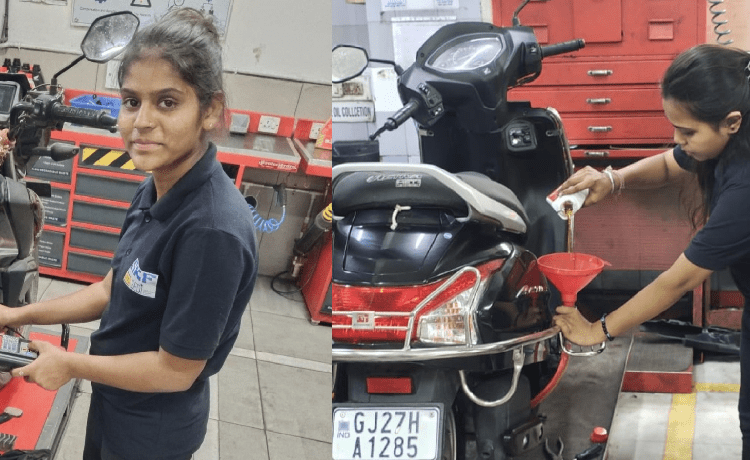
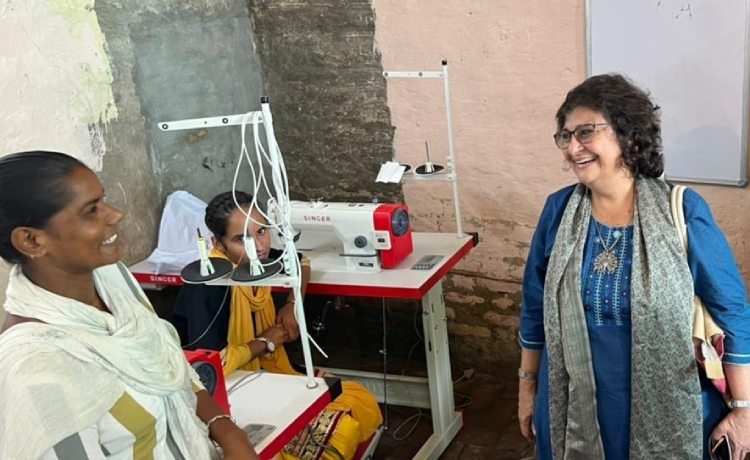
Given that the rural workforce accounts for 70% of the total, it is therefore vital for India, to prioritise rural skill training - making quality skill training more accessible to the rural youth in order to prevent their joining the ranks of migrant workers.
The penetration of vocational training in rural India is abysmally low - 93.7% (2017-18) of rural youth have not receive any vocational training. Current skill development programmes and vocational training being imparted have met with limited success with youth often unable to find work. Additionally, there is high attrition—one in five candidates tend to drop out of jobs within the first three months.
As a result a vast segment of informal workers (more than 390 million[2]individuals), have acquired skills informally - through self-learning, on-the-job learning, observation or a transfer of skills from a master craftsperson to an apprentice. This 'unskilled' labour force ends up working in the unorganised sector and is often exploited. Those who find their way into SMEs often learn on the job and have low productivity. The overall lack of formal training is an economic loss not just for the 'unskilled' labour force, but for the country as a whole.
How Should We Skill Rural India?
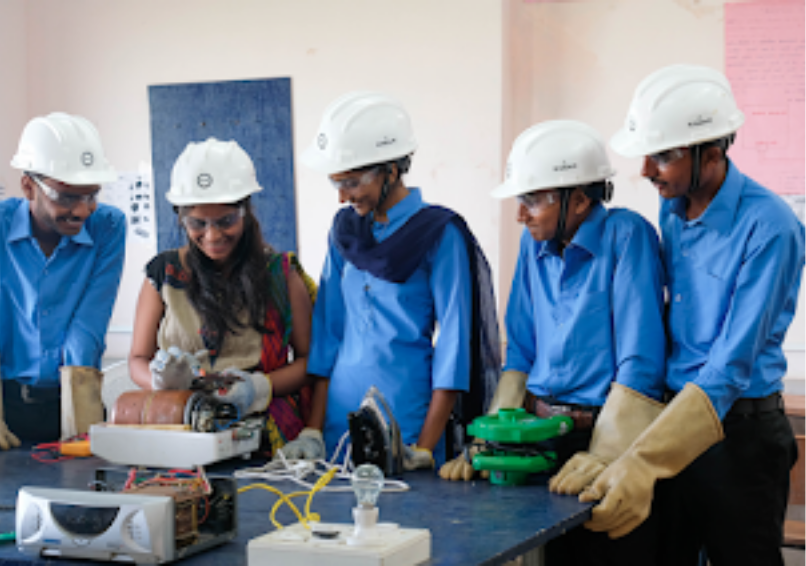
To address this massive gap, it is not enough to merely ramp up the number of skill training institutes in rural India; it is the quality of the skill training that is equally important. Skill training programs need to be aligned to local employment opportunities, designed in partnership with potential employers, keeping in mind the demands of specific jobs. Apart from the technical skills, the rural youth also need to be trained in cognitive and interpersonal skills to adapt to a technology-enabled rapidly changing world.
The pandemic has focused the spotlight on some opportunities. Our poorly equipped public healthcare system and the shortage of frontline workers i.e. Nursing cadres, lab technicians, paramedics and ASHA workers has meant that, in the coming years, there is expected to be spurt in demand for these professions, one that, the skill training institutes need to respond to by offering a greater number of healthcare courses.
Other p