


To those who once knew it, Mohi Kalan is almost unrecognisable! Once a ‘dumping ground’ for household rubbish, today village streets are squeaky clean and ponds are a thriving oasis for birds and other local animals – a transformation that has earned them not one, but 3 awards for being the ‘Cleanest Village’.
But Mohi Kalan’s Sarpanch, Ranbir Kaur learned the hard way, that old habits die hard – waging a year-long crusade to transform the behaviour of the communities of 217 households!
It all started when Ranbir Kaur stood by her husband in his campaign to become the Village Sarpanch in January 2019. Little did she know that it was her who would soon be thrust into the limelight. When he won the election, the following term saw her stand for the role – losing by just 1 vote! But when the constituency was soon after allocated as a ‘lady’s seat’, the well- known Ranbir Kaur was the natural choice to assume the role.
Born and raised in Amritsar, Ranbir Kaur had a vision for her community and quickly got to work to address education in the area – the local government school was marked for closure when enrolment numbers plummeted due to poor infrastructure and teaching methods. Investing her own funds, and raising the balance from NRIs, she raised the enrolment numbers from 17 to 85.
It was here that the focus shifted to solid waste management. Garbage disposal was the main problem and without any proper system in place, households dumped waste in the local pond, in streets, and on disused common plots.
Flummoxed as to how to go about it, Ranbir Kaur sought support from Ambuja Foundation which had recently commenced work in the community. Working hand in hand, with additional support from the Round Glass Foundation, the group got to work on developing a Solid Waste Management System in the community.
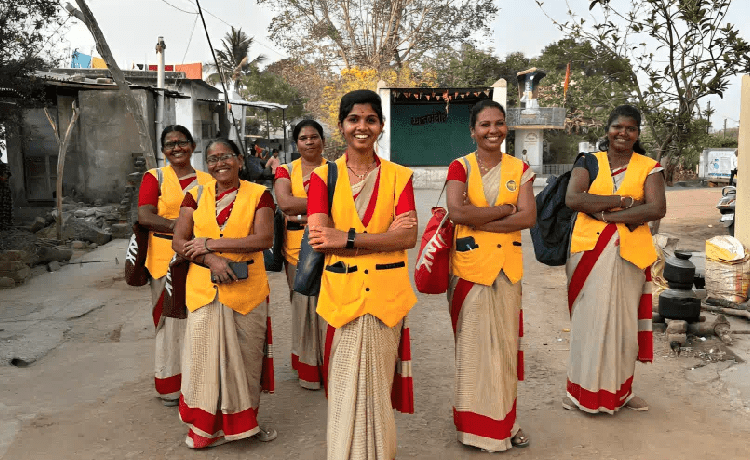
Inaugurated in October 2022, Ranbir Kaur advocated the importance of waste management in light of sanitation, health, and overall community pride. Ambuja Foundation and HDFC Bank Parivartan under the Holistic Rural Development Programme got to work training the community on how to segregate waste and support the newfound system.
But of course, Ranbir Kaur faced resistance from several households and here, she decided to play hardball! As solid waste management was the new focus of the Central Government’s Swachh Bharat Scheme, she swiftly told villagers that if they didn’t get on board, other schemes would not be made available to them.
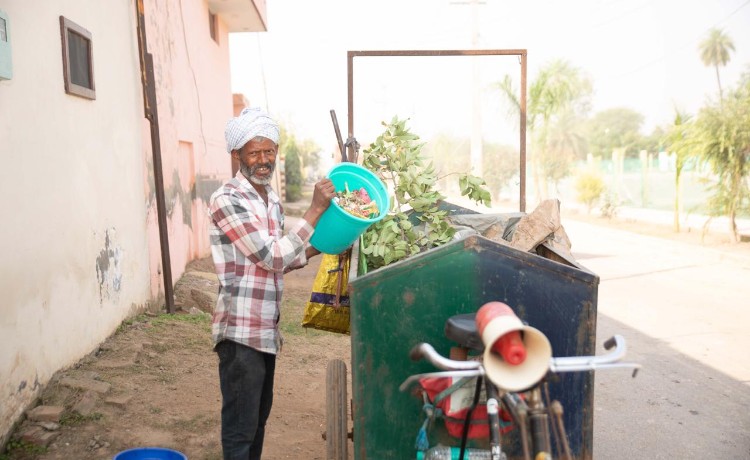
Today, a waste collection cycle rickshaw visits every household and each household contributes Rs. 60 per month. Wet waste is set aside for composting and the creation of organic manure, whilst dry waste is further segregated and sold at the Material Recovery Facility.
Buoyed by their achievements, the community has formed a ‘cleanliness group’ which has been instrumental in fencing off ponds and beautifying the area with plantation. And recognition soon followed – the community received 3 awards! The solid waste management model is such a success that it is being replicated in 3 other villages.
There is truly nothing that cannot be achieved if you put your mind to it and work together to achieve it!