


For many developing countries, increasing agricultural productivity is key to poverty reduction. Over-dependence on monsoons isn’t sustainable, and irrigated agriculture remains a vital resource that poor producers still ask for. Yet, unmonitored water wastage causes huge losses, higher production costs, and risks of water crises. Both water availability and sustainability become crucial when implementing a water project.
The Background
Murshidabad district, West Bengal, is among the most socioeconomically backward regions of the state, home to about 2.74 lakh people. The villages lie along the Kalai river, prone to flooding and occasional droughts. Agriculture and animal husbandry are the primary income sources, and nearly 80% of marginal farmers and sharecroppers cultivate less than 1.5 hectares each. Agriculture here is mostly rain-fed, limited to a single crop (paddy or jute). This mono-cropping, combined with monsoon dependence, leads to low productivity and forces farmers to migrate to towns during the off-season.
Ambuja Foundation's Intervention with the Community
In 2017–18, Ambuja Foundation initiated the construction of a check dam on the river. While the water quality was found suitable, a project need analysis showed a check dam alone would only benefit a few farmers. Many marginal farmers’ fields, located on higher ground, wouldn’t get water.
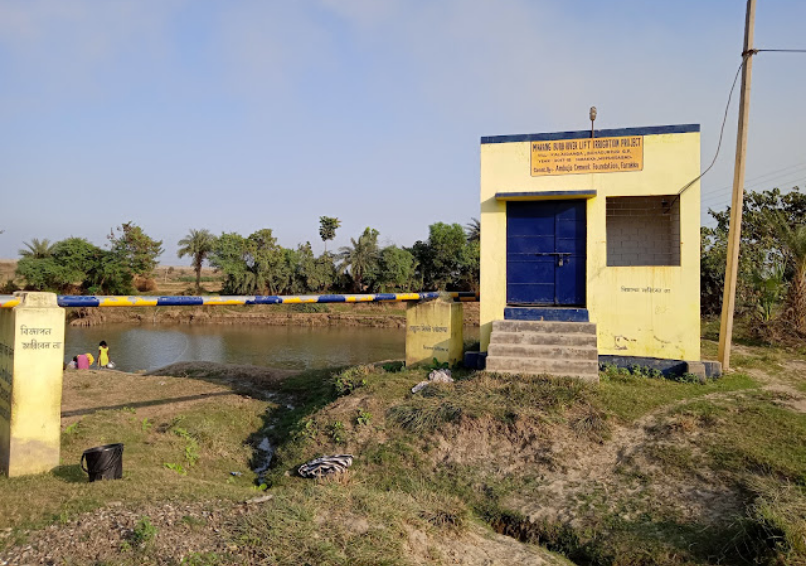
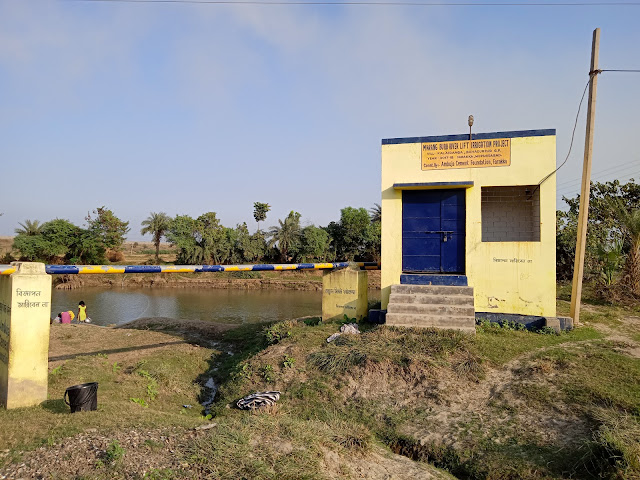
After discussions with farmers, it was decided to implement a Lift Irrigation system instead, so water could reach all fields. Since water was available, lifting it to fields could allow two to three crops annually, instead of just one. The first Lift Irrigation project was built in Farakka in 2018–19.
Ambuja Foundation ensured strong community participation to keep the project sustainable and community-owned. Farmers received training on system maintenance and pipeline fitting. Through sweat equity, the community contributed labor. User groups were formed to manage the system.
The Impact Created
After installation, farmers now harvest three crops annually (paddy, pulses/mustard, and vegetables), boosting cropping intensity by ~200%. Average agricultural income rose from ₹40,680 to ~₹76,600 per acre. About 55 hectares are now irrigated, increasing production by at least 1.5 times.
Ambuja Foundation mobilised farmers into ‘Farmer Clubs’, which invest collectively in pumps and electricity. Farmers pay a small monthly fee to the club, and per-hour pump charges when irrigating fields. In 2019, two more clubs were created, benefiting 100 and 55 farmers respectively, replicating the successful model.
- 3 Farmer Clubs established with Lift Irrigation facilities
- 219 tribal farmers now have year-round water access
- Farming increased from 1 crop/year to 3 crops/year
- 200% increase in profits
- 126 women farmers benefited
Testimonials from the Community
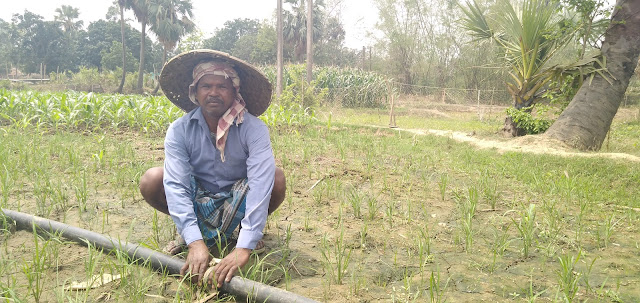
- Chandan Kisku (30), President of Farmer's Club: “We are getting sufficient water which feels like a miracle. It’s like the river is flowing next to our land. We’re happy and expecting more crops in the future.”
- Ranjeet Mondal (32): “We never imagined getting enough water in our fields. This big project benefits over 80 farmers. Ambuja Foundation taught us how to use water efficiently and grow more with less. Being part of the process was a great learning.”
- Biswanath Mondal (48): “Earlier, even with two machines, I couldn’t get enough water to my field. Now, it’s easy, less costly, and saves time. Thanks to Ambuja Foundation’s investment, our villages expect higher economic growth because we have water all year for more crops.”
Expansion of the Project
For 2020–21, Ambuja Foundation Farakka, in partnership with IndusInd Bank, plans another irrigation project in Jalpukaria village. This includes 4 additional Lift Irrigation systems and 2 check dams, covering ~50 hectares.
Additionally, around 270 hectares (from 7 Lift Irrigation projects) practicing mono-cropping will shift to double cropping, benefiting ~750 farmers.