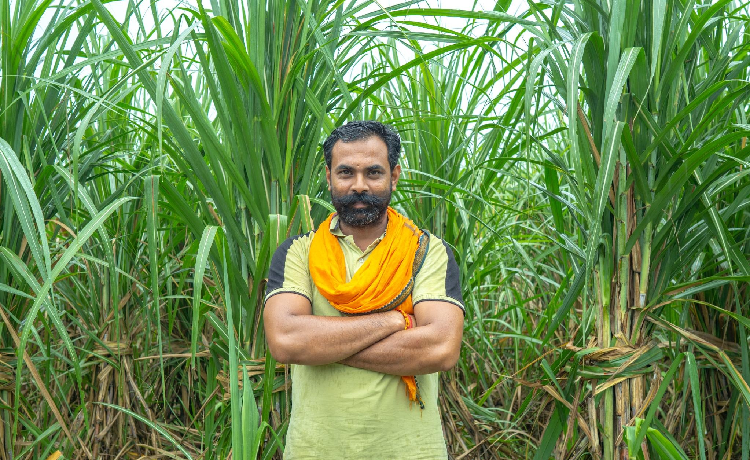



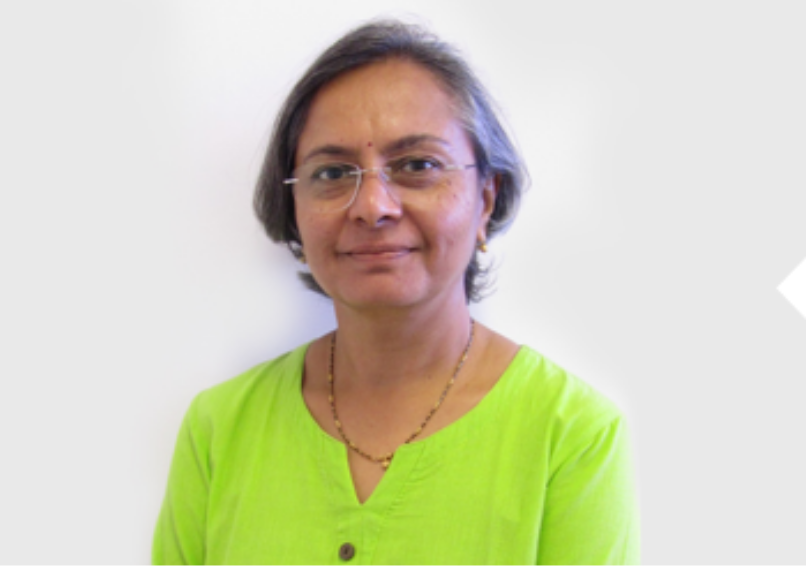
Anagha Mahajani - GM, Program Research & Monitoring at Ambuja Foundation has over 25 years' experience in the development sector and is a qualified management and research practitioner with publications to her credit. Thrive caught up with Anagha to understand how Monitoring & Evaluation works in the context of Enabling People and Prosperity
Thrive: Why is measuring success important in the context of 'Enabling People'?
Anagha: From an earlier philanthropic mode, the sector has moved to a strategic community development mode which is a complete change in the approach towards work. As such, besides 'what' you do; 'how' you do it and 'what it results in (outputs)' are some important aspects that get considered while approaching the work. The sense of accountability has increased for every rupee that is invested in community development. Community development is now looked at with the need to have a return on investment. This is an impactful way of looking at community development since it looks at clearly fixing responsibility on the team that engages in the development work. At Ambuja Foundation the focus is not on doling out material benefits but creating an enabling environment for the locals to own the process of development. Measuring processes and the outputs of the initiatives highlight the change brought about in the community. Processes, when imbibed by the community, stay with them forever.
Thrive: How does Ambuja Foundation approach 'Enabling People'?
Anagha: When we talk about 'Enabling People', we do not just build the capacity of the people to solve problems but first help them identify and prioritise their issues. Our needs assessment process focuses on identifying the most pressing issue, addressing which, creates sustainable impact.
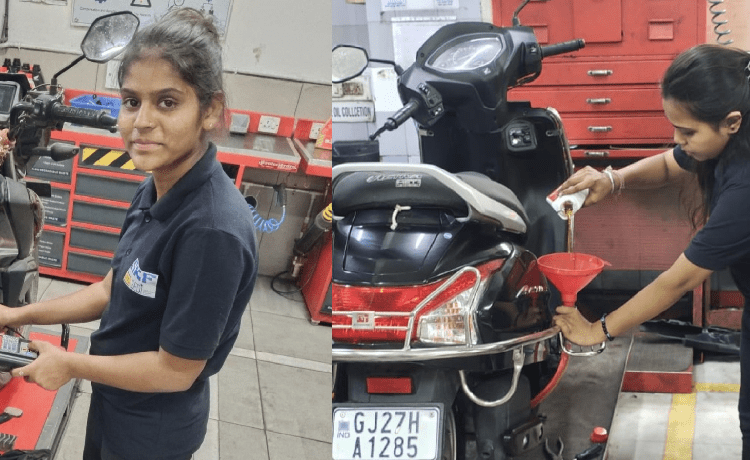
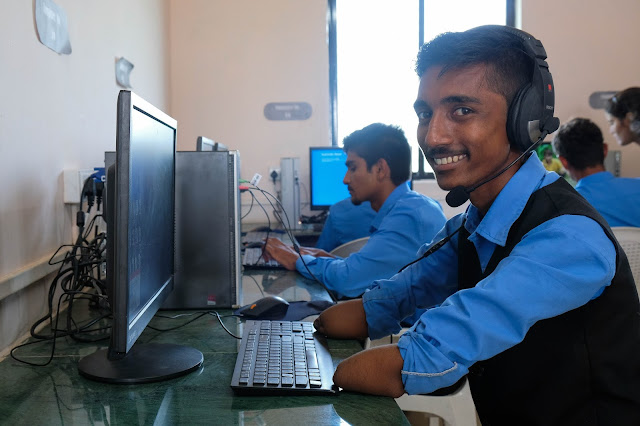
Once the key issue has been identified, attention shifts to building capacities of people to address and resolve the issue with specific skills. For example, in livelihoods, a real need may be realised that unemployed youth and school dropouts need employment. Consequently, they need to be equipped with skills that are vocational through a skilling centre which offers a set of skills that enables them to be differentiated from others around for possible employment opportunities. The skilling centre itself will not offer jobs but will build skills in youth that helps them find a decent & dignified livelihood and help them identify jobs where they can apply. This is a sustainable approach.
Thrive: What are the various dimensions that one needs to look at, when measuring success in 'Enabling Communities'?
Anagha: All our interventions cut across social, economic & environmental dimensions. For example, when looking at R.O. water availability in villages, it’s not just about bringing technology but the social mobilisation around the issue. Our approach influences social systems; economic gains come from better health and productivity in jobs & education; environmentally, water usage is optimised as wastewater is minimised and reused.
Another example is the Better Cotton Initiative (BCI). Farmers receive knowledge on optimising pesticides, seeds, fertilisers, etc., through social mobilisation into groups. Economically, input costs are reduced; environmentally, better practices support soil and crop health, leading to sustainable farming.
Thrive: Which approach does Ambuja Foundation use to measure success in 'Enabling People'? What are some indicators?
Anagha: We’ve moved from input-based to output-based monitoring. Earlier, we measured money spent on a check dam. But what’s unique to Ambuja Foundation is the process: engaging communities, government, CSR organisations, and investors. Outputs capture changes: Does the check dam still exist? Is it maintained by Water User Associations? How much water has been collected? Community ownership and engagement are captured through qualitative indicators. Across six programs, we track over 1300 indicators regularly.
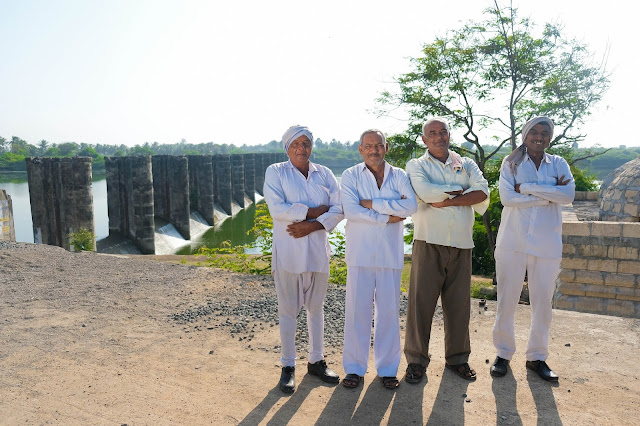
An output-based system considers inputs but focuses on capturing the resulting change. These indicators help us track long-term, sustainable impact. We also run baseline surveys to scientifically document pre-project conditions. For impact evaluation (usually after 5+ years), we engage external agencies. For instance, IFMR evaluated our micro-irrigation project in Kodinar, Gujarat. The field keeps evolving with new methods to measure better.
Thrive: How is the Monitoring & Evaluation function structured at Ambuja Foundation?
Anagha: Our founders were forward-thinking. Instead of a separate monitoring team, monitoring is integrated into project implementation, enabling reflection, stakeholder feedback, and continuous improvement. This, we believe, ensures sustainability.
Thrive: When working with partner investors, do approaches to monitoring differ?
Anagha: Yes, but our system is comprehensive enough to feed into other organisations' systems. Every quarter, each location reports 1300+ data points across six major programs, each with multiple projects—like agriculture includes KVK, BCI, SRI, organic farming, goatery, and poultry.
Thrive: Which initiatives at Ambuja Foundation would you rate highly for enabling people?
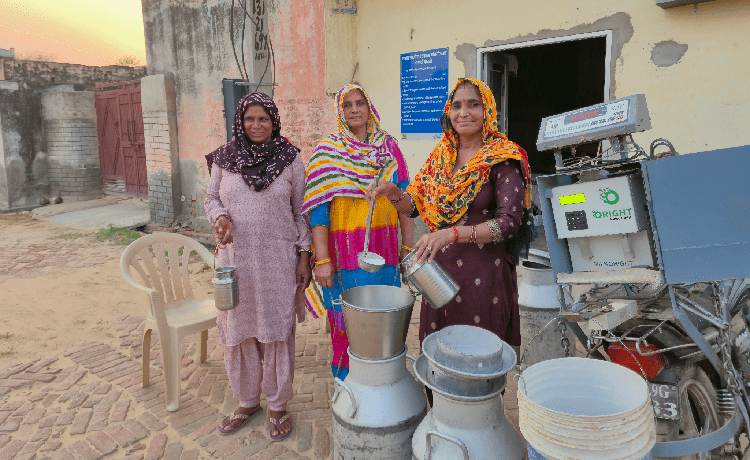
Anagha: Recent examples: placement meets at SEDI centres improved course quality and sustainable livelihoods; marketing organic produce through FPOs in Roorkee; Sorath Women's Federation in Kodinar addressing social issues; women’s federation in Darlaghat creating dairy livelihoods; and rapid COVID-19 awareness initiatives. We’re also focusing on knowledge sharing, which is well-received by corporates, especially newcomers to CSR.