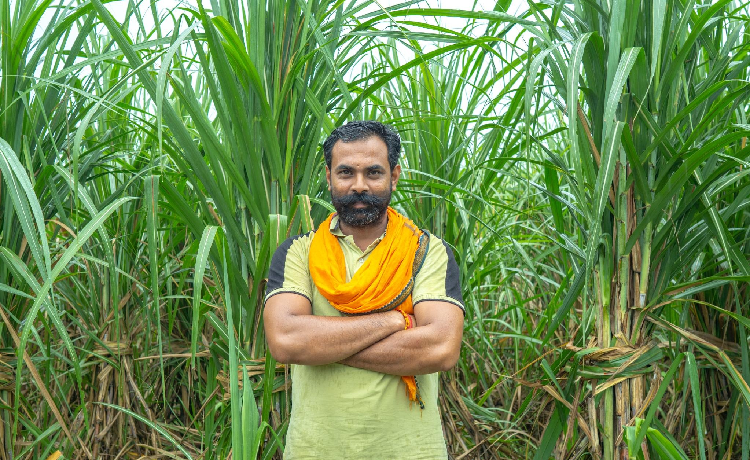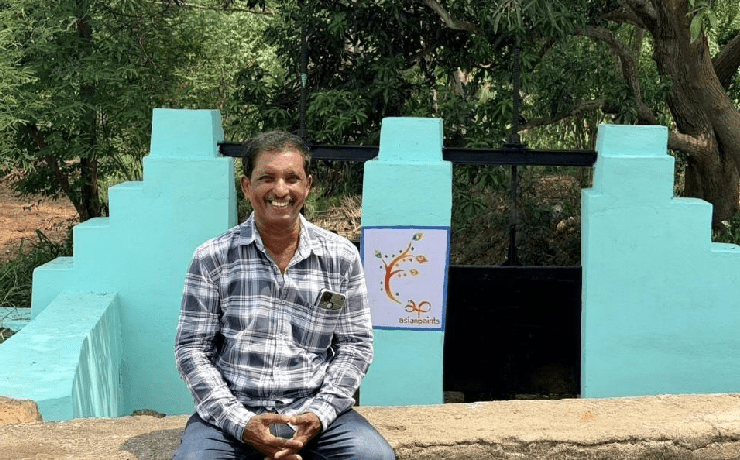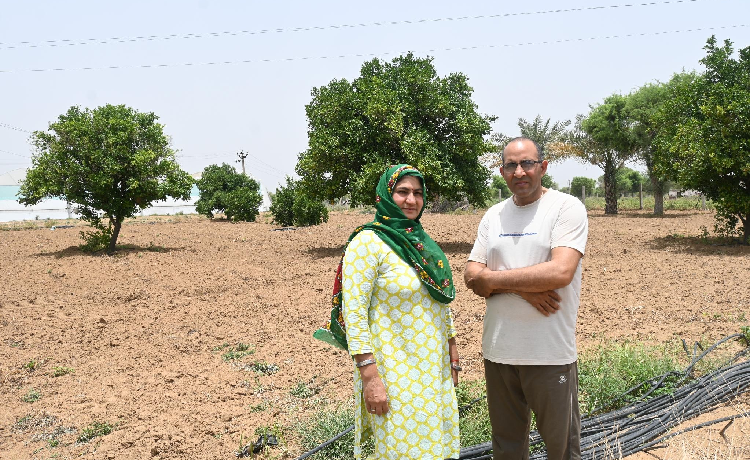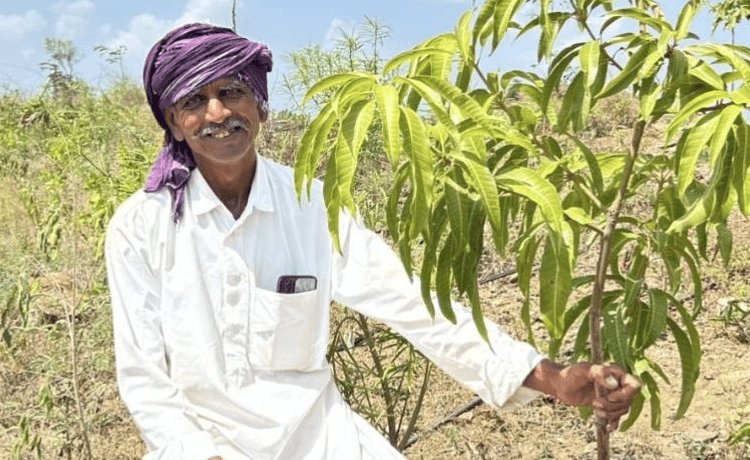

“It was a bitter pill to swallow - I was 59. I'd just retired. And was broken.
Despite growing up in a farming family of 28 people, I turned to the local jute mill for work in my youth, as it was difficult for us all to survive on farming.
In time I got married, had 3 children, and started living separately on 1.33 acres of land, where, in my spare time I would cultivate paddy, vegetables, and fruits. It was good pocket money to support the household.
In 2007 I was forced to retire becoming solely dependent on agriculture as a livelihood. My wife Parbati worked shoulder to shoulder with me in the field, but somehow we couldn't generate enough to support our children - for 2 years we struggled.
But in 2009, things began to turn around.I adopted the System of Rice Intensification (SRI) approach and my yield increased by 30% and my income almost doubled.It was a boon! Now I had a fire burning in my belly.
What more could I do?
I had a pond on my farm and had grown some fish there, but mainly for our own consumption. Ambuja Foundation helped me purchase an aerator to oxygenate the water, taught me how to prepare cheaper, better fish food, and take Aquaculture more seriously.
In 2020 my income soared to Rs. 3 lakhs and I could finally rebuild my house, invest Rs. 1.5 lakhs for a poly house and run the business in 500 square meters.
Motivated, I wanted other farmers to turn their farms around too. Working with Ambuja Foundation I helped form the 'Sabujbiplob Farmers’ Club' which was linked with NABARD for support and I was elected the Chief Coordinator. Soon, everyone began to see results and profit from the work.
I want to be remembered as a farmer who was always ready to innovate and take risks to lead the way for other young farmers in my village.” - Asit Kanji, Sankrail, West Bengal.