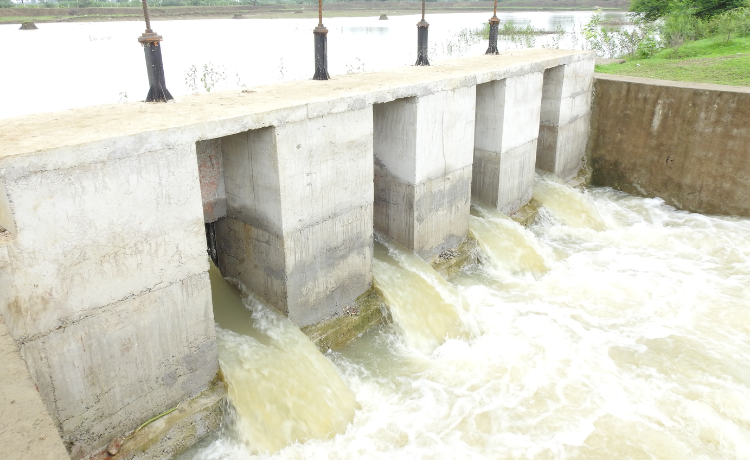
Since antiquity, water has been harvested in diverse and distinctive water structures. These include Ponds, Tanks, Lakes, Vayalgams (traditional tanks), Tars (traditional check dams), Khadins (streams) Bawdis (springs) and Talabs (small ponds). The constructs aided afforestation, reduced soil erosion, increased the rainwater catchment area, and strengthened groundwater absorption. Depending on the region, these structures would be in the proximity of community settlements, allowing easy access to the villagers. Chhattisgarh, the state of ponds for instance had 4-5 ponds in the vicinity of each village. The water holding capacity of these structures ranged widely - between 10,000 m3 and 1,00,000 m3, enough to meet the needs of the villages around for up to a year.
However, over a period, many of these valuable structures fell into disuse. Siltation is identified as one major cause, where silt deposited into the structure by rainwater from the catchment areas reduces the capacity of the structure to store water. Siltation over a period of 8-10 years dirties the water and renders the structure unusable. A lack of general repair and maintenance to fix leakages and over-extraction of groundwater for irrigation and other purposes further rendered many such structures useless.
Unfortunately, while new water harvesting structures are built with active participation from the government, corporates and other funding agencies, repair and maintenance of traditional and other existing structures are often overlooked. In Chandrapur, Maharashtra for instance, despite having 44 check dams, irrigation capacity was still exceptionally low till 3 years back due to siltation and a lack of maintenance.
This is where Ambuja Foundation’s approach differs. From the early 2000s itself, the organisation prioritized the repair and maintenance of already existing water structures over building new ones in water-starved regions. The approach is a financially prudent one as it avoids the costs associated with building a new structure altogether, including land and labour. Continuous monitoring of the structure is also carried out to ensure that desilting and plugging of leakages are accomplished when necessary.
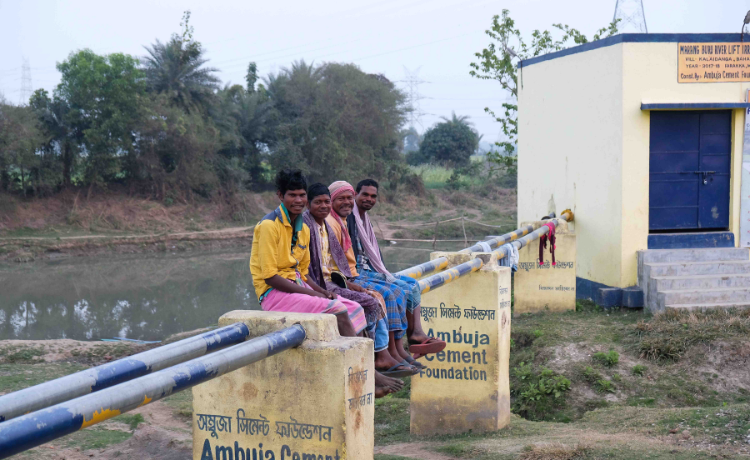
The cornerstone of Ambuja Foundation’s approach lies in enabling people. To make a defunct water structure operational again, several educational and awareness discussions are held with the community to help them realise the potential of the water structure. In the repair itself, the community contributes to making the structure functional again by contributing to labour and costs. This is consciously done to establish community ownership over the structure and its maintenance. In some villages, Water User Associations or Village Development Committees are formed to oversee the repair and subsequent monitoring and functioning of the structures while in other regions, the gram panchayat itself may perform these duties. Subsequently, the community itself apprises Ambuja Foundation of defunct water structures in the region that need reparation.
Repairing defunct water structures has a widespread impact. For many farmers who could manage only one harvest in a year and work as manual labour in the other months, the availability of water all year round allows for a second harvest, bringing desperately needed income into households.

(Stepwell renovated in Rajasthan)
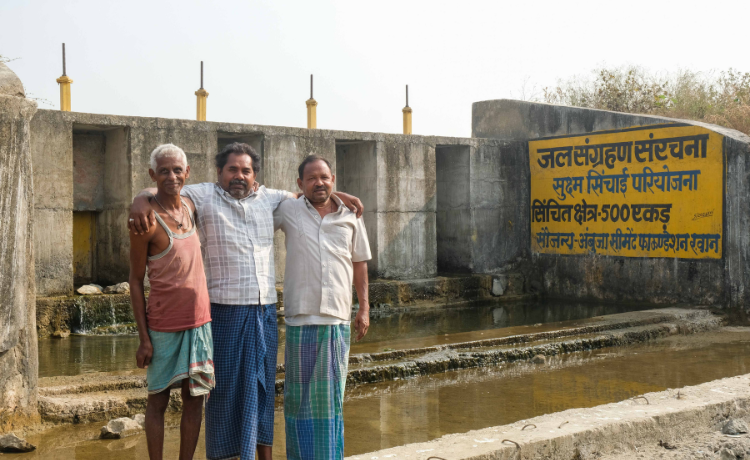
Take for instance, Bhatapara, Chhattisgarh. Ambuja Foundation along with the community took initiative in repairing a Tar (a Check Dam), with a capacity of holding up to 50,000 m3 of water. While the structure was still in use, siltation, leakages, and disrepair meant that water availability was limited to a few months in a year and that too to only a few farmers. Excavation was organised and outlets were drained to properly channel the water. The work resulted in increasing the water storage capacity by almost 35,000 m3. Consequently, about 550 acres of farmland and 350 farmers in the region are today benefitting from year-round water availability. With paddy cultivation being the mainstay of agricultural livelihoods, an additional rice harvest of 5 quintals per acre was observed which roughly translates into Rs. 35-40 lakhs of increased income for the farmers.

Ambuja Foundation’s investing partners have played an essential role in this approach. Apart from Ambuja Cements, Ambuja Foundation actively works with a host of other Government and Corporate partners in reviving traditional water structures and carrying out other projects in its Water programme.
Reviving traditional water harvesting systems can be an efficient way to manage water availability in rural India. By diligently working with like-minded partners and communities and creating people’s institutions to identify and repair defunct water structures, water security can be achieved for these rural communities in a sustainable manner.
Invest in a CSR Implementation partnership for Water with Ambuja Foundation by writing to brajeshsingh.tomar.ext@ambujafoundation.com