


March 19, 2019

Filling India's Rice Bowls

Once a part of subsistence farming, rice is now helping farmers in West Bengal prosper!


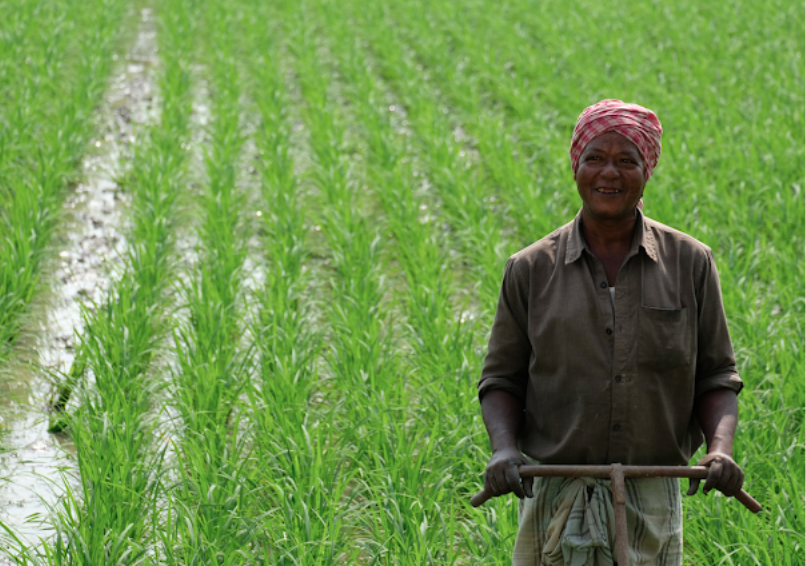
India is one of the largest producers of rice in the world. And West Bengal is the top rice producing state. But in 2007, farmers around Farakka and Sankrail were barely surviving on subsistence farming. The land was fertile, but outdated practices meant their efforts put rice on their plate, but no money in their pockets.


Surely farmers would walk away? But they couldn't leave the land fallow for the threat of encroachment. Ambuja Foundation stepped in to help and adopted the System of Rice Intensification approach. But farmers were skeptical. In the first meeting, 75 farmers attended, but half of them left midway — rubbishing the information as 'useless.'


Farmers had their minds fixed. If the land had seed, water and manure then the crop would grow. If it didn't, it was their own bad luck! Starting small in Sankrail in 2009 with just 10 farmers, Ambuja Foundation began to teach a different way to till and tend the land. SRI helps farmers reduce agri-inputs, lower costs, reduce pests and disease, cut water use and methane emissions. Most importantly — to increase yields by 20-25%.


One such farmer was Asit Kanji. Despite coming from a farming background he worked at a local jute mill to make ends meet. But in 2009, he retired and turned back to farming. With Ambuja Foundation's SRI support, his income doubled.


Since inception, Ambuja Foundation's SRI initiative has increased outreach from 174 farmers in 2009 to over 10,000 farmers in 2019. And farmer profits have increased 30%. Today, some of these farmers are sending their children to agricultural universities — to take family farming to an all new level.
Tags: Agriculture
March 19, 2019

RELATED POSTS
  • Going Organic
    September 10, 2026
    For years, farming in Haridwar’s sugarcane belt followed a familiar pattern: more chemicals, more fertiliser, and rising cultivation costs. Productivity remained the priority even as soil fertility declined.
  • The Diversification Dividend
    September 10, 2026
    When you think of farming incomes in India, you think in thousands. Rarely in lakhs. And almost never double digits – Rs. 28 lakh a year is almost unheard of. Yet, on a small patch of land (2.7 ha) in Jhunjhunu, Rajasthan, that is exactly what Suman and her husband have built. Not through a single breakthrough—but through a series of deliberate, well-timed shifts.
  • The Village Climate Reset
    September 10, 2026
    For a village in Gujarat’s rainfed cotton belt, where farming has become increasingly difficult attributed to rising temperatures, water stress, and declining soil health, the sapling forest has become a visible sign of change.
  • Climate Smart Farming: Bridging Science and Farm Practices
    February 24, 2026
    Discover how climate coordinators are preparing farmers for climate-smart farming. Ambuja Foundation is a leading NGO working for the empowerment of rural farmers.
  • The Cotton Queens of Chandrapur
    September 19, 2025
    In the heart of Chandrapur’s Rajura block lies Devada, a quiet farming village where cotton reigns supreme. With 264 of its 298 households cultivating over 2200 acres, agriculture is more than a livelihood—it’s a way of life. But it was defined by outdated practices, limited tools and little access to credit.
An Opportunity to Support
SUBSCRIBE TO OUR NEWSLETTER & BLOGS
Stay updated on the latest insights from Ambuja Foundation.
GET CONNECTED