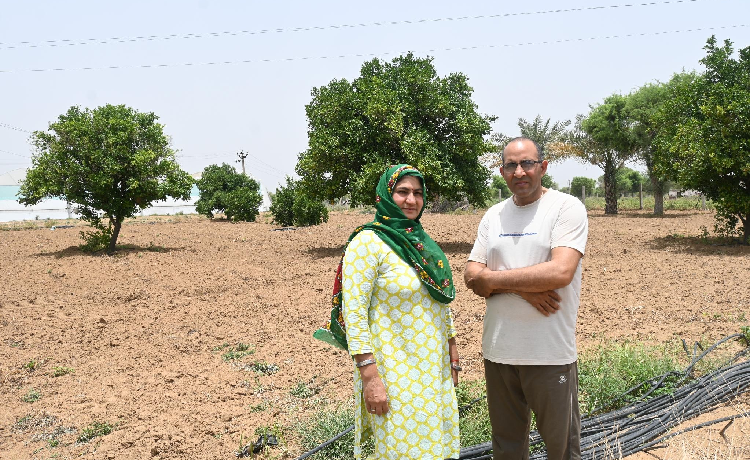
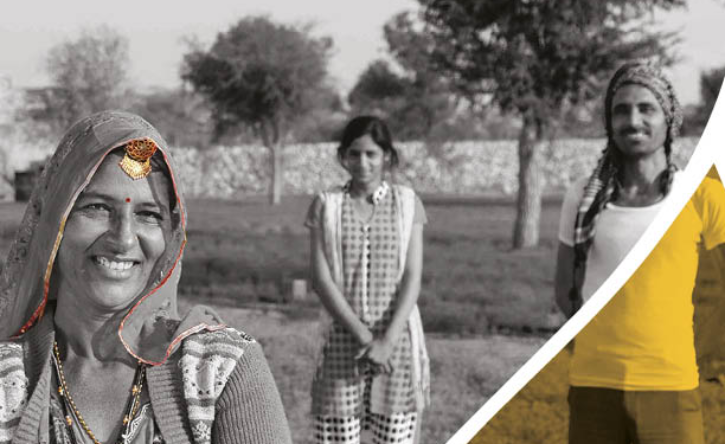
Prahlad Ram and his wife, Parma Devi, have built a reputation for themselves across Rajasthan. It seems their jeera, which is being exported to the US, is being purchased in bulk by the Indian diaspora and rumor has it, even Vice-President Kamla Harris has tried it!
It all began when Prahlad Ram, a third generation farmer who has been growing crops for the last 16 years, decided to make his farming business more viable. With little profit, he was forced to work as labor on neighboring farms, and even tried his hand as a driver in far flung Mumbai, just to make ends meet.
He started attending training sessions run by Ambuja Foundation and shared his new found knowledge with his wife Parma, who meticulously managed the farm and crops while he was away earning.
Renowned as one of the best cash crops in the area, which also uses less water, Prahlad and Parma decided to sow Jeera and focus on reducing the use of pesticides and other chemical fertilizers. How did they do it? By making bio-pesticide which not only gets rid of pests, but boosts soil productivity significantly - helping deliver a bumper crop.
So when the Director of the National Research Centre for Seed Spices visited the region along with the Head of Diaspora Company Co. LLC, a company importing spices to the US, in search of high quality spices, Prahlad Ram's name was mentioned.
It seems they had visited up to 30 farms and were not happy with the quality being produced. With too much fertilizer and other chemical inputs being used, the produce would not meet US approval standards.
Prahlad Ram showed them the work he and Parma were doing and sent a sample of Jeera which was MRL (Maximum Residue Limit) tested. Seeing the quality , they immediately placed an order of 5 quintals. This year, the order has increased to 20 quintals.
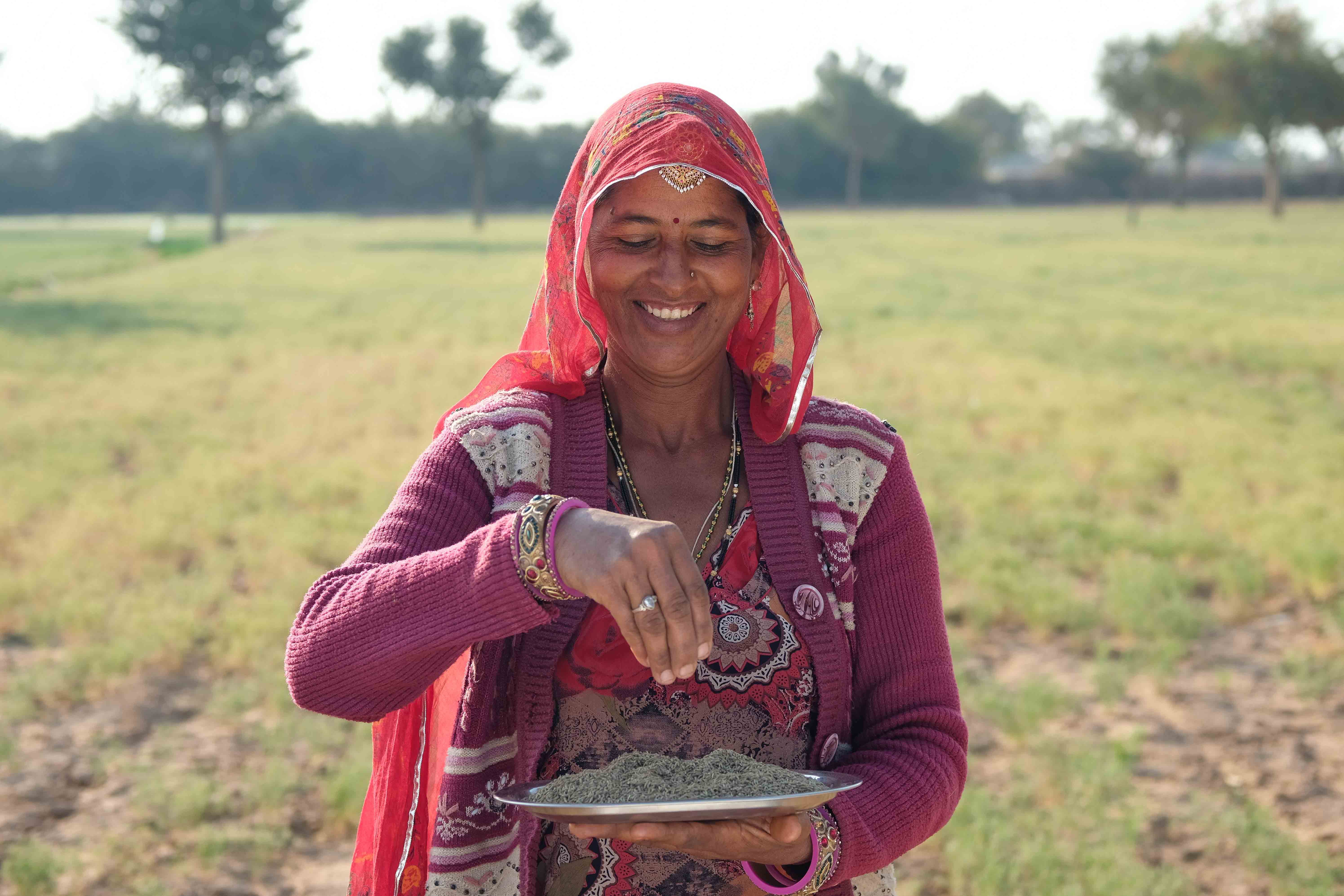
Parma Devi plays an integral role in the entire farming operation. From spraying fertilizer and starting water pumps to segregating, grading and packaging the jeera - her keen eye ensures quality to meet the standards of the US market.
More than the increase in income, Prahlad and Parma's stature has increased. The attitude of people towards them has changed - today they command respect. Prahlad has featured on TV (News India) and people call him for advice on growing Jeera and marketing it. And where once he worked as farm labor, today they hire their own labor for support.
Now that's a return on investment!
Impact:
- 45 farmers in Rajasthan have initiated pesticide free practices
- Profit of Rs. 350 per kg earned
- Ambuja Foundation works with 1942 Farmers promoting 'pesticide free' farming
- Ambuja Foundation engaged with 2.1 lakh farmers