


In a district of Saurashtra, Gujarat, select villagers are of a princely lineage – being direct descendants of small-scale princely states that once ruled the lands. Here, women are considered so ‘royal’ that they are confined to the four walls of their house compound to prevent them from ‘mixing with commoners’ – their faces never seen by others, forbidden to travel and unless a person is of a particular caste, they can never enter their homes.
As a result, these women suffered gaping loneliness, mental health problems, and malnourishment. And on top of that, they are poor - the dissolution of princely states and widespread division of royal land has seen the gradual descent of these families from being ‘royally rich’ to being a part of the bottom of the pyramid.
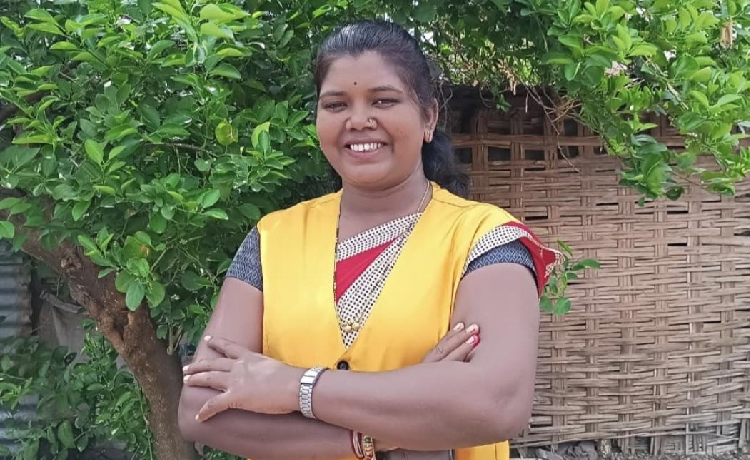
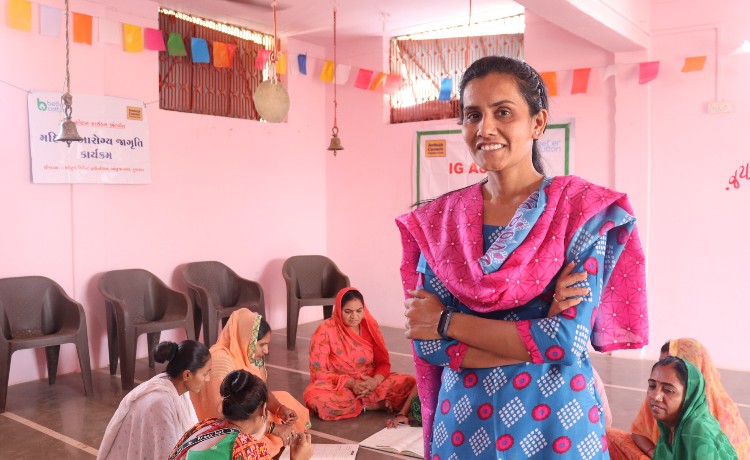
But Hetal Renuka, a Project Officer with Ambuja Foundation, has managed to penetrate the high fort walls of this community’s households, to engage with nearly 1000 women – empowering them with knowledge on health, nutrition, and menstrual hygiene; addressing mental health issues; and even helping them earn an income via gunthan work – the art of decorative pearls and beads in traditional house décor.
Hetal’s ancestors were ‘scribes’ to these royal families, and so, being from a caste that is allowed to enter their houses, Hetal began her journey - painstakingly knocking on the doors of each and every household in the community to gain access to the isolated women.
Her purpose? To share information. “I’m not here to challenge your customs, I only want to give women information that would help their health,” she said. Starting her work in 2022, Hetal faced many challenges and stiff opposition. “Coming to our home is pointless, we will not let you meet our women.” Scared at first, she took her brother with her, wherever she went. But slowly she began to gain the confidence of family members, and one by one, the doors began to open.
Women found comfort in their interactions, learning from ‘someone from the outside and having access to a peer group’. Hetal slowly began to form tiny ‘groups’ of women from one or two neighbouring Gadhis (households) to share information on health. With many women suffering from anaemia, she taught them how to kickstart kitchen gardens in their own backyards for their own consumption.
Women from this community are experts in gunthan (knitting) – the art of pearl and beadwork to make traditional torans (wall hangings), chakada (decorative wall crafts) and other items. Hetal formed special learning groups and ensured they were trained to bring finesse to their art of beadwork. In total 184 women in 8 groups were trained by a master trainer and today 96 women entrepreneurs are financially supporting their families. The total value of work these women have done amounts to Rs. 1.7 crore - of which they earned Rs. 27.1 lakh as their profit.
“These women needed interventions that could lead to a sense of worth, sense of freedom, sense of belonging to a larger community and society in general, and agency in at least their personal lives. The challenge was to do that within the restrictions placed upon them,” Hetal said.
Today Hetal is warmly welcomed into hundreds of these households and is treated as a family member – invited to weddings, family events and ceremonies.