


When people talk about India’s water crisis, stark images of the deserts of Rajasthan and the dry, dusty interiors of Maharashtra come to mind. But India’s water woes are relentless—leaving no corner of the country untouched in its wake.
It may therefore be surprising to many that the lush hills and the picturesque villages that dot the hillsides of Uttarakhand, Himachal Pradesh, Sikkim, and Assam are struggling with complex water issues. These problems are wreaking havoc on the water supply for drinking purposes and agriculture—the primary source of livelihood.
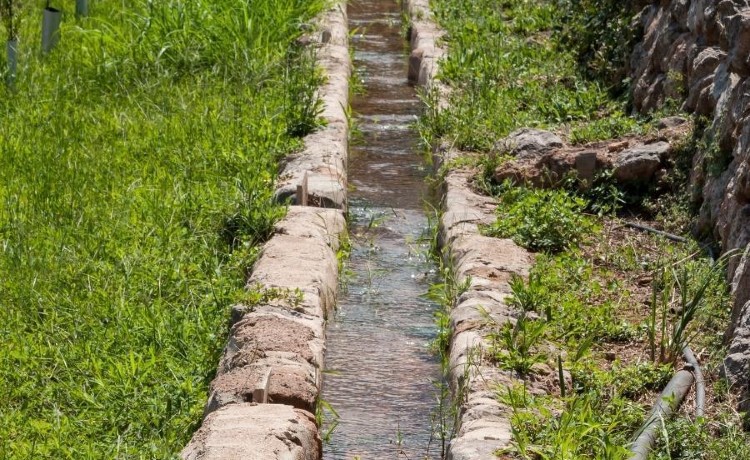
In some areas, the revival of watersheds and traditional water sources such as springs have led to the resurgence of ancient techniques, such as kuhls. It channels water from water sources to once-dry farmer fields, revitalising the vastly ‘unproductive’ agricultural sector and sending waves of prosperity through the communities that feed off it.
This model for water and agricultural sustainability in the region provides a window of hope that hill states can harness to revitalise industry and community.

Crisis of livelihoods in the hills
Farms in the hilly states are largely reliant on rain which has become erratic. About 70 percent of the population living in the mountainous regions of Himachal Pradesh depend on agriculture for their livelihood. Constraints around climate, geography and the socio-economic landscape have limited the agricultural productivity of the region.
The people who live there often depend on natural water springs for drinking water supply, household activities and irrigation. But in recent times, most of the springs have either become seasonal or have been extinct, largely due to ecological imbalances.
As a result, farmers face a dual problem—availability of water and access to that water to irrigate their fields. Working together in groups, with support from developmental agencies, farmers are revitalising watersheds and springs, and renovating ancient kuhls to channel that water directly to their fields to provide direct access. The results have been transformative.
Farmers like Narpat Singh in Darlaghat, with only a small landholding, would earlier grow just one crop of tomato in a year earn an income, and then grow wheat, maize, and lentils only to supplement household grains. He couldn’t venture into commercial agriculture to generate more income without proper access to water.
With the renovation of a nearby Kuhl, which supplies water to up to 15 farmers in the area, the situation has changed completely. Today, he grows short-term high-profit vegetable crops like radish, cucumber and spinach, and can generate a livelihood.
Kuhls: Generating rural prosperity
Thanks to this traditional system of irrigation, farmers are moving beyond subsistence farming and into commercial production of vegetables and plantation of fruit trees—far more profitable pursuits than the traditional maize. Wasteland has also been converted into productive land for cultivating, expanding the number of hectares under cropping and increasing income.
With a thriving agricultural sector, communities are bustling and businesses are prospering. Farmers are even diversifying into seed production as an alternative income source. It’s a far cry from the time when farmers would grow just one crop and supplement their income with off-farm labouring jobs in the district.
The Kuhl is the perfect example of how, whilst we must look to the future, sometimes the answers to our problems lie in the past, if only we take the time to look.
- This article was originally posted on the Forbes India Blog section
.png)