


There is a growing need for communities to develop and manage their local water resources sustainably. An essential first step is understanding the total local supply of water vs. local demand. To help measure this, Ambuja Foundation is training communities to conduct their own Community Water Audit – educating them not only to harvest water but also to save it.
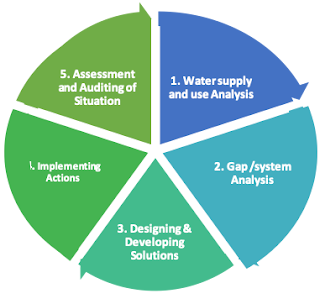
To test the model, Ambuja Foundation conducted a Participatory Water Audit in Rawan Village, Bhatapara block, Balodabazar, Chhattisgarh. Through collaboration and participatory data collection, the community analyzed total water needs, existing resources, and potential solutions, following the Cycle of Water Management Process:
Using scientific formulas to measure water use and supply, the following key observations were made:
- The village received 860.89 Ha-m water annually, but 28% (241.17 Ha-m) flowed out during monsoon without productive use. Only ~63.18% could strengthen livelihoods.
- The village’s water harvesting capacity was only 12.92 Ha-m, with just 6.0 Ha-m usable across the year, highlighting large potential for improvement.
By studying topography, hydro-geology, number of households, rainfall, and existing structures, Ambuja Foundation helped design a strategy to balance water demand and supply.
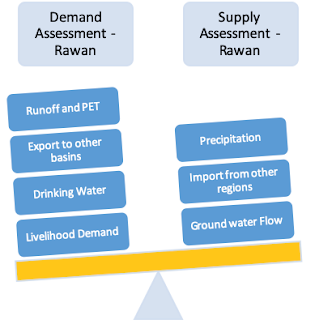
The water-balance exercise suggested these actions:
- Increase water-harvesting capacity by deepening and building new ponds in upstream areas.
- Diversion of flood water and monsoon runoff for groundwater recharge using open-wells and tube-wells.
- Review irrigation systems, as large portions of kharif irrigation water runoff without productive use – suggesting a stakeholder forum for the wider limestone belt.
- Promote decentralized ponds (“Rel” areas) to store rainwater and increase groundwater recharge, boosting bore-well yields.
- Address water loss in kharif irrigation to help farmers benefit in the rabi season.
With clear audit data and recommendations, Ambuja Foundation and the community can implement targeted initiatives to make water resources more sustainable for the future.
To have a Water Audit conducted in your location, write to brajeshsingh.tomar.ext@ambujafoundation.com for more information.